
Walter Franklin Lansil — Mayflower Descendant, Marine Painter, and the Meuse River
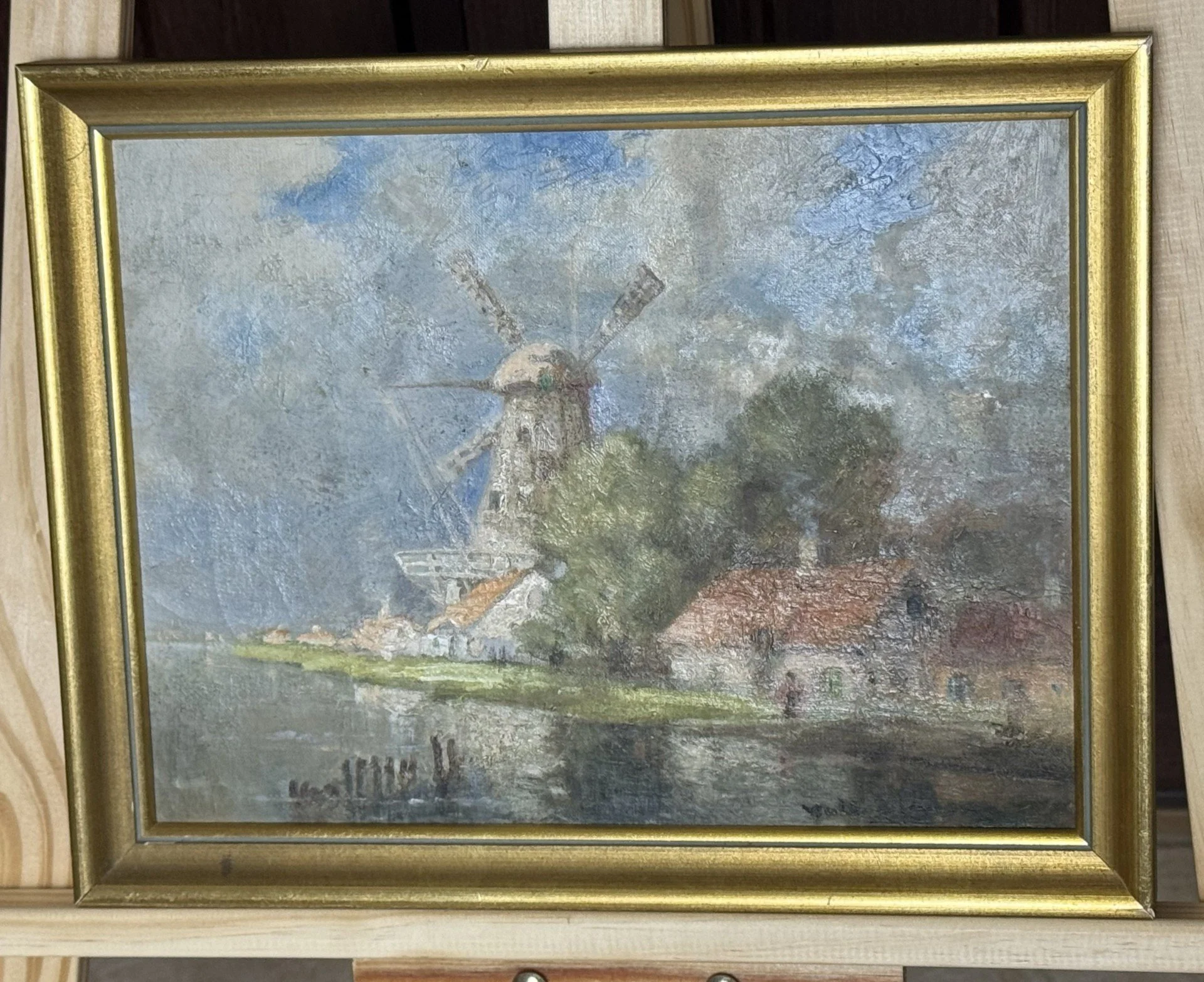
Walter Franklin Lansil (1846–1925) was born in Bangor, Maine, and became one of New England’s noted marine painters. He studied first with Bangor portraitist Jeremiah Pearson Hardy before establishing his career in Boston, where he joined the Boston Art Club and became particularly associated with ships, harbors, marine subjects, and views of Venice. Contemporary accounts described him as a celebrated marine artist, and nineteenth-century reference works likewise identified marine views as his specialty. (Wikimedia Commons)
Lansil exhibited extensively during his career, including with the Boston Art Club, the National Academy of Design in New York, and the Pennsylvania Academy of the Fine Arts. His fascination with Europe became central to his art. In his 1914 memoir, A Trip to Venice, he recalled his impressions of Venice and his intention to study art there. Two handwritten drafts of that memoir are now preserved by the Smithsonian Institution’s Archives of American Art. (American Alliance of Museums)
The Meuse River and Holland
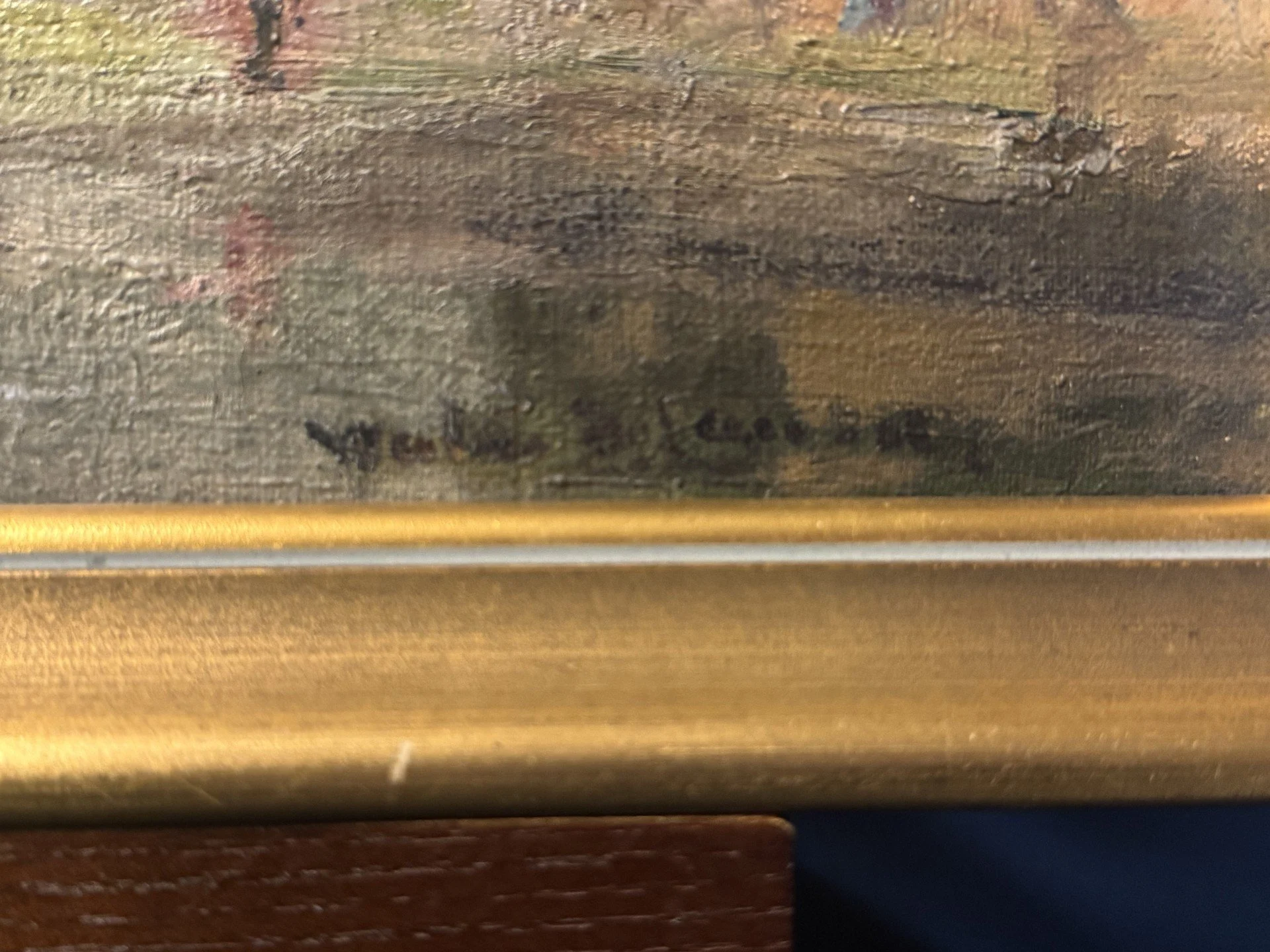
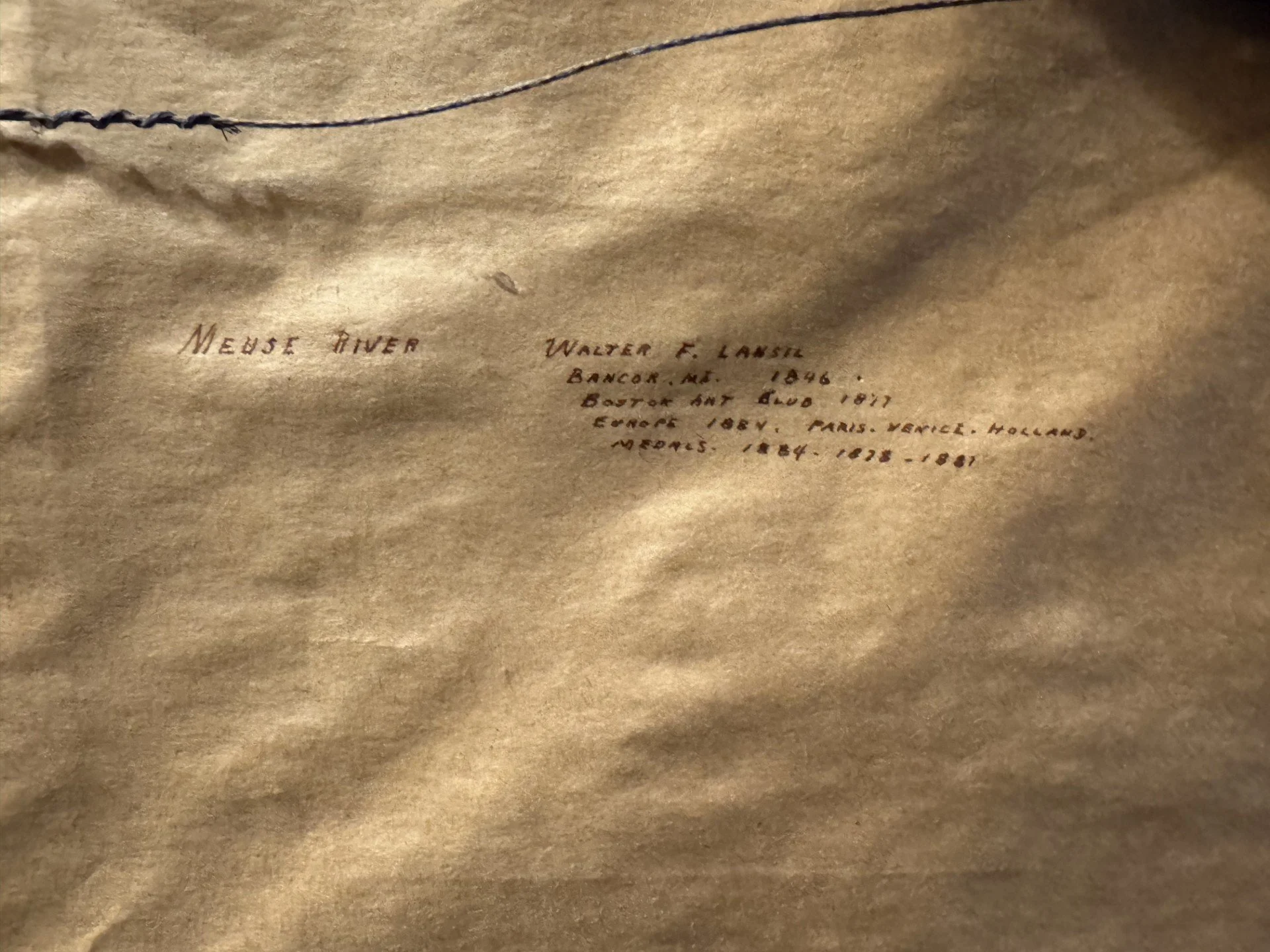
Shown here is an oil painting in the Mayflower Descendants Museum collection identified on the reverse as Meuse River. The scene centers on a large windmill beside a waterway, with low buildings and an expansive atmospheric sky. The reverse also bears an old handwritten biographical inscription recording Lansil’s connections with Bangor and Boston and his European travels, including Paris, Venice, and Holland.
The Meuse, or Maas in Dutch, is one of the great rivers of western Europe, flowing through France, Belgium, and the Netherlands before reaching the North Sea. Lansil traveled and studied in Europe with his younger brother, Wilber Henry Lansil, and contemporary biographical records document their travel through Holland as part of that artistic journey.
For Walter, water remained a recurring subject wherever he traveled. Whether painting Boston Harbor, ships at sea, Venetian canals, or a windmill beside the Meuse, he repeatedly returned to the relationship between architecture, atmosphere, and water.
A Mayflower Descendant Returning to Holland
Lansil was also a Mayflower descendant. Genealogical research identifies him as a seventh great-grandson of Mayflower passenger William Brewster and as a descendant of Stephen Hopkins through two lines. (Mayflower Kin)
The Brewster connection makes Lansil’s travels in Holland particularly interesting. Before William Brewster crossed the Atlantic aboard the Mayflower in 1620, he lived with the English Separatist congregation in the Netherlands. Brewster first reached Holland in 1608 and settled in Leiden in 1609, where he served as an elder of the congregation. (Pilgrim Hall Museum)
During the congregation’s years in Leiden, Brewster also became involved in printing religious works. Between 1617 and 1619, the press associated with Brewster produced controversial religious books that were prohibited in England, leading English authorities to pursue him and eventually seize the printing type. (Pilgrim Hall Museum)
More than two and a half centuries later, Brewster’s descendant Walter Franklin Lansil traveled through Holland as an artist and painted the landscape of the region. The Museum’s Meuse River scene therefore brings together two different chapters of the same family history: William Brewster’s years in the Netherlands before the Mayflower voyage and Walter Lansil’s later artistic travels through Europe.
An Artist of the Sea and Venice
Lansil became especially associated with Venice. The Whistler House Museum of Art has described Venice as one of the great sources of inspiration for his career and has exhibited his maritime and Venetian works together in an exhibition devoted to the artist. (Whistler House Museum of Art)
His work also entered institutional collections. The Museum of Fine Arts, Boston recorded an oil painting by Lansil titled Fishermen Becalmed in its nineteenth-century annual reporting, and works by Lansil are associated today with collections including the McMullen Museum of Art at Boston College. (Wikimedia Commons)
Lansil’s younger brother Wilber developed his own career as a painter of cattle and landscapes. The two brothers traveled to Europe together and later exhibited together in Boston, creating an unusual artistic partnership within the same family: Wilber became closely associated with the land and animals, while Walter became increasingly identified with the sea, harbors, ships, Venice, and water.
The Museum’s Meuse River adds another chapter to that story—a Mayflower-descendant marine painter carrying his artistic interest in water into the European landscape.
Holdings of the Mayflower Descendants Museum
Sources and Further Reading
Smithsonian Institution, Archives of American Art — Walter Lansil Memoir “A Trip to Venice,” 1914. The collection contains two handwritten drafts in which Lansil describes Venice, his reactions to the city, and his intention to study art there. (American Alliance of Museums)
Explore Walter Lansil's memoir at the Smithsonian
Pilgrim Hall Museum — William Brewster. Biography documenting Brewster’s role in the Separatist congregation, his move to Holland, settlement in Leiden, work as an elder, and later voyage aboard the Mayflower. (Pilgrim Hall Museum)
Read the William Brewster biography
Pilgrim Hall Museum — The Pilgrim Press. History of Brewster’s printing activities in Leiden between 1617 and 1619 and the suppression of the press by English authorities. (Pilgrim Hall Museum)
Read about Brewster's Pilgrim Press
Pilgrim Hall Museum — Exile in Holland. History of the English Separatist congregation’s years in the Netherlands before the Mayflower voyage. (Pilgrim Hall Museum)
Read about the Pilgrims in Holland
MayflowerKin — Walter F. Lansil. Genealogical charts identifying Lansil as a seventh great-grandson of William Brewster and a descendant of Stephen Hopkins through two lines. (Mayflower Kin)
View Walter Lansil's Mayflower connections
Whistler House Museum of Art — The Allure of Venice. Exhibition material discussing Lansil’s maritime and Venetian paintings and the importance of Venice to his career. (Whistler House Museum of Art)
Explore The Allure of Venice
Historic New England — Boston Art Club scrapbook. Archival material relating to the Boston Art Club that includes Walter F. Lansil among the artists represented in the collection. (Historic New England)
View the Boston Art Club archive record