Constance Whitney Warren — Mayflower Descendant, Paris Salon Sculptor, and a Metropolitan Arts Family
Constance Whitney Warren (1888–1948)
American Sculptor | Mayflower Descendant
Constance Whitney Warren (1888–1948) was an American sculptor and descendant of four Mayflower passengers—John Howland, Elizabeth Tilley, John Tilley, and Joan Hurst—whose work connected American heritage with the international art world. Born into a prominent New York family, Warren became known particularly for sculptures of horses, cowboys, and the human figure.
Warren demonstrated an early interest in drawing and painting horses, influenced in part by her father's experiences in the American West. After moving to France, she pursued sculpture seriously and exhibited at the Paris Salon. Her sculpture The Cowboy, also known as Texas Cowboy or Bronco Rider, received an honorable mention at the Paris Salon in 1923.
Warren's artistic achievements extended into major American public spaces. Her monumental bronze The Cowboy was donated to the State of Texas and unveiled on the grounds of the Texas State Capitol in Austin in 1925. The sculpture commemorates the American cowboy and remains part of the Capitol's historic landscape.
Another monumental work, Tribute to Range Riders, was installed at the Oklahoma State Capitol in Oklahoma City in 1929. It became the first sculpture installed on the Capitol grounds and was formally dedicated in 1957. Warren also created Lariat Cowboy, a public sculpture associated with Phoenix, Arizona.
Her work has been represented in several American museum collections. Princeton University Library preserves a smaller bronze cast of Bronco Rider, while other documented works include William S. Hart (1921) at the Gilcrease Museum, Steeplechase (1921) at the Philbrook Museum of Art, and Hackney No. 1 (1920) at the Rhode Island School of Design Museum.
Warren's family was deeply connected to the development of New York's cultural institutions. Her grandfather, George Henry Warren, was associated with the founding of the Metropolitan Opera, established in 1883. Her father, George Henry Warren II, was a founder of the Metropolitan Opera and Real Estate Company, which was associated with the opera house's property and development.
Warren's own artistic career later connected her to another major New York institution: the Metropolitan Museum of Art. The museum held her bronze sculpture Standing Horse, No. 1 (1922) for decades before deaccessioning it on June 9, 2014. Art historian Scott A. Sullivan documented the work's subsequent presence in his private collection in a 2015 study of Warren's career.
Her personal life also connected her to another chapter of American history. In 1912, Warren married Count Guy de Lasteyrie, a great-great-grandson of the Marquis de Lafayette (1757–1834), the French aristocrat and military officer who became a major figure in the American Revolutionary War and maintained close relationships with Founding Fathers including George Washington, Alexander Hamilton, and Thomas Jefferson. The couple lived in France, dividing their time between Paris and the Château de la Grange-Bléneau, a historic Lafayette family residence. Their marriage ended in divorce in the early 1920s.
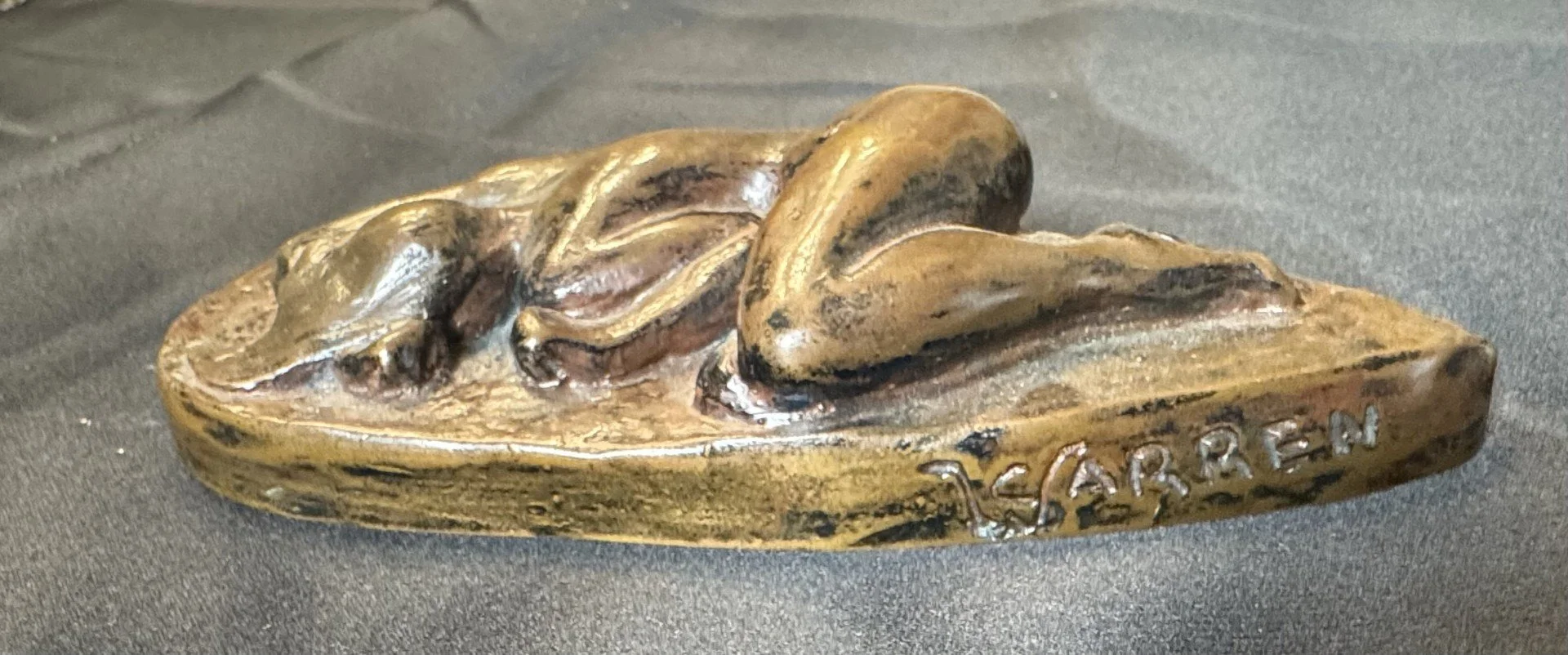
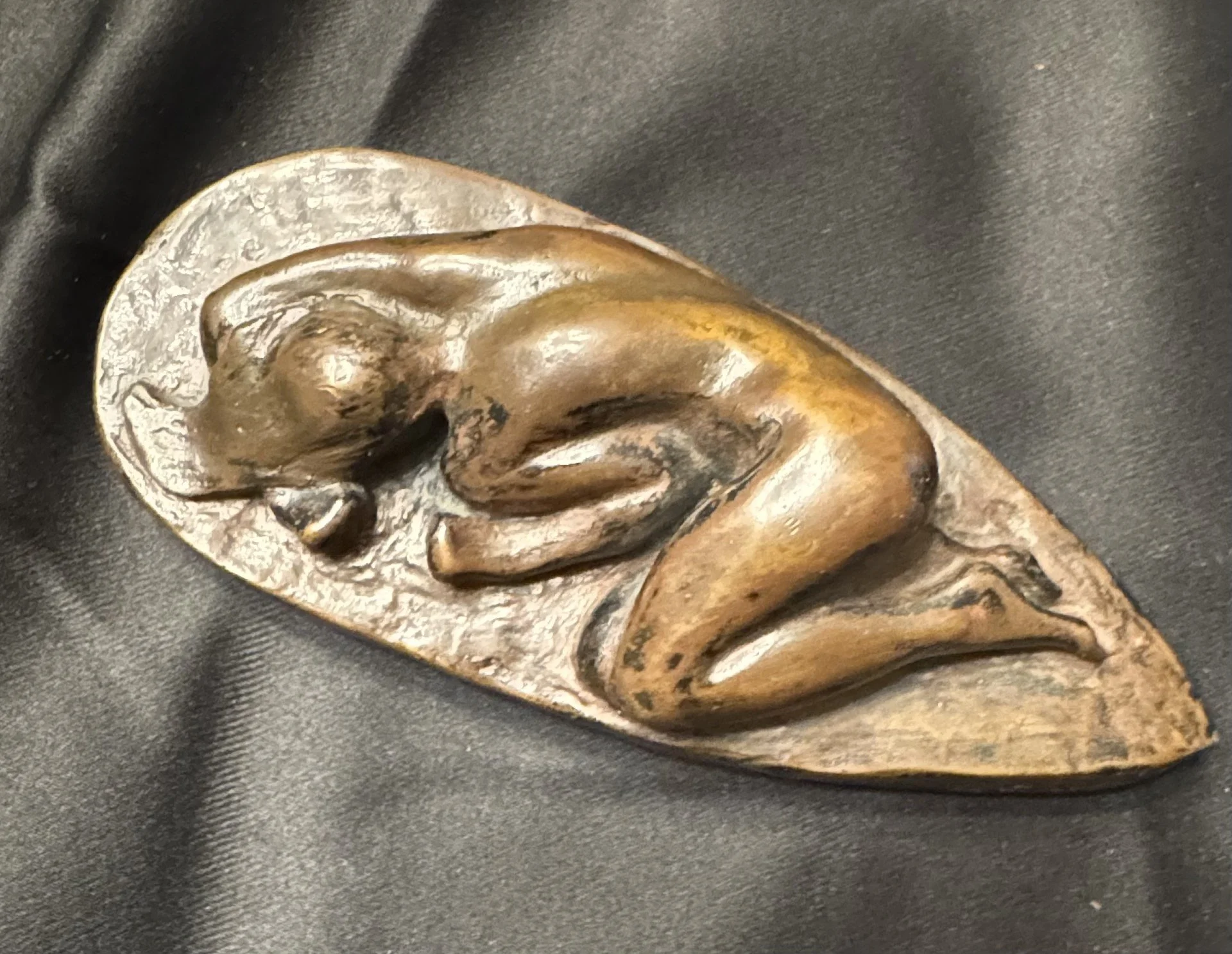
Shown here is a signed bronze nude by Warren in the holdings of the Mayflower Descendants Museum. The work adds another dimension to an artist remembered particularly for her equestrian subjects and monumental public sculptures.
Together, Warren's Mayflower ancestry, Parisian artistic career, public monuments, museum representation, and family connections reveal intersecting threads of American art, cultural institutions, the American West, and Revolutionary War history.
Sources and Further Reading
Princeton University Library. “Constance Whitney Warren.” Graphic Arts Collection, January 10, 2016. Documents Warren's artistic career, Bronco Rider, the 1923 Paris Salon honorable mention, the Texas State Capitol sculpture, and her father's connection to the Metropolitan Opera and Real Estate Company.
https://graphicarts.princeton.edu/2016/01/10/constance-whitney-warren/Sullivan, Scott A. “Constance Whitney Warren: Sculptor in a Man's World.” 2015. An art-historical study examining Warren's artistic development, sculptures, museum representation, and the Metropolitan Museum of Art's June 9, 2014, deaccession of Standing Horse, No. 1.
https://repository.tcu.edu/bitstreams/10babea5-e88a-407f-a6ae-f91c39e5acab/downloadSmithsonian Institution. The Cowboy (Texas Cowboy). Inventory of American Sculpture. Documents Warren's monumental sculpture at the Texas State Capitol in Austin, Texas.
Oklahoma Arts Council. Teaching with Capitol Art: Tribute to Range Riders. Documents the history of Warren's monumental sculpture at the Oklahoma State Capitol, including its installation and subsequent dedication.
https://www.arts.ok.gov/pdf/Teaching_with_Capitol_Art/CAC/TWCA_Field_trip.pdfGardner, Albert TenEyck. American Sculpture: A Catalogue of the Collection of the Metropolitan Museum of Art. New York: Metropolitan Museum of Art, 1965, p. 161. Documents Warren's representation in the museum's American sculpture collection.
The New York Times. “The Texas Cowboy Rides at Austin.” February 1, 1925. Contemporary reporting on Warren's monumental bronze sculpture presented to the State of Texas.
The New York Times. “Miss Warren Weds Count.” December 20, 1912. Contemporary reporting of Warren's marriage to Count Guy de Lasteyrie.
Wikidata. “WikiProject Genealogy/Mayflower Descendants.” Entry for Constance Whitney Warren (Q50414394), identifying her descent from Mayflower passengers John Howland, Elizabeth Tilley, John Tilley, and Joan Hurst.
https://www.wikidata.org/wiki/Wikidata:WikiProject_Genealogy/Mayflower_descendantsMayflower Descendants Museum. Collection records for the signed bronze sculpture by Constance Whitney Warren.
Holdings of the Mayflower Descendants Museum.