The Lay Family — Art, Landscape, and a Legacy Across Generations
The Museum holds three generations of art and artifacts from this family
Research conducted by the Mayflower Descendants Museum indicates that the Lay family represented in this preview descends from Mayflower passenger William Brewster. This multigenerational story begins with American painter Oliver Ingraham Lay (1845–1890), continues through his son, landscape architect and artist Charles Downing Lay (1877–1956), and extends into the present through contemporary artist Pat Lay, Oliver’s great-granddaughter and Charles’s granddaughter. The Museum’s holdings reveal a notable intersection of American artists within the Lay family through works of art and related artifacts.
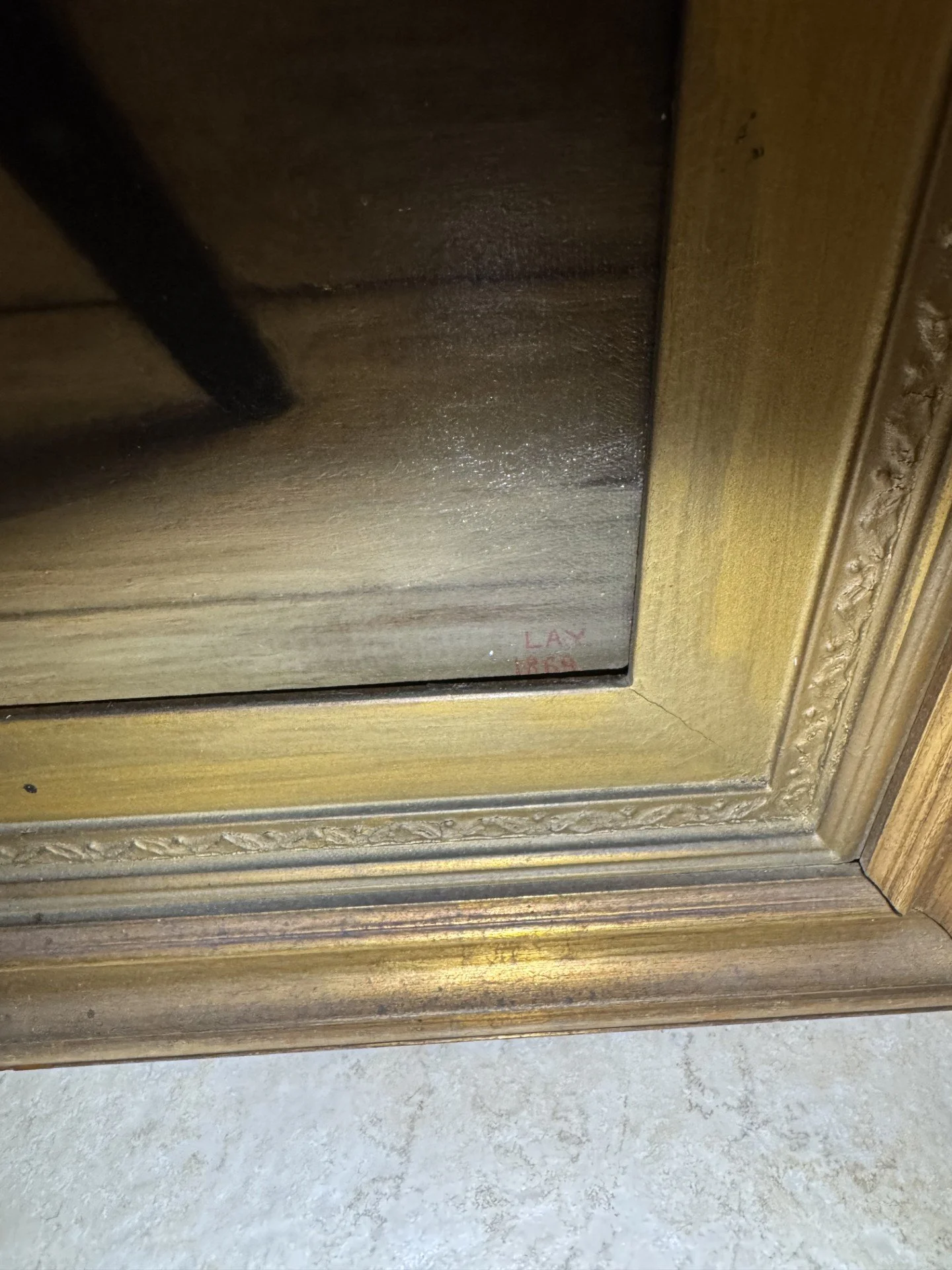
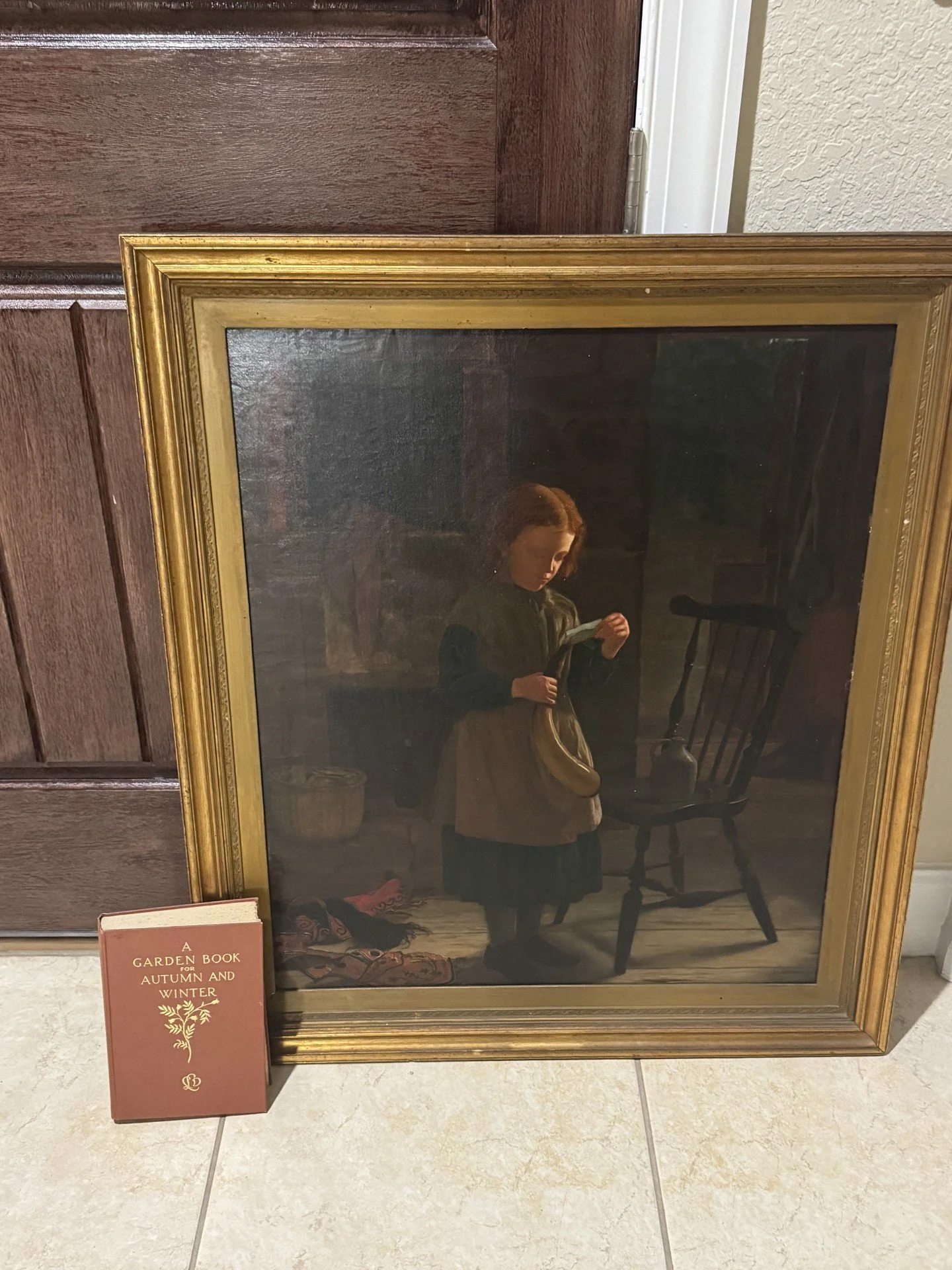
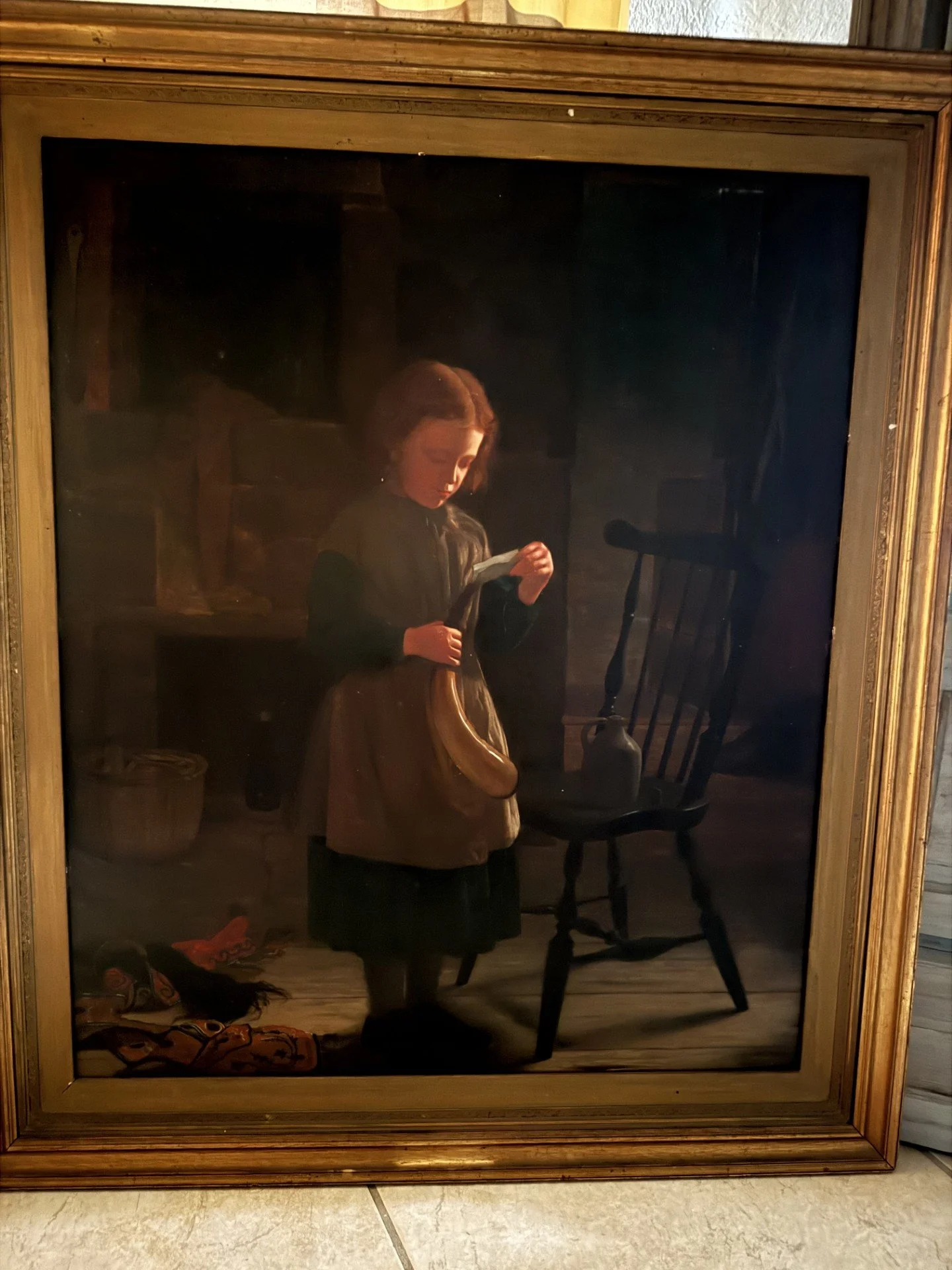
At the beginning of this artistic line is Oliver Ingraham Lay’s 1869 painting known as Filling the Powder Horn. The work centers on a young girl engaged in the task suggested by its recorded title, transforming an everyday nineteenth-century moment into a carefully observed genre scene. Lay studied at the Cooper Institute and the National Academy of Design and became known especially for his portraiture and genre paintings. In 1876, he was elected to the National Academy of Design.
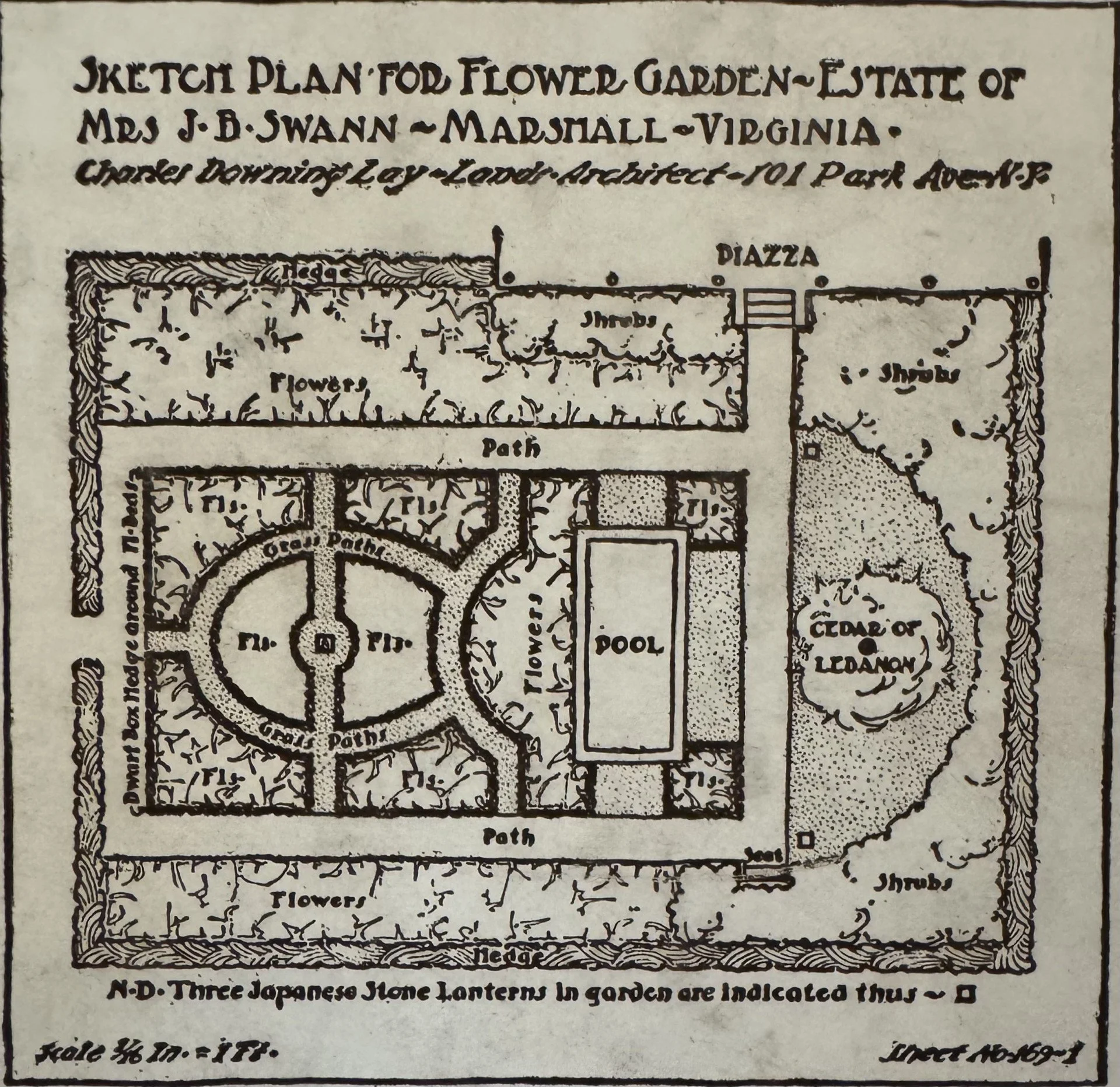
Oliver’s artistic legacy continued through his son, Charles Downing Lay, although Charles ultimately became best known as one of the important American landscape architects of his generation. He studied architecture at Columbia University before continuing his education at Harvard’s School of Landscape Architecture, graduating in 1902. He established a landscape practice in New York and worked on gardens, parks, residential landscapes, and public planning projects throughout his career.
Charles also helped establish the professional journal Landscape Architecture and served as its editor and manager for more than a decade. He later worked in connection with the 1939 New York World’s Fair, undertook landscape work for the United States Navy during World War II, and became a National Academician in 1948.
His work even reached the Olympic stage. Charles Downing Lay received a silver medal in the architecture category of the art competitions associated with the 1936 Berlin Olympic Games for his plan for Marine Park in Brooklyn. At the time, architecture, painting, sculpture, literature, and music were included among the Olympic arts competitions.
Charles was also an artist and writer in his own right. In 1924, he published A Garden Book for Autumn and Winter through Duffield & Company. Rather than treating the garden primarily as a spring-and-summer subject, the book focused attention on the landscape during the colder months and considered how structure, planting, form, and design could continue to create beauty throughout autumn and winter.
His visual-art practice continued alongside his landscape architecture. Surviving materials in the Lay family papers at the Smithsonian Archives of American Art include Charles’s watercolor, pencil, and ink sketches, landscapes, figure studies, architectural drawings, and other works.
The Mayflower Descendants Museum has now purchased an original watercolor by Charles Downing Lay.
Under the applicable copyright term for qualifying unpublished works, the Museum therefore plans to reveal online the watercolor in January 2027, when that term has expired, unless permission to reproduce it is obtained beforehand.
The artistic story continues for another generation.
The Museum also holds artwork by contemporary artist Pat Lay, Oliver Ingraham Lay’s great-granddaughter and Charles Downing Lay’s granddaughter. Her work extends this artistic story into another generation, connecting nineteenth-century painting, twentieth-century landscape architecture, and contemporary art within one family.
From the young girl in Oliver Ingraham Lay’s painting known as Filling the Powder Horn, to Charles Downing Lay’s gardens, writing, watercolors, and public landscapes, to the contemporary work of Pat Lay, this collection allows the Museum to explore something larger than the career of a single artist: how artistic creativity can move through a family across generations.
Sources and Further Readings
National Academy of Design — Charles Downing Lay
Charles Downing Lay — National Academy of DesignSmithsonian Archives of American Art — Oliver Ingraham Lay, Charles Downing Lay, and Lay Family Papers, 1789–2000
Lay Family Papers — Smithsonian Archives of American ArtThe Cultural Landscape Foundation — Charles Downing Lay
Charles Downing Lay — The Cultural Landscape FoundationCornell University Library — Charles Downing Lay Papers, 1898–1956
Charles Downing Lay Papers — Cornell University LibraryPat Lay — Artist Biography and Résumé
Pat Lay — Résumé
Genealogical research: Mayflower Descendants Museum research using historical records and genealogical databases, including Ancestry and other genealogical sources. The Brewster descent discussed here reflects the Museum’s independent research and has not been presented as a formally verified lineage by a Mayflower lineage society.