
Writer Henry Wadsworth Longfellow and His Artist Son, Ernest Wadsworth Longfellow
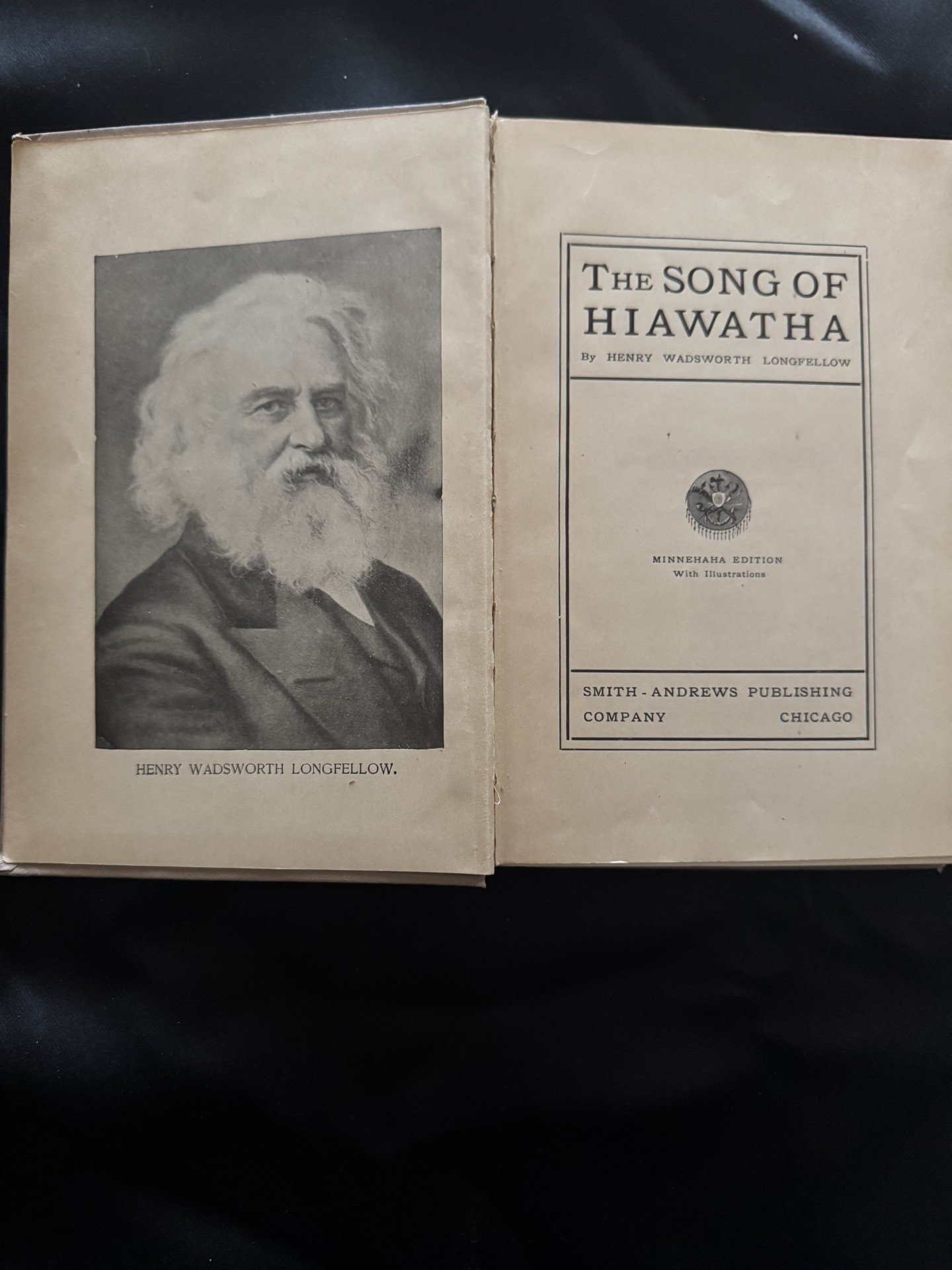
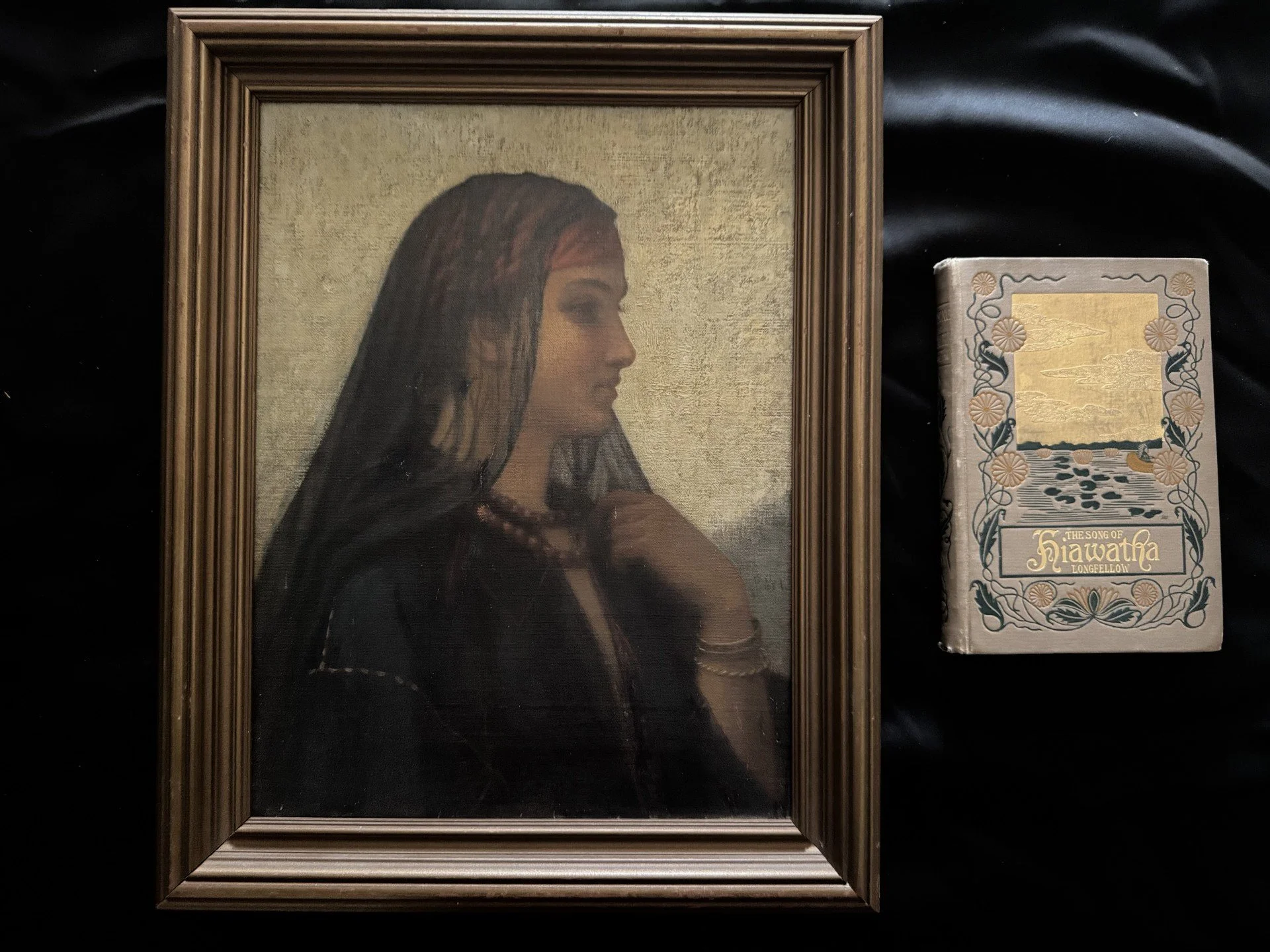
Henry Wadsworth Longfellow (1807–1882) became one of the most celebrated American poets of the nineteenth century. Among the works that helped shape his legacy was The Song of Hiawatha, first published in 1855. The Mayflower Descendants Museum holds an 1898 copy of The Song of Hiawatha, published by Smith-Andrews Publishing Company of Chicago as the Minnehaha Edition, reflecting the continued popularity of Longfellow’s writing decades after its original publication. (HathiTrust Digital Library)
Longfellow’s artistic legacy also continued through his son, Ernest Wadsworth Longfellow (1845–1921), who became an accomplished painter. Ernest studied in London and Paris before establishing a studio in Boston in 1869. He continued his artistic training in France and Italy with painters including Léon Bonnat, G. P. A. Healy, and Thomas Couture. By the 1870s, his career was well established: an 1876 exhibition resulted in the sale of more than one hundred paintings, and he later served as vice president of the Boston Art Club. (National Park Service)
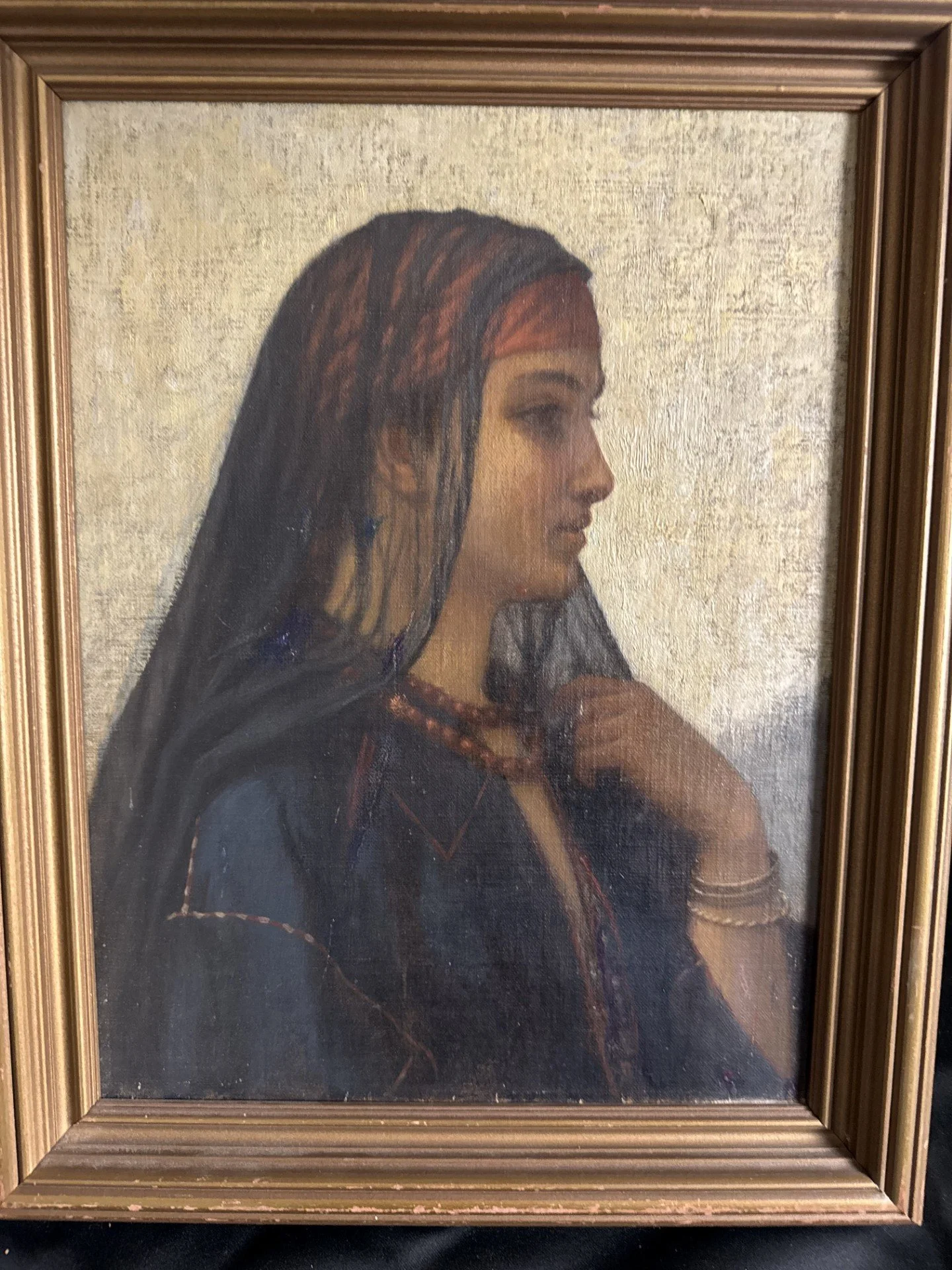
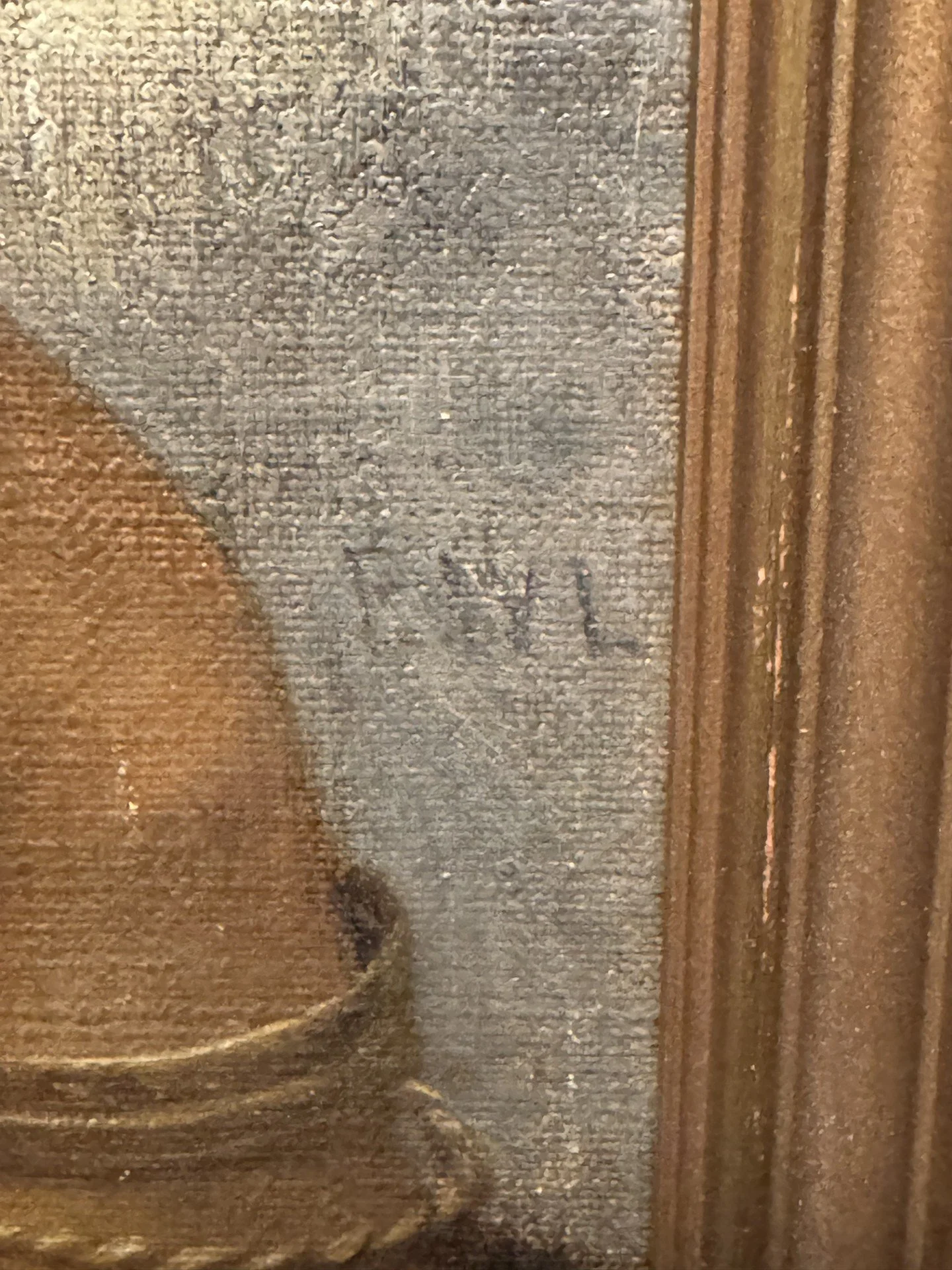
The painting shown here is a close-up from a larger composition by Ernest Wadsworth Longfellow depicting a group traveling along the Nile. The Museum’s detail focuses on one of the women within that larger scene.
There is particularly compelling evidence connecting the work to Ernest’s travels in Egypt. Ernest and his wife, Harriet “Hattie” Spelman Longfellow, traveled down the Nile for the first time during the winter of 1878–1879. The collection of the Longfellow House–Washington’s Headquarters National Historic Site contains several paintings documenting this period, including View of the Nile with Ruins of Kom Ombo Temple, dated 1879; View of the Nile, circa 1879; and Sailboats Along the Nile. (NPGallery)
Because Longfellow is documented painting Nile subjects during this journey, the Museum’s work may date to around 1879 or the period immediately surrounding his Egyptian travels. Further research will be needed before assigning a more precise date.
Together, the objects tell a story of creativity moving from one generation to another: Henry Wadsworth Longfellow through literature and Ernest Wadsworth Longfellow through painting. They also demonstrate how the arts within one family could take very different forms while becoming part of a broader American cultural story.
Sources & Further Reading
National Park Service — Ernest Longfellow, Longfellow House–Washington’s Headquarters National Historic Site. (National Park Service)
National Park Service — Oil Paintings in the Longfellow House–Washington’s Headquarters NHS Collection. (NPGallery)
National Park Service — Sailboats Along the Nile by Ernest Wadsworth Longfellow. (National Park Service)
HathiTrust — Henry Wadsworth Longfellow, The Song of Hiawatha, Minnehaha Edition, Smith-Andrews Publishing Company, 1898. (HathiTrust Digital Library)