
The Pearce Brothers
Artist Charles Sprague Pearce and Artist William Houghton Sprague Pearce
Two Mayflower-Descendant Brothers: Charles Sprague Pearce and William Houghton Sprague Pearce
Charles Sprague Pearce (1851–1914) was born in Boston and became one of the better-known American artists working in France during the late nineteenth century. A contemporary biographical account identifies him as the son of Shadrach Houghton Pearce and Mary Anna Sprague Pearce. He traveled in Egypt and Algeria in 1873–74, studied painting in Paris with Léon Bonnat, exhibited frequently at the Paris Salon as well as in New York, Boston, and Philadelphia, and received numerous international honors, including appointment as a Chevalier of the French Legion of Honor in 1894. (The Biographical Dictionary of America — Charles Sprague Pearce)
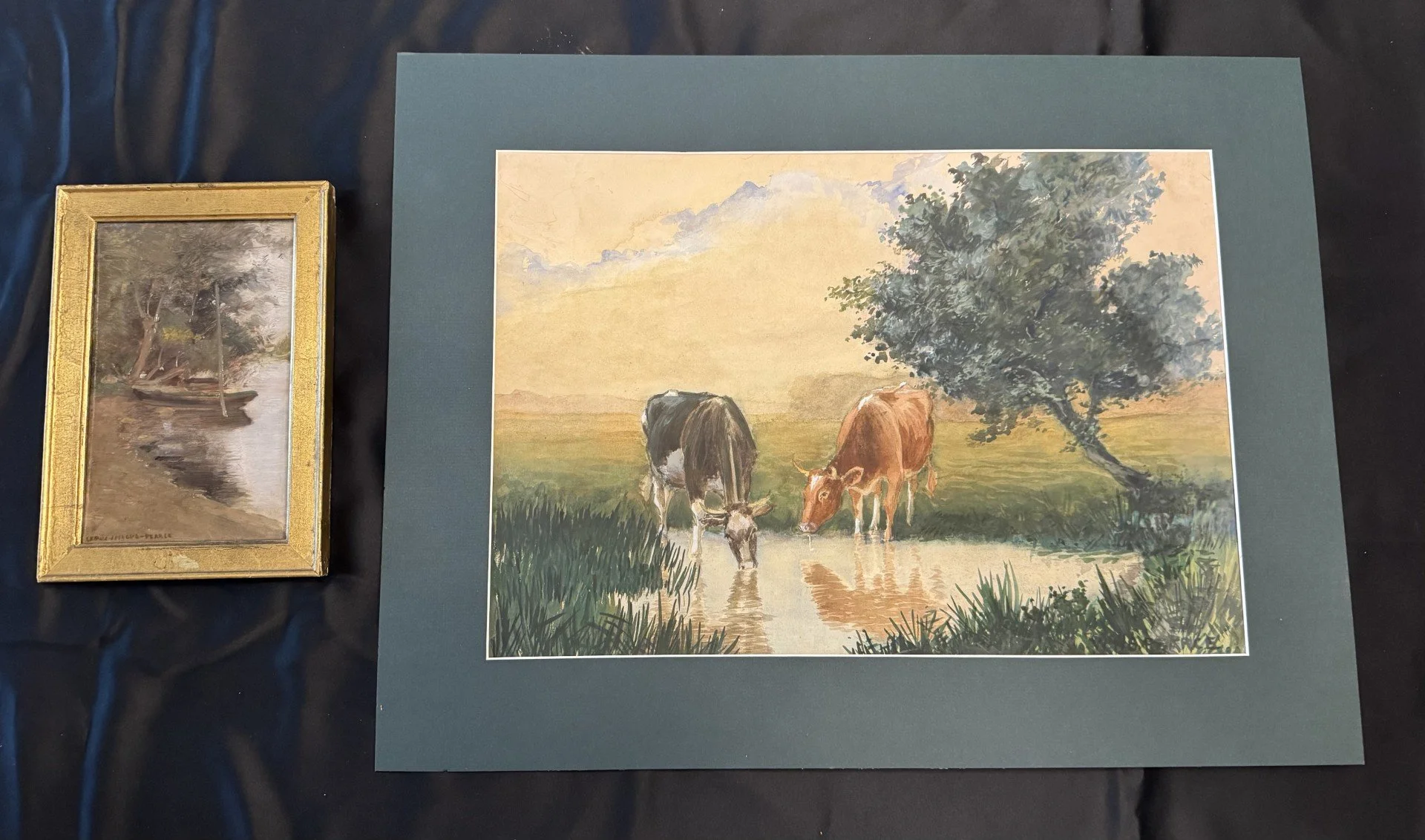
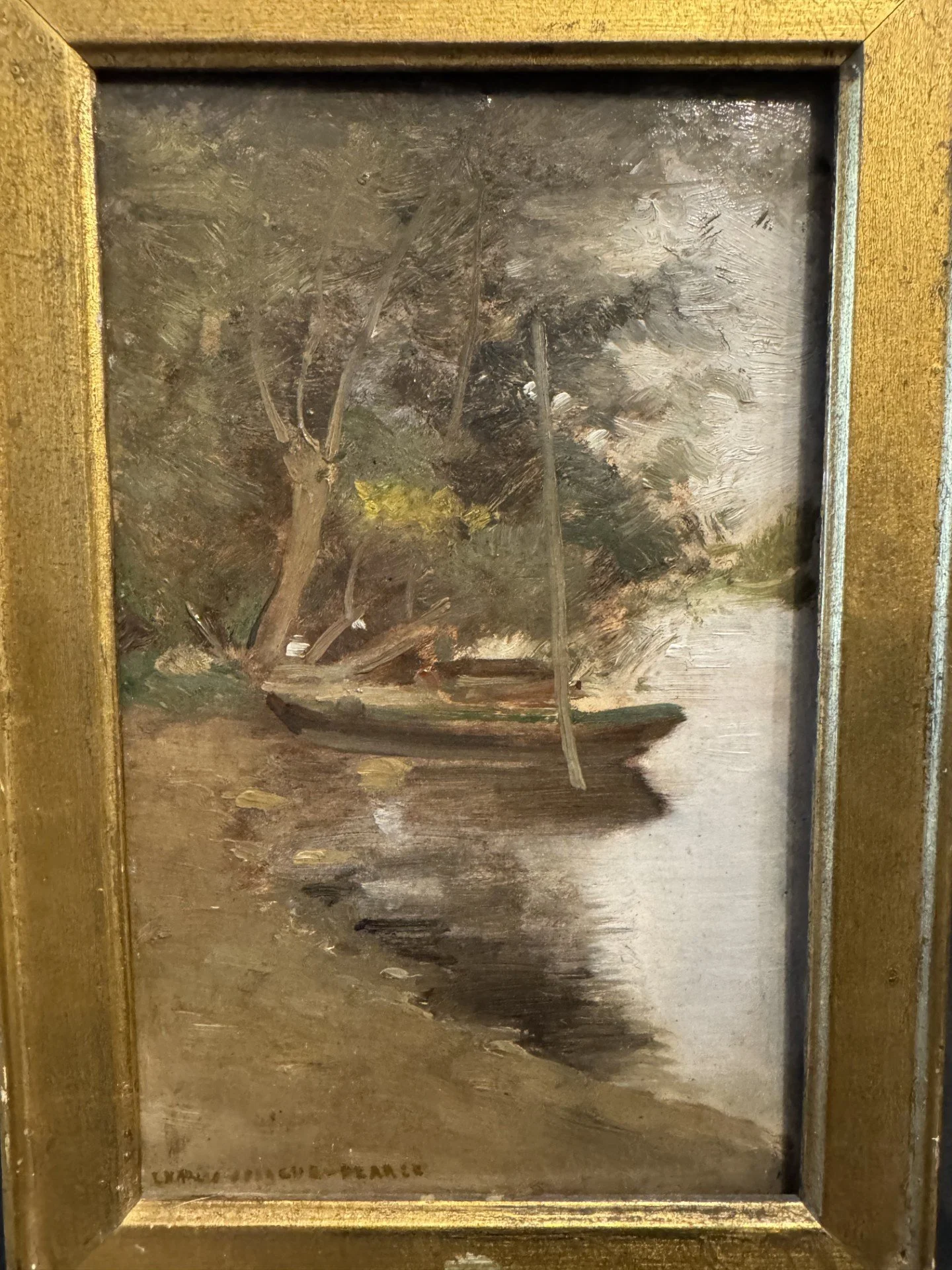
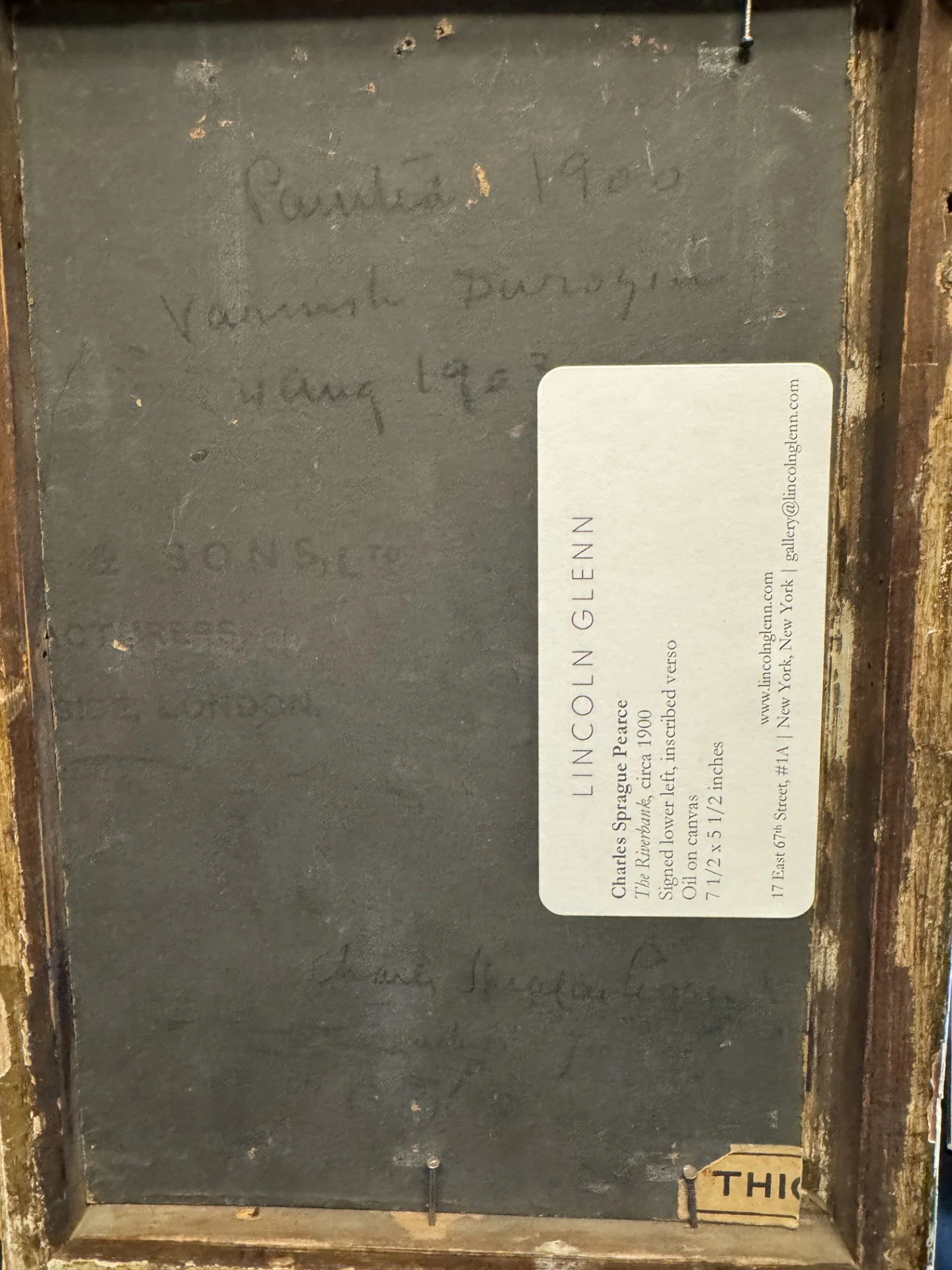
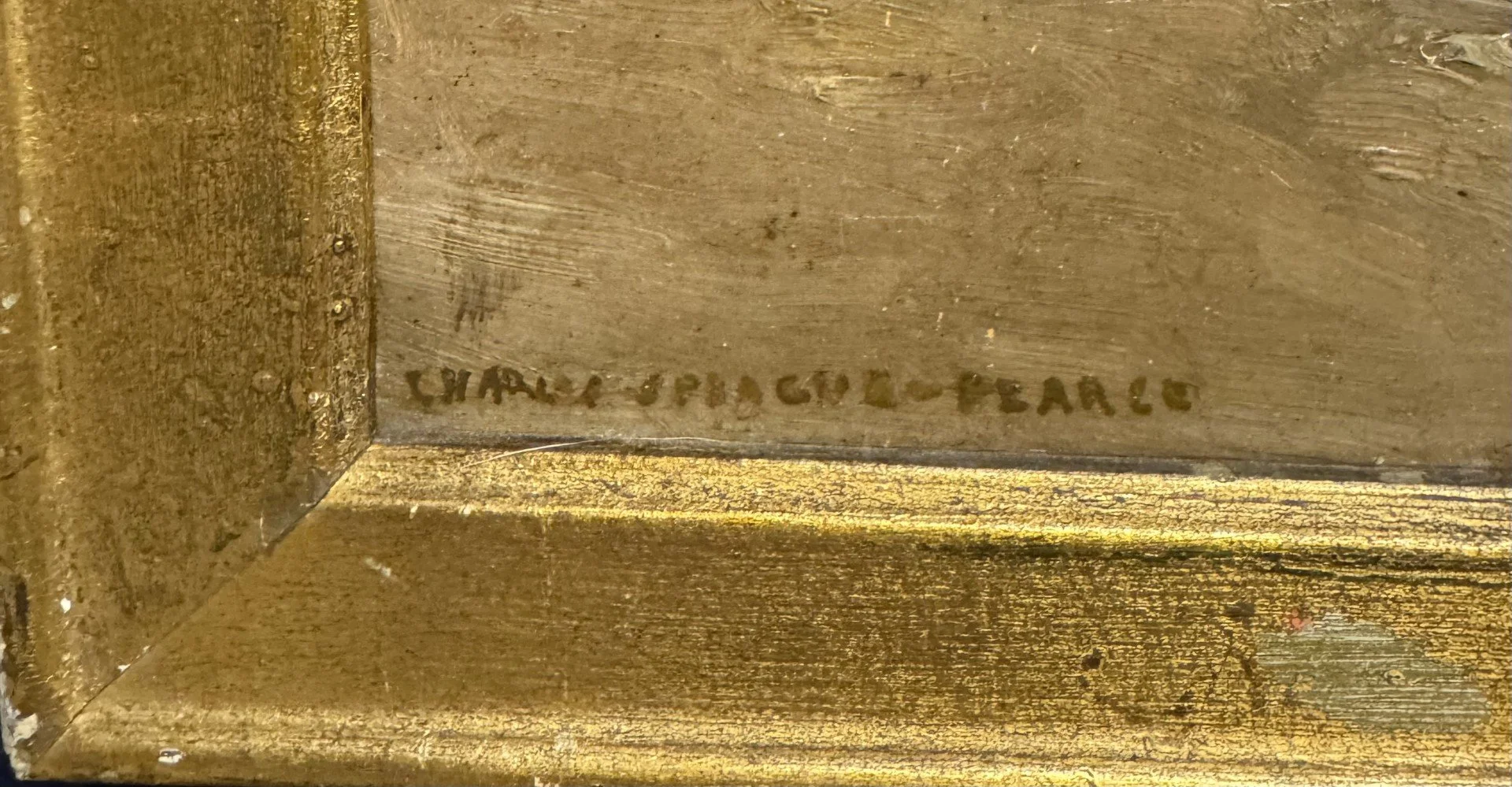
The Mayflower Descendants Museum’s work by Charles is a small oil on canvas identified on its verso label as The Riverbank, circa 1900. The intimate painting shows a moored boat along a quiet bank, handled with a sketch-like immediacy that gives the work a spontaneous, impressionistic quality. Though modest in scale, it offers a compelling glimpse of Charles Sprague Pearce’s painterly touch and sensitivity to atmosphere.
Charles was not the only artist in his immediate family.
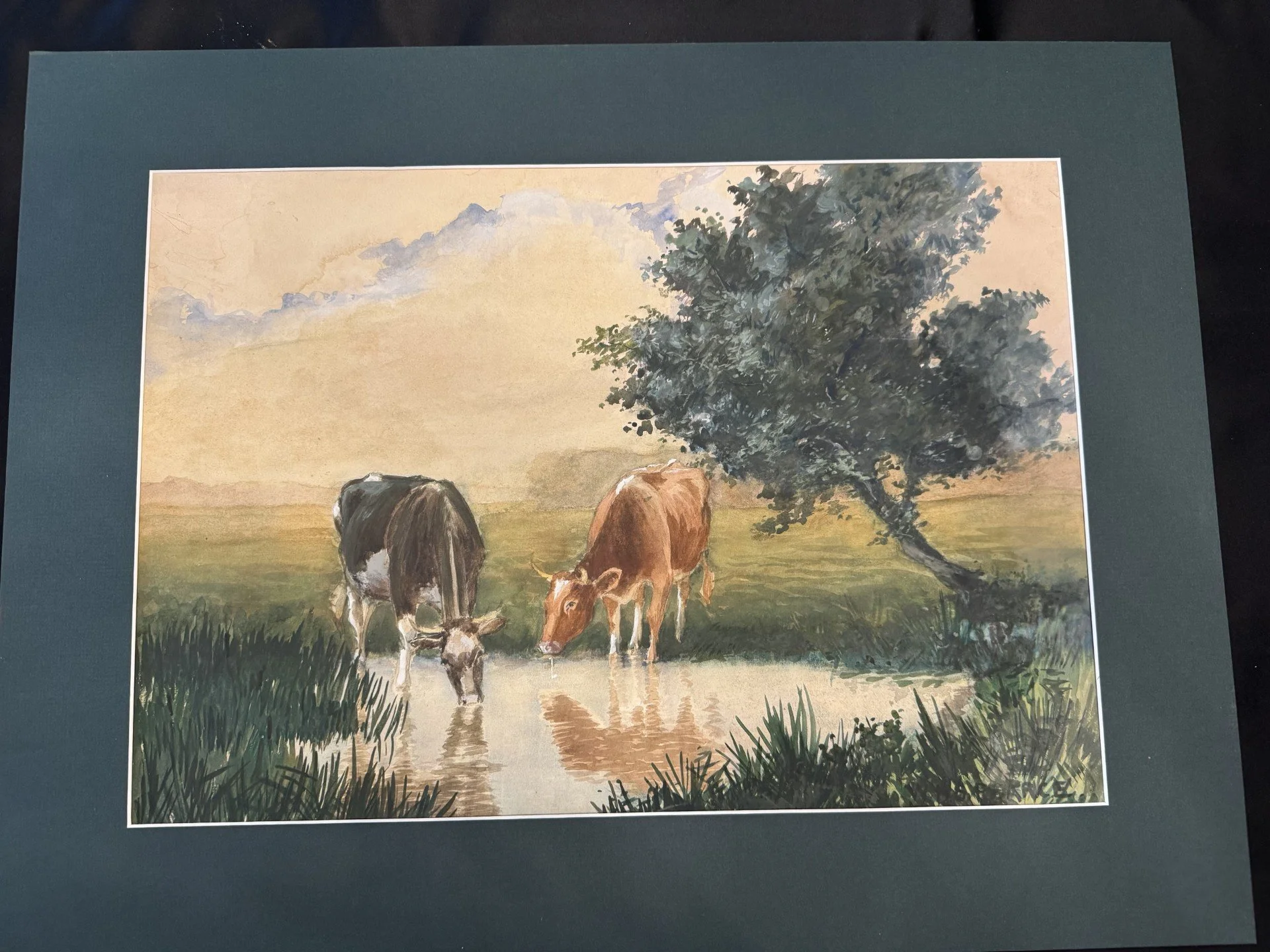
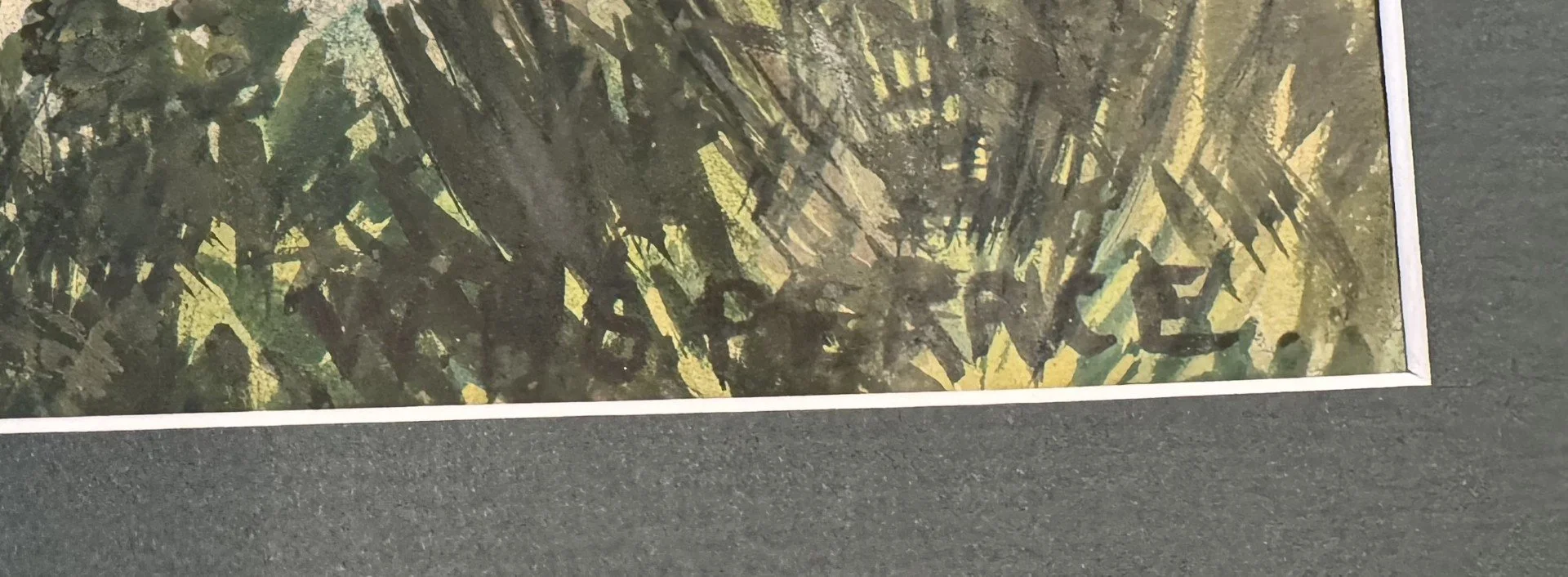
His younger brother, William Houghton Sprague Pearce (1864–1935), was also a painter. William remained in Massachusetts and became known especially for landscapes, cattle, and pastoral subjects. The Museum’s watercolor depicts two cows drinking at the edge of a reflective body of water beneath a tree. (askART — William Houghton Sprague Pearce)
Two Brothers, One Mayflower Line
The brothers also shared a direct connection to the Mayflower.
Published family research identifies William Houghton Sprague Pearce as a descendant of Mayflower passenger Richard Warren. Because Charles and William were brothers—the sons of the same parents, Shadrach Houghton Pearce and Mary Anna Sprague Pearce—the same ancestral line makes both Charles and William Mayflower descendants. (askART — William Houghton Sprague Pearce)
Their family history also connects them to later chapters of Massachusetts history. Their maternal grandfather was Boston poet Charles Sprague, and their maternal great-grandfather was Samuel Sprague, a participant in the Boston Tea Party and a Revolutionary War veteran. (askART — William Houghton Sprague Pearce) (Boston Tea Party Ships & Museum — Samuel Sprague)
The presence of works by two Mayflower-descendant brothers in the same Museum collection provides an unusual opportunity to examine how artistic interests developed within one family while the brothers themselves followed very different paths.
Charles left Boston for Europe as a young man, established himself in France, exhibited internationally, and became a decorated professional artist. William remained closer to home, pursued a long career with the New England Mutual Life Insurance Company, and continued painting throughout his life. (National Academy of Design — Charles Sprague Pearce) (askART — William Houghton Sprague Pearce)
Yet geographic distance did not end their artistic relationship.
Family biographical research records that the brothers remained in contact for approximately four decades. William reportedly sent Charles photographs of his paintings and asked his older brother for advice and criticism, while their correspondence discussed composition, values, lighting, painting techniques, style, and even pricing. Their artistic exchange continued until Charles’s death in France in 1914. (askART — William Houghton Sprague Pearce)
That correspondence makes the Museum’s two works especially interesting when viewed together.
They are not simply works by two artists who happened to share a surname. They represent two brothers, both painters and both descendants of Mayflower passenger Richard Warren, whose artistic lives remained connected despite developing on opposite sides of the Atlantic.
Comparing the Brothers’ Art
Displaying the two works together also allows viewers to compare and contrast the brothers’ artistic approaches directly.
Charles’s The Riverbank is an oil painting with a loosely handled, atmospheric quality. Its small scale and visible painterly handling give the scene an immediacy that differs from the more formal works for which Charles was internationally recognized.
William’s watercolor approaches a pastoral subject through an entirely different medium. Two cattle stand at the water’s edge beneath a tree, allowing watercolor, reflection, vegetation, and open landscape to create a quieter rural scene.
Placed side by side, the works invite viewers to compare the brothers’ choices of subject, composition, brushwork, color, atmosphere, light, and technique—and to consider whether any shared artistic sensibilities can be recognized alongside the differences that developed through their separate careers and experiences.
One brother became an internationally recognized expatriate artist in France.
The other continued painting landscapes and pastoral subjects while building his life in Massachusetts.
Yet surviving accounts indicate that they continued discussing art across the Atlantic for decades.
Together, the Museum’s two works preserve not only two individual artistic careers, but also a family relationship, an artistic dialogue, and a shared Mayflower lineage extending back to Richard Warren.
Holdings of the Mayflower Descendants Museum.
Sources & Further Reading
National Academy of Design — Charles Sprague Pearce
Biographical information on Pearce’s Boston origins, Paris training, career in France, and artistic achievements.
Charles Sprague Pearce — National Academy of Design
The Biographical Dictionary of America — Charles Sprague Pearce
Contemporary biographical account identifying Charles’s parents and documenting his travels in Egypt and Algeria, studies with Léon Bonnat, exhibitions, and international honors.
Charles Sprague Pearce — The Biographical Dictionary of America
askART — William Houghton Sprague Pearce
Biographical account identifying William as Charles’s younger brother, documenting his painting career, Richard Warren descent, and the brothers’ decades-long artistic correspondence.
William Houghton Sprague Pearce — askART
Boston Tea Party Ships & Museum — Samuel Sprague
Biographical account of the brothers’ maternal great-grandfather Samuel Sprague and his participation in the Boston Tea Party and Revolutionary War.
Samuel Sprague — Boston Tea Party Ships & Museum