
John Singer Sargent Memorial Exhibition, The Metropolitan Museum of Art, 1926
Featuring Mayflower Descendant General Charles Jackson Paine
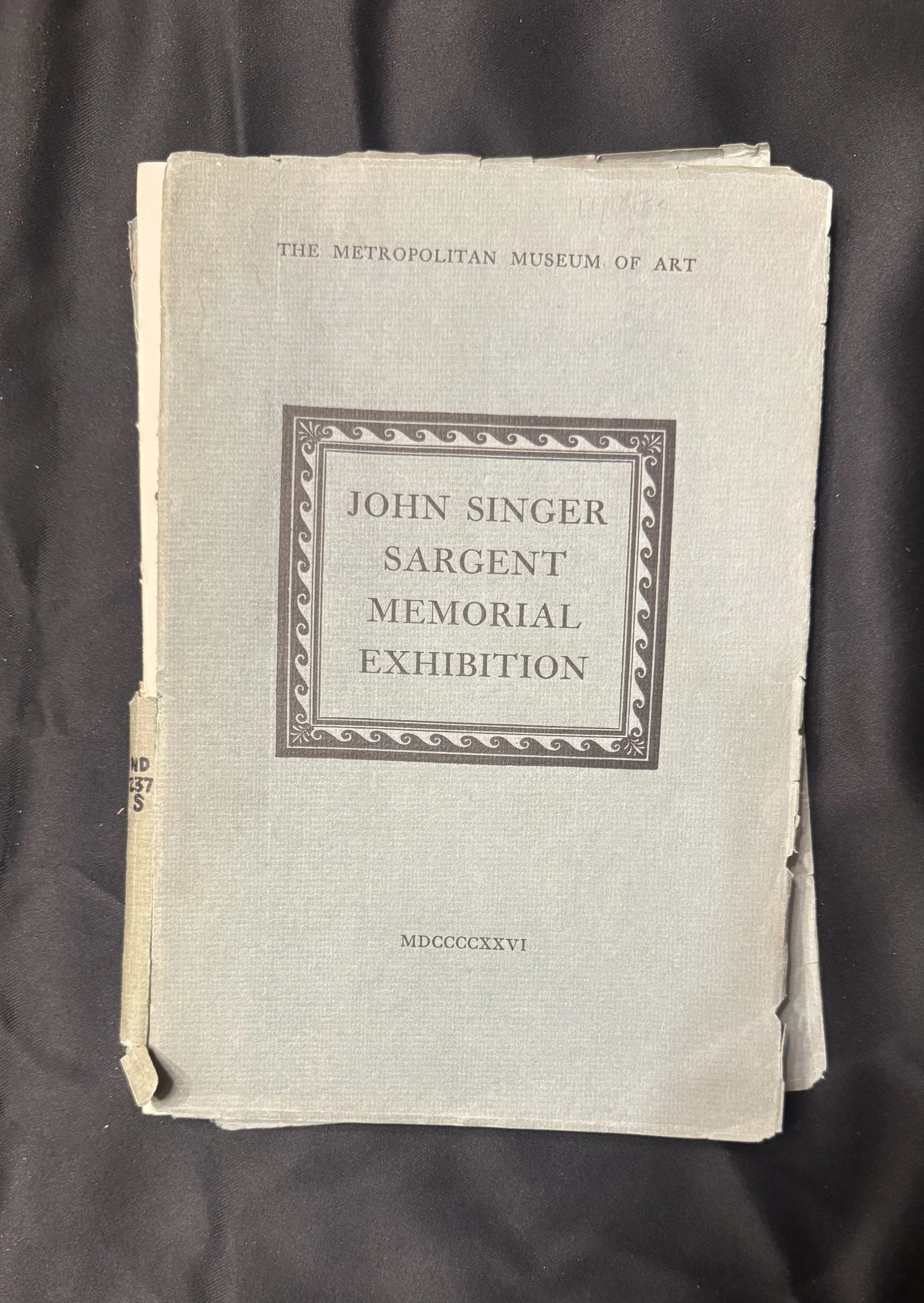
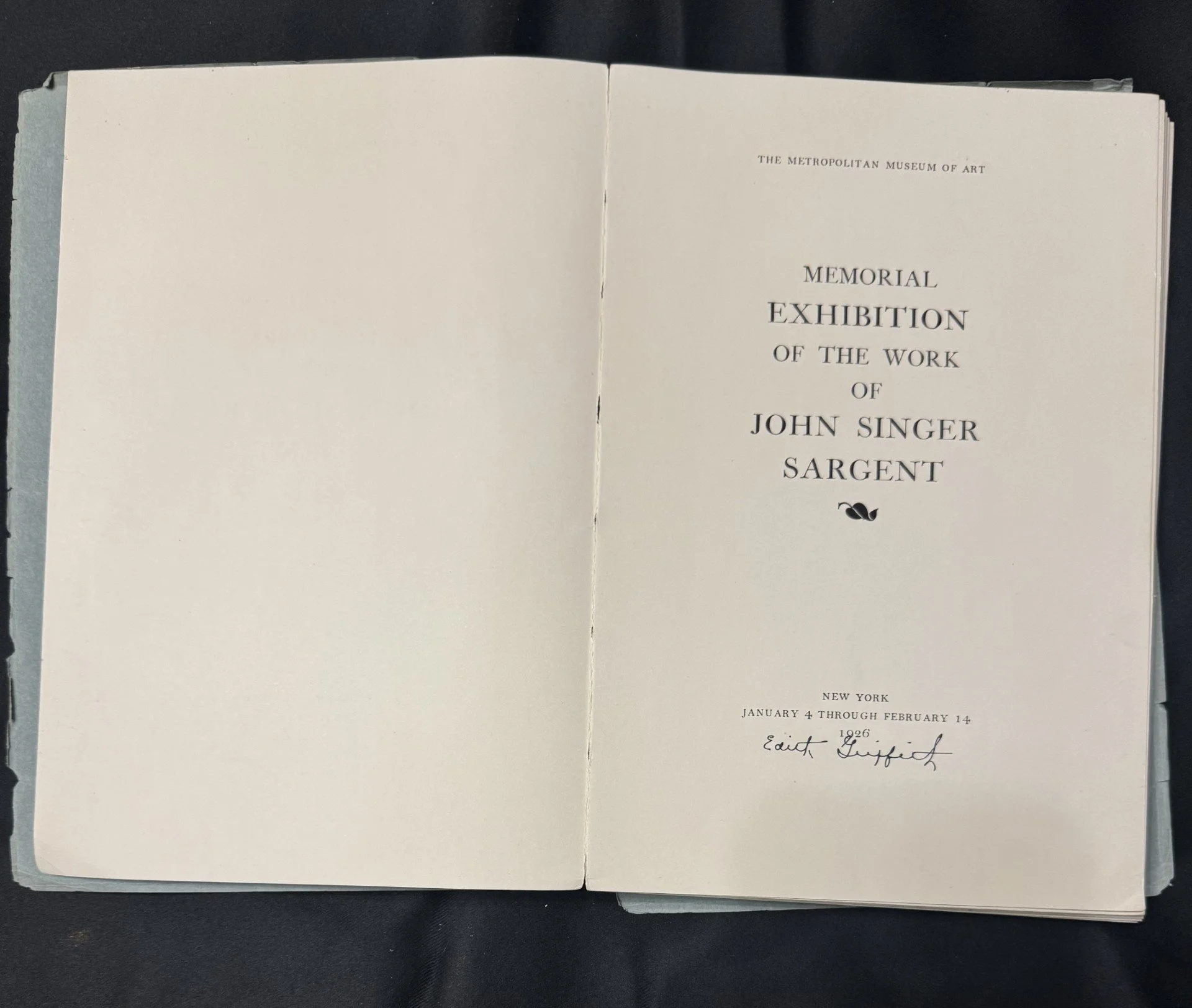
This 1926 exhibition catalog in the holdings of the Mayflower Descendants Museum was published by The Metropolitan Museum of Art for its memorial exhibition honoring John Singer Sargent (1856–1925), one of the most celebrated portrait painters of his generation.
Sargent died in London in April 1925. Memorial exhibitions of his work followed in Boston, London, and New York. The Metropolitan Museum’s exhibition opened on January 4, 1926, and continued through February 14, 1926.
The exhibition proved enormously popular. Metropolitan Museum records indicate that thousands attended the opening and that approximately 60,000 visitors saw the exhibition during its brief six-week run. Demand for the accompanying publication was also extraordinary: the Museum’s supply of 2,000 standard exhibition catalogs reportedly sold out within the first twenty-four hours.
A Limited Original Printing
The catalog itself was produced in a relatively small original printing. The Metropolitan Museum issued just 2,000 standard copies, with an additional 100 copies printed on larger paper.
The Mayflower Descendants Museum holds one of the 2,000 standard copies produced for the 1926 exhibition. More than a century later, the catalog survives as an original publication directly connected with one of the major memorial exhibitions organized immediately following Sargent’s death—and with the remarkable public response his work received at the Metropolitan Museum in the months after his passing.
A Mayflower Descendant Inside the Catalog
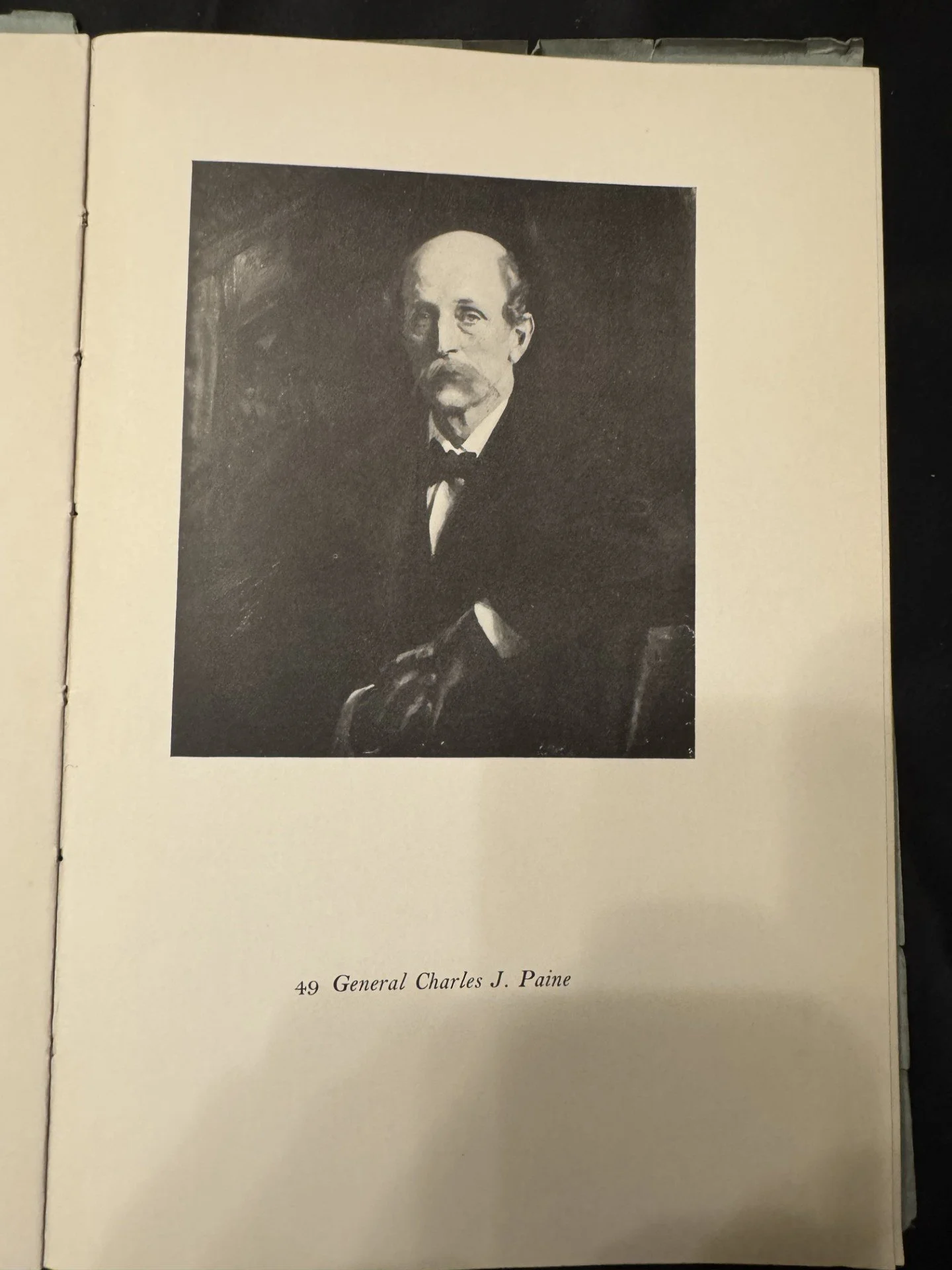
Among the portraits reproduced in the Museum’s copy is Sargent’s portrait of General Charles Jackson Paine (1833–1916).
Paine was a Boston-born Union officer during the Civil War, businessman, railroad executive, and one of the most important figures in nineteenth-century American yachting. Genealogical research identifies him as a descendant of Mayflower passenger Stephen Hopkins, through the Hopkins family line.
Sargent painted Paine in 1904. The original oil portrait is now held by the Museum of Fine Arts, Boston.
A Remarkable Mayflower Connection in Paine’s Yachting Career
Paine’s celebrated yachting career adds another striking dimension to his Mayflower ancestry.
He played central roles in three consecutive successful America’s Cup defenses: Puritan in 1885, Mayflower in 1886, and Volunteer in 1887. He managed the Puritan campaign and subsequently owned and managed Mayflower and Volunteer.
For a man descended from Mayflower passenger Stephen Hopkins, the names Puritan and especially Mayflower strongly echo the Pilgrim and Mayflower heritage from which he descended.
The Museum has not yet located a surviving statement from Paine explicitly saying that these names were selected to honor his ancestry, so we do not present that motivation as established fact. But the connection is nevertheless striking—particularly in the case of his own yacht, Mayflower.
Paine’s Mayflower successfully defended the America’s Cup in 1886, more than 260 years after the historic Mayflower carried his ancestor Stephen Hopkins across the Atlantic.
The Letters Behind the Portrait
The relationship between Sargent and Paine survives beyond the painting itself.
The Smithsonian Institution’s Archives of American Art preserves a group of materials titled Charles Jackson Paine letters from John Singer Sargent, 1904–1905. The collection contains four letters from Sargent to Paine concerning Sargent’s portrait of him, together with a photograph of the completed portrait.
That correspondence creates an unusually direct archival connection between the portrait reproduced in this 1926 Metropolitan Museum catalog and the actual exchange between artist and sitter.
The Museum of Fine Arts, Boston also preserves Charles J. Paine correspondence within the John Singer Sargent Archive.
Pictured: the Mayflower Descendants Museum’s 1926 Metropolitan Museum of Art catalog for the John Singer Sargent Memorial Exhibition, including its reproduction of Sargent’s 1904 portrait of General Charles J. Paine.
Sources & Further Reading
The Metropolitan Museum of Art — John Singer Sargent Memorial Exhibition, January 4–February 14, 1926
The Metropolitan Museum of Art — Special Exhibitions, 1870–2022
Smithsonian Archives of American Art — Charles Jackson Paine letters from John Singer Sargent, 1904–1905
The collection contains four Sargent letters to Paine concerning the portrait and a photograph of the completed portrait.
Smithsonian Archives of American Art — Paine/Sargent Correspondence
Museum of Fine Arts, Boston — John Singer Sargent Archive and Charles J. Paine correspondence
The finding aid specifically lists Charles J. Paine correspondence from 1904.
MFA Boston — John Singer Sargent Archive Finding Aid
Herreshoff Marine Museum / America’s Cup Hall of Fame — General Charles J. Paine
This is especially useful: it states that Paine managed Puritan in 1885 and then owned and managed Mayflower in 1886 and Volunteer in 1887, becoming the first syndicate leader to win three consecutive America’s Cup matches.
Herreshoff Marine Museum — General Charles J. Paine
MIT Museum — Charles Jackson Paine and American yachting
The MIT material describes him as one of the most important figures in nineteenth-century yacht racing and documents his management/ownership of Puritan, Mayflower, and Volunteer.
MIT Museum — Paine Family Yachting Index PDF
Genealogical research — Charles Jackson Paine’s descent from Mayflower passenger Stephen Hopkins
His father, Charles Cushing Paine, is explicitly identified as a descendant of Stephen Hopkins of the Mayflower, and Charles Jackson Paine appears in the household as his son.
Hall Families of New England — Charles Cushing Paine