
Richard Briggs - Longfellow Ceramic Pitcher
Briggs gave Longfellow one of these for Christmas in 1880. It remains at the Longfellow House today.
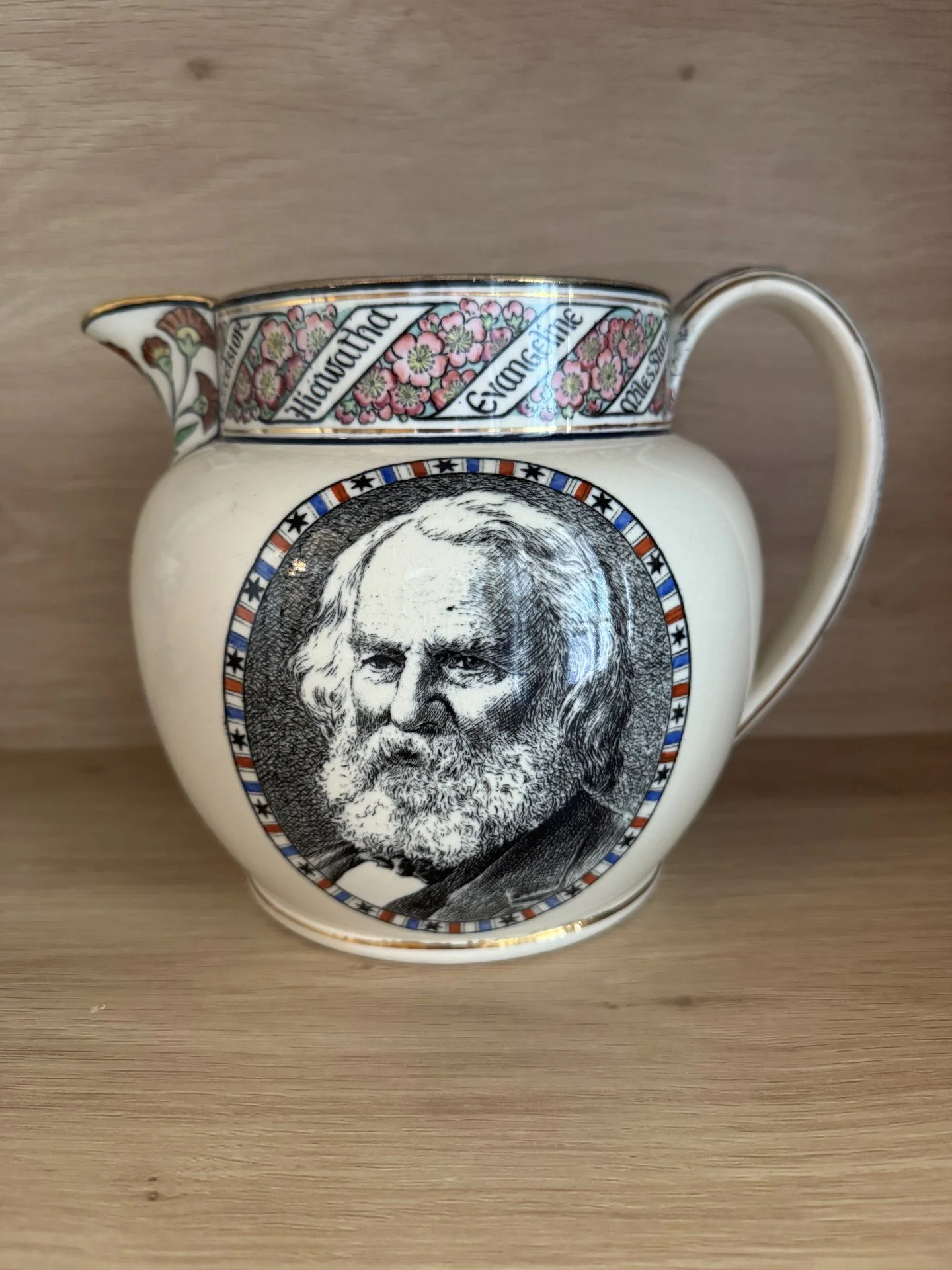
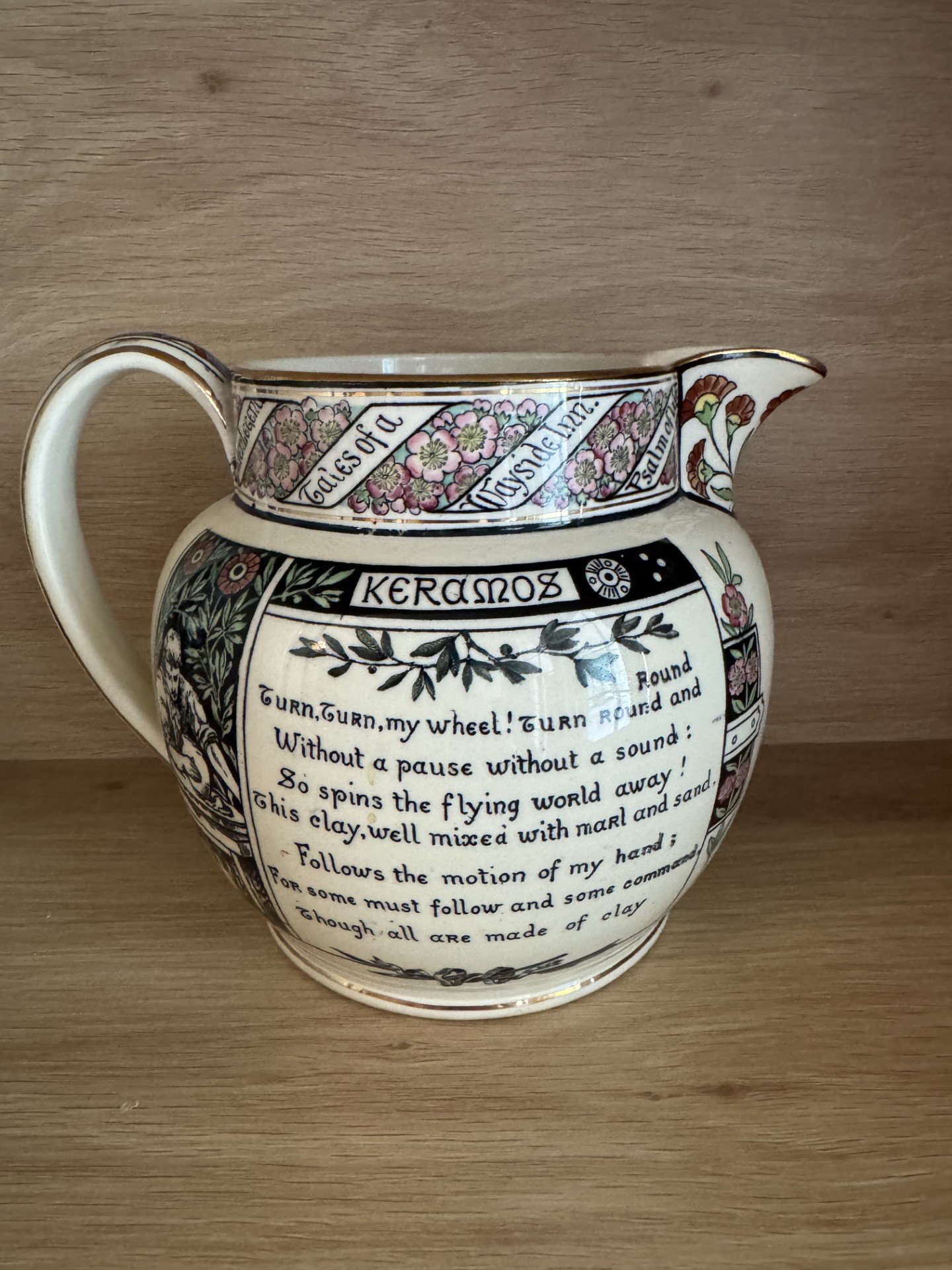
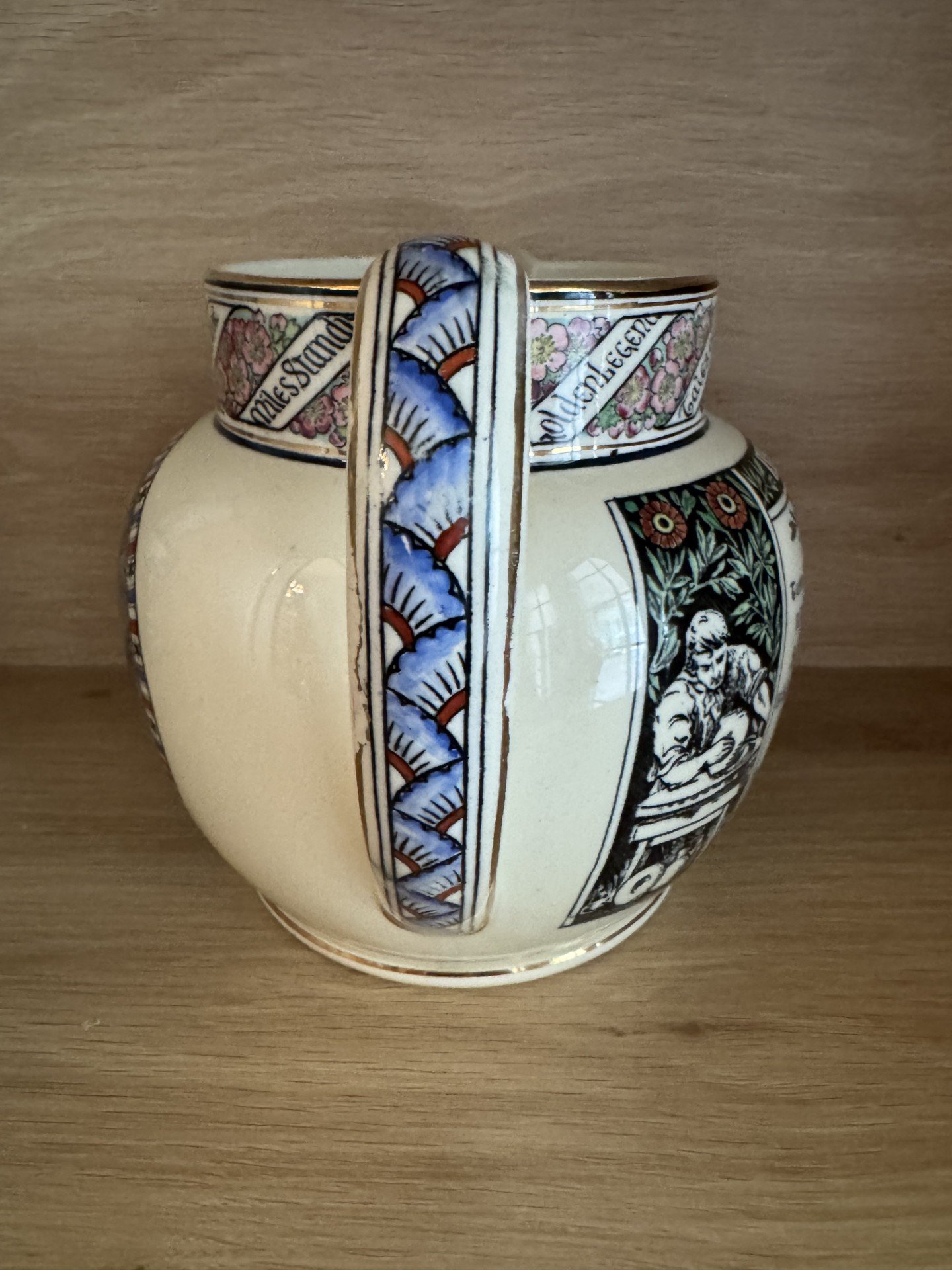
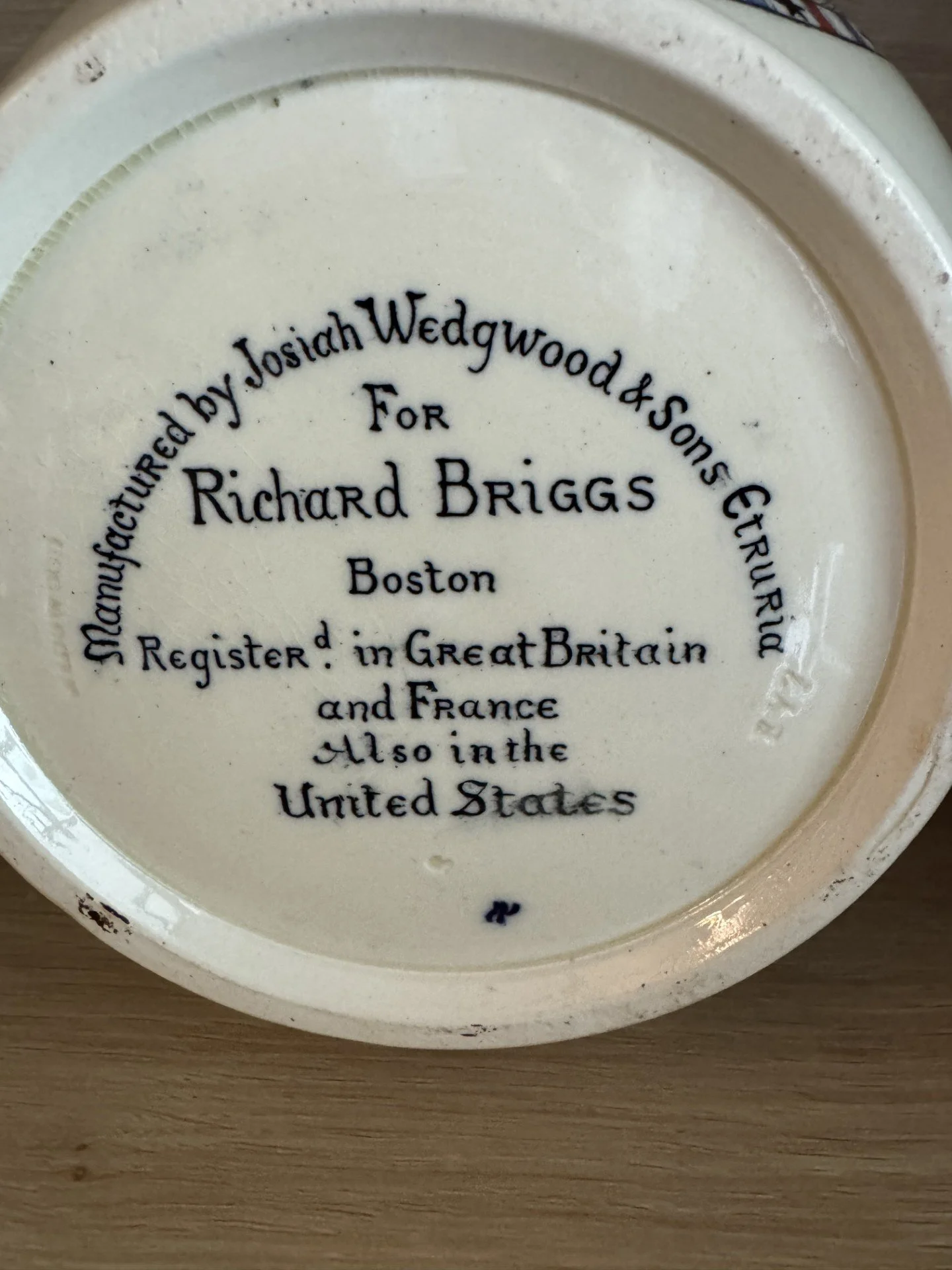
This circa 1880–1881 ceramic pitcher celebrates one of the most famous American writers of the nineteenth century, Henry Wadsworth Longfellow (1807–1882). But its story becomes even more remarkable through its connection to Longfellow himself.
Boston china and ceramics dealer Richard Briggs commissioned Josiah Wedgwood & Sons in Staffordshire, England, to manufacture the pitcher after recognizing the enormous popularity of Longfellow and his poem Kéramos. The jug was designed by British decorative artist George Woolliscroft Rhead (1855–1920). Around its upper border, Rhead incorporated the titles of Longfellow’s writings—including Hiawatha, Evangeline, Miles Standish, and Tales of a Wayside Inn—into an elaborate floral design. Longfellow’s portrait dominates one side, while verses from Kéramos appear on the reverse. (Historic New England)
The choice of Kéramos was especially fitting. The poem explores pottery and ceramic traditions, periodically returning to the potter working at his wheel. On the reverse of the pitcher, that imagery appears alongside the opening words of the refrain, “Turn, turn, my wheel!” The poem about the art of pottery had effectively been transformed into pottery itself. (National Park Service)
A Christmas Gift to Longfellow
The strongest connection is direct: Richard Briggs presented one of these jugs to Henry Wadsworth Longfellow at Christmas in 1880. Bowdoin College Museum of Art specifically records the presentation, while the National Park Service identifies Longfellow’s own example as the jug Briggs sent to him in late 1880. (Bowdoin College)
That particular pitcher remains preserved in the museum collection of the Longfellow House–Washington’s Headquarters National Historic Site in Cambridge, Massachusetts, where it is catalogued as LONG 5829. (National Park Service)
The pitcher in the Mayflower Descendants Museum collection therefore belongs to the same production as an example that was personally given to Longfellow during his lifetime and retained at his historic home today.
Longfellow, the Mayflower, and American Memory
Longfellow was himself a descendant of Mayflower passengers John Alden and Priscilla Mullins. That family connection became especially significant in 1858 when he published The Courtship of Miles Standish, transforming the traditional story of Alden, Mullins, and Myles Standish into one of the best-known literary interpretations of Plymouth Colony. (National Park Service)
The poem's cultural influence was substantial. National Park Service research notes that The Courtship of Miles Standish made John Alden and Priscilla Mullins national icons of Pilgrim history, made the Alden house in Duxbury famous, stimulated public interest in places and artifacts associated with the Pilgrims, and ultimately contributed to the Colonial Revival movement. (National Park Service)
Longfellow's fame extended far beyond the literary world. His books were issued in numerous editions and price ranges, his poems became major publishing events, and his portrait circulated widely during his lifetime. By the time this pitcher was created, Longfellow had become not simply a successful poet but a recognizable figure in American popular culture. (National Park Service)
That extraordinary popularity helps explain why Longfellow could appear on an object intended for the American home. Recent scholarship devoted specifically to the Longfellow Jug has found that Briggs marketed the Wedgwood jugs in Boston in 1881, where they became highly successful; approximately fifteen examples have been identified in American museum collections. (UDSpace)
The result is an unusually layered decorative object: a Wedgwood pitcher commissioned by a Boston retailer, designed around a Longfellow poem about pottery, decorated with his portrait and the titles of his celebrated writings, produced during the poet's lifetime—and represented by an example personally presented to Longfellow for Christmas in 1880 that remains at the Longfellow House today.
Sources and Further Reading
National Park Service — Longfellow’s Nature Poetry
Includes Longfellow’s own jug, LONG 5829, and identifies it as the example commissioned from Wedgwood by Richard Briggs and sent to Longfellow in late 1880.
Read the National Park Service article
Historic New England — Longfellow Pitcher, ca. 1880
Collection record for another example, including the Wedgwood attribution, Richard Briggs commission, George Woolliscroft Rhead attribution, and the manufacturer's inscription.
View the Historic New England collection record
Bowdoin College Museum of Art — Poetic Truths: Hawthorne, Longfellow, and American Visual Culture, 1840–1880
Features a Longfellow Jug and records that Briggs presented one of the jugs to Longfellow at Christmas in 1880.
Explore the Bowdoin exhibition
Margaret Elizabeth Palms — Poetically Posh: Richard Briggs’s Longfellow Jug, Wedgwood, and Henry Wadsworth Longfellow in the American Home
University of Delaware master’s thesis, 2025. A recent scholarly study devoted specifically to the history, design, marketing, and reception of the Longfellow Jug.
Read the University of Delaware thesis record
National Park Service — “The Courtship of Miles Standish,” Longfellow House Bulletin
Discusses Longfellow’s descent from John Alden and Priscilla Mullins and the enormous impact of his poem on public interest in Pilgrim history, historic sites, artifacts, and the Colonial Revival.
Read the Longfellow House Bulletin
National Park Service — Henry Wadsworth Longfellow
Background on Longfellow’s life, extraordinary nineteenth-century popularity, publishing success, and position in American culture.
Read the National Park Service biography
Alden Kindred of America — History of the Alden Kindred
Discusses how Longfellow’s bestselling The Courtship of Miles Standish made John Alden and Priscilla Mullins familiar household names.
Read more from the Alden Kindred of America