
James W. Tufts
Decorative Arts for the Victorian Table
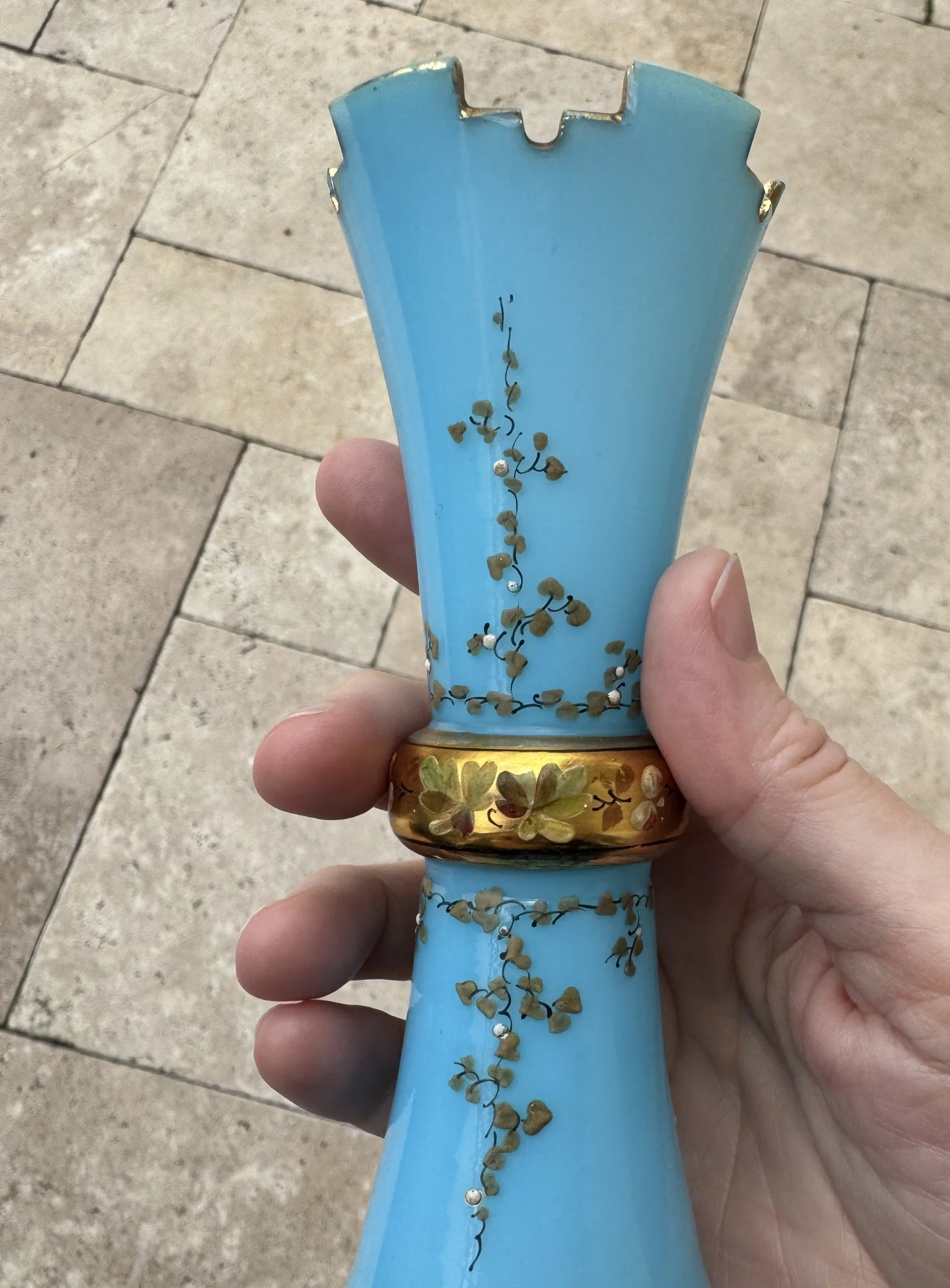
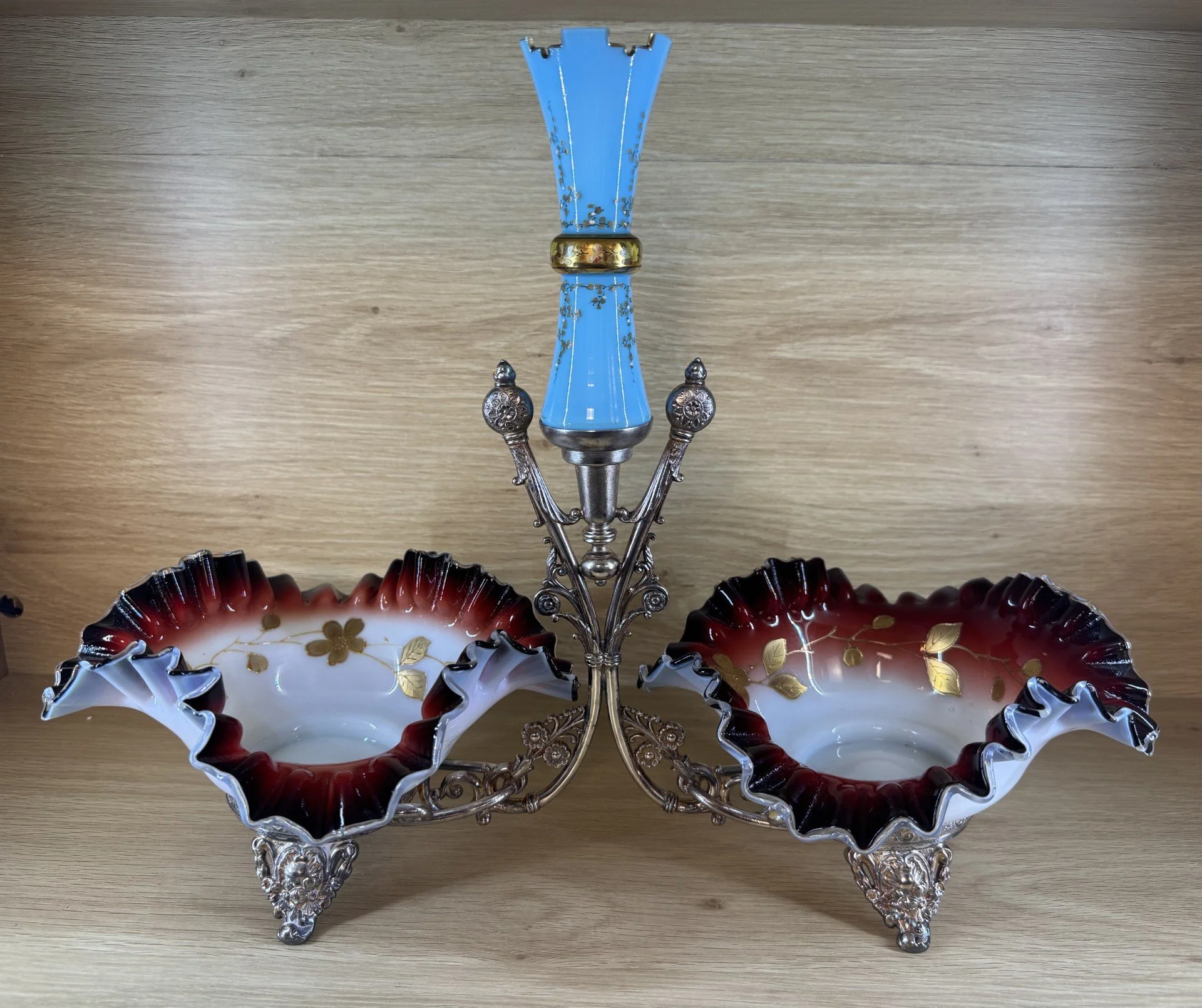
Shown here is a rare circa 1880–1885 epergne double bridal basket produced by the James W. Tufts company of Boston. Combining two richly colored glass baskets and a tall central glass trumpet with an elaborate silver-plated framework, the object reflects the highly ornamental character of late nineteenth-century American dining and decorative arts.
James Walker Tufts (1835–1902) was a Massachusetts businessman, inventor, manufacturer, philanthropist, and Mayflower descendant through Elder William Brewster. He began his career as an apprentice in the drug business before developing soda-fountain equipment and building a substantial manufacturing enterprise. His company later produced a wide variety of silver-plated household and decorative wares. Tufts eventually purchased thousands of acres in North Carolina and founded Pinehurst, initially conceived as a health-oriented resort community and later famous internationally for golf. (NCPedia)
What Was a Bridal Basket?
The term “bridal basket” or “bride’s basket” is commonly used today for elaborate nineteenth-century baskets combining ornamental metalwork with glass. Historically, similar pieces were also described as cake baskets, fruit baskets, or berry dishes. They became particularly popular during the second half of the nineteenth century. Some were associated with weddings and the display of flowers or a bridal bouquet, while afterward they could serve as decorative household objects holding fruit, cakes, sweets, flowers, or other delicacies. (Living Heritage Museum)
The Museum’s example goes considerably beyond the form of a simple basket. Its two colored-glass bowls flank a tall central trumpet, creating what can be described as a double bridal-basket epergne. An epergne was designed to occupy a prominent position on a dining or dessert table. The Metropolitan Museum of Art describes the epergne as a table centerpiece whose baskets and dishes could hold delicacies, while other museum examples document their use for fruit, sweets, and flowers. (The Metropolitan Museum of Art)
On a Victorian table, this piece would have been visually dramatic. The central trumpet could be filled with flowers, while the two baskets could contain fruit, candies, small cakes, or other foods. Colored glass, reflective silver plate, sculptural metalwork, and flowers or food would combine to produce height and color at the center of the table. When not being used during a meal, an object this decorative could also have been displayed on a sideboard or buffet.
The Look of Silver Without the Price of Solid Silver
Earlier elaborate tablewares were often made from solid silver and represented substantial wealth. Museums today preserve eighteenth-century cake baskets and epergnes made entirely of silver—objects that belonged to an established tradition of luxury dining. (The Metropolitan Museum of Art)
During the nineteenth century, silver plating dramatically expanded that visual world. Manufacturers could form an object from a less expensive base metal and apply a coating of silver to its surface. Surviving American cake baskets from the period demonstrate how elaborate silver-plated tableware could reproduce many of the forms and decorative effects previously associated with expensive solid silver. (National Museum of American History)
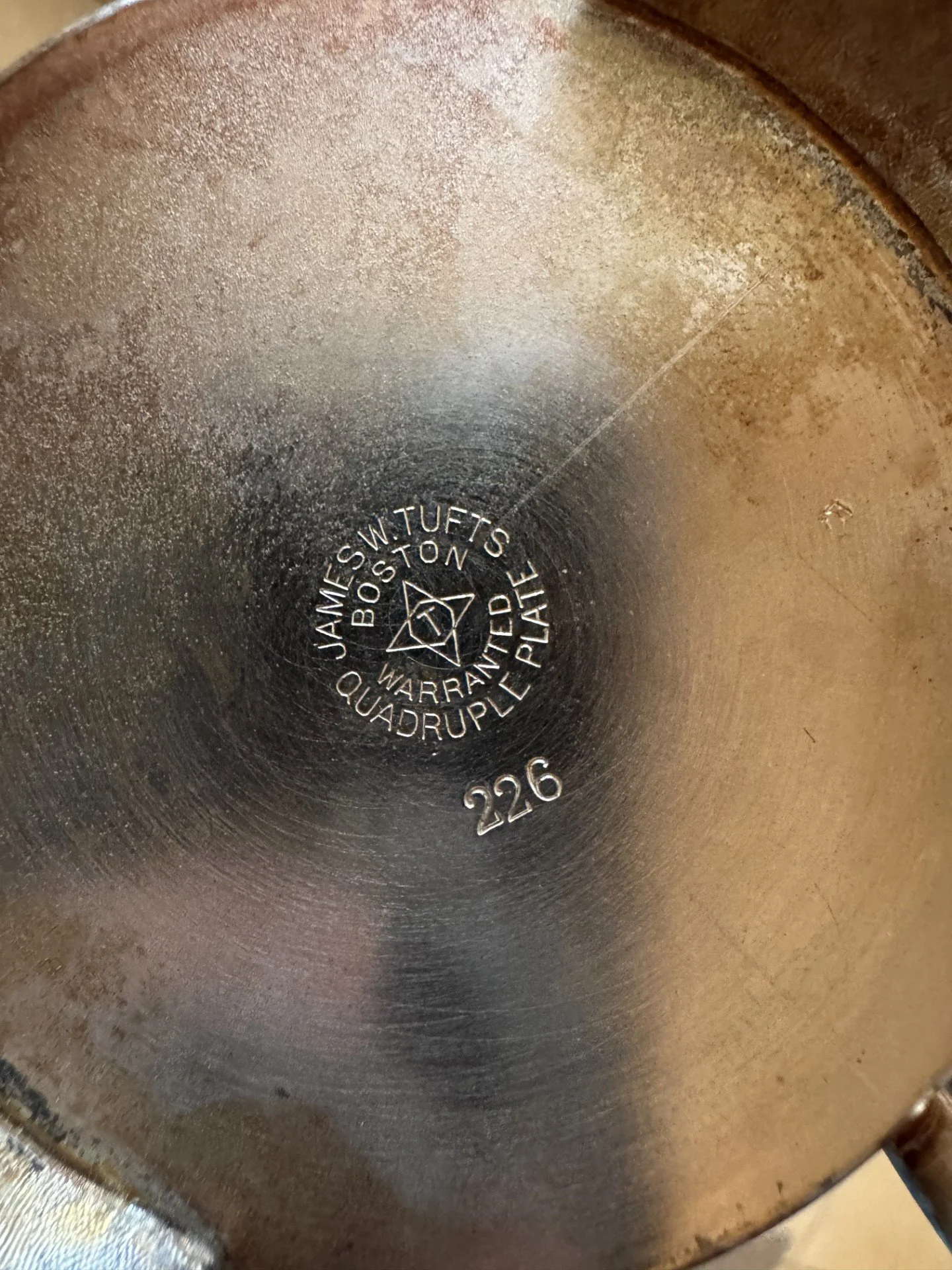
Tufts became particularly associated with “quadruple plate,” terminology used by nineteenth-century manufacturers for a heavier grade of plated ware. The important distinction is that quadruple plate was still silver plate—not solid silver—but it was marketed as a higher-quality and more durable product.
That manufacturing process opened fashionable decorative tableware to a much wider market. A household did not need the resources required to purchase an elaborate sterling-silver centerpiece in order to create a table that conveyed refinement, abundance, and Victorian taste.
The likely market therefore extended beyond only the very wealthy. Silver plate could be purchased by prosperous middle-class and upper-middle-class households as well as affluent families. A complicated centerpiece such as the Museum’s Tufts epergne, with multiple pieces of colored glass and elaborate metalwork, would nevertheless have represented a more substantial decorative purchase than an ordinary plate, cup, or simple basket.
What Might It Have Cost?
The Museum has not yet located a period Tufts catalogue listing this exact model, so an exact original selling price should not be assigned to it.
Period advertisements do, however, provide useful context. In an 1898 department-store advertisement, quadruple-plate cake baskets were offered for approximately $2 to $3.25, while other quadruple-plate goods ranged considerably higher depending upon size and complexity. A contemporary mail-order catalogue similarly advertised a hand-engraved quadruple-plate cake basket for $1.30. (The Portal to Texas History)
Those were meaningful sums. Historical consumer-price estimates indicate that a dollar from the 1880s represented several dozen dollars of modern purchasing power; because pre-1913 inflation figures are reconstructed estimates, modern equivalents should be treated as approximate rather than exact. (Federal Reserve Bank of Minneapolis)
As a broad comparison, a $2–$3.25 silver-plated basket from this period would represent roughly $70–$120 in 2026 purchasing power. A complex multi-part epergne with two glass baskets, a central trumpet, and elaborate metalwork could reasonably have occupied a higher price category than those simpler advertised cake baskets, although the Museum has not yet found documentation establishing the original price of this particular model.
The important point is not that these objects were inexpensive. Rather, silver plating made elaborate decorative tableware substantially more attainable than comparable objects made from solid silver.
A Mayflower Descendant and American Manufacturing
The epergne also connects decorative arts with the life of its manufacturer. Tufts was a descendant of Mayflower passenger William Brewster, but his own life belonged firmly to nineteenth-century American industry and entrepreneurship. From soda fountains and silver-plated wares to the development of Pinehurst, his career reflects the rapidly expanding world of American manufacturing, consumer goods, and leisure in the decades following the Civil War. (NCPedia)
This double bridal basket preserves one particularly decorative side of that history. It was designed not simply to perform a household function but to transform the appearance of the table—bringing together colored glass, silvered metal, flowers or food, and the elaborate rituals of Victorian entertaining.
Holdings of the Mayflower Descendants Museum
Sources and Further Reading
NCpedia — James Walker Tufts. Biography documenting Tufts’s manufacturing career, founding of Pinehurst, and descent from Mayflower passenger William Brewster. (NCPedia)
Read the James Walker Tufts biography
Metropolitan Museum of Art — Epergne, Thomas Heming, 1766–67. The Met describes an epergne as a centerpiece for the table and discusses the baskets and dishes used to present delicacies. (The Metropolitan Museum of Art)
View the epergne at The Met
National Museum of American History, Smithsonian Institution — nineteenth-century silver-plated cake baskets, documenting the elaborate forms produced in American silver plate. (National Museum of American History)
View a silver-plated cake basket at the Smithsonian
McMinn County Living Heritage Museum — Historic Bride’s Baskets. Discussion of the terminology, wedding associations, and household uses of nineteenth-century bride’s, cake, fruit, and berry baskets. (Living Heritage Museum)
Read about historic bride’s baskets
Federal Reserve Bank of Minneapolis — Historical Consumer Price Index. Provides estimated inflation data before 1913 and modern CPI data for placing nineteenth-century prices in purchasing-power context. (Federal Reserve Bank of Minneapolis)
Explore the Federal Reserve inflation data