
James W. Tufts
Silverplate, Art Glass, and a Heron Among the Reeds
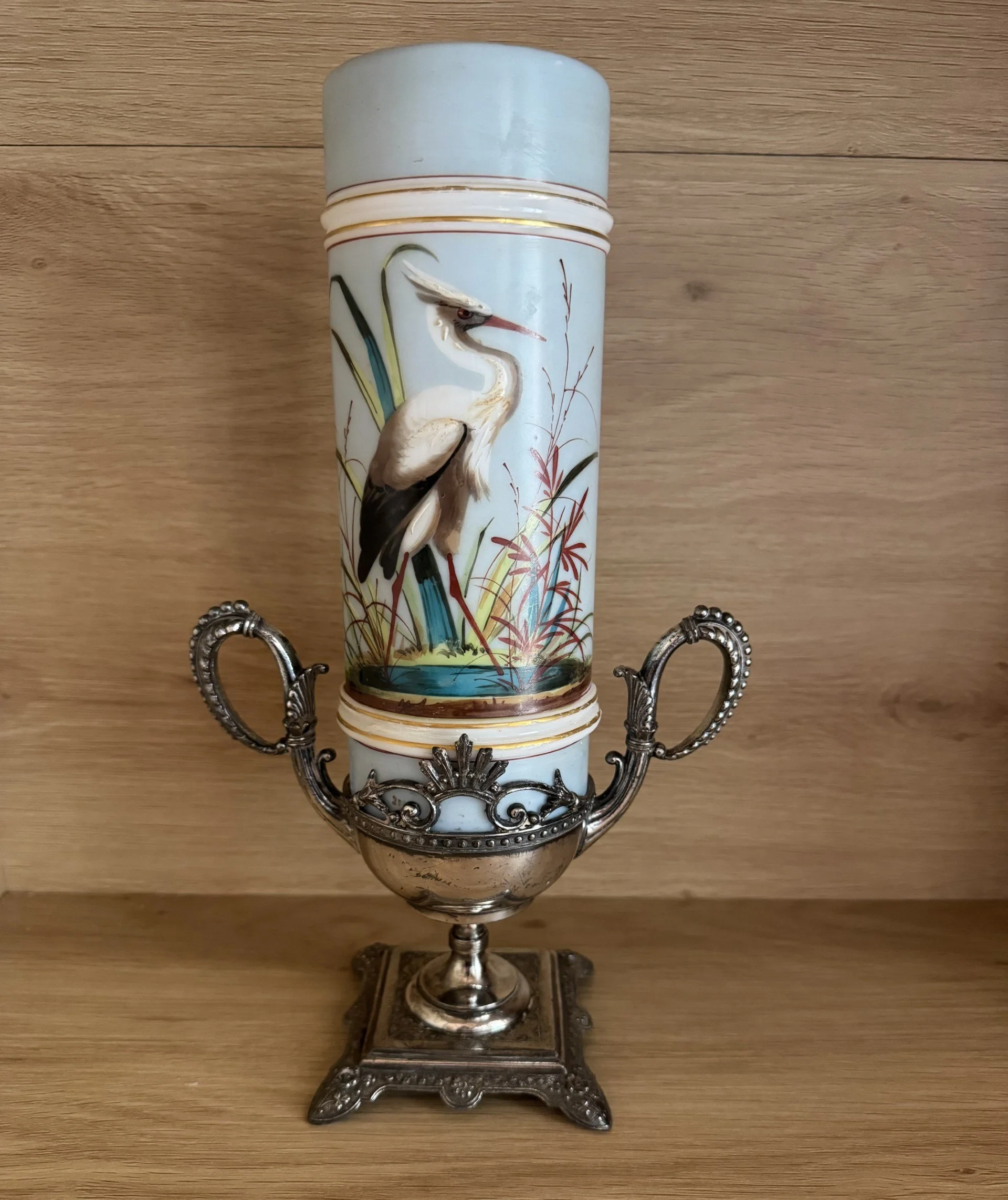
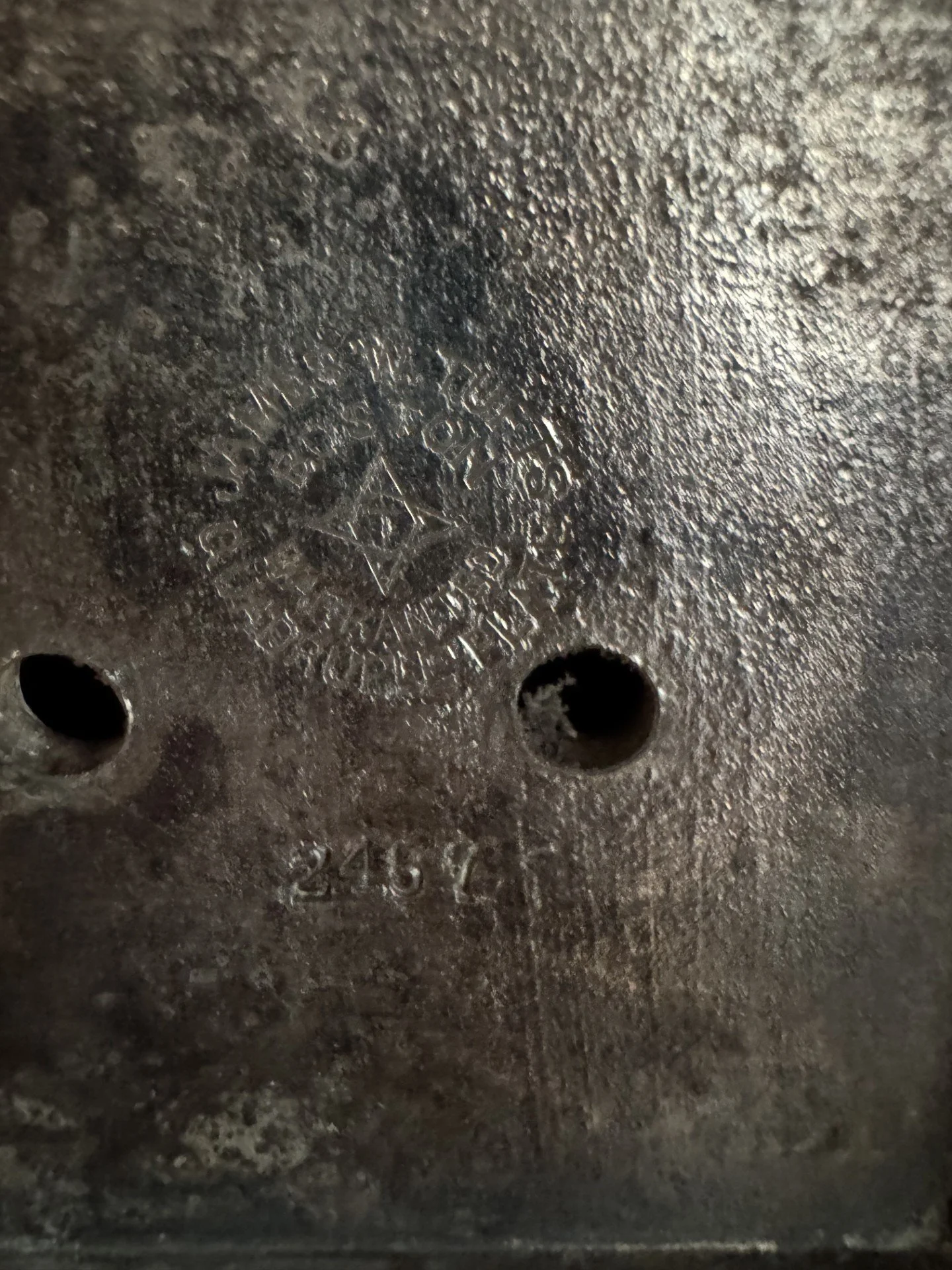
Shown here is a late nineteenth-century decorative glass vessel supported by an elaborate silver-plated mount manufactured by the James W. Tufts company of Boston. The metal base bears the Tufts maker’s mark and pattern number, securely identifying the metalwork with the company discussed in Preview 1.
James Walker Tufts (1835–1902) was a Mayflower descendant through Elder William Brewster and became a successful inventor and manufacturer of soda-fountain equipment and silver-plated decorative wares. This object provides an opportunity to examine another aspect of his company’s production: the combination of elaborate silver-plated mounts with decorative glass.
Two Materials — and Potentially Two Makers
Although the silver-plated mount is marked James W. Tufts, the glass itself carries no visible maker’s mark.
That distinction matters. Tufts manufactured silver-plated wares, but there is evidence that glass incorporated into Tufts objects could come from another manufacturer. A particularly useful comparison survives at the Smithsonian’s National Museum of American History. Its Tufts dish, dating to approximately 1875–1891, consists of an enamel- and gilt-decorated glass bowl made in Sandwich, Massachusetts, supported by a silver-plated frame manufactured by James W. Tufts in Boston. The Smithsonian specifically distinguishes the place of manufacture of the glass bowl from that of the Tufts stand. (National Museum of American History)
Another Smithsonian object, a circa 1885 Tufts soda-glass holder, consists of a marked quadruple-plated framework intended to hold a separate glass vessel. Together, these objects demonstrate that a Tufts mark on the metalwork does not necessarily mean that Tufts manufactured the accompanying glass. (National Museum of American History)
For that reason, the Mayflower Descendants Museum currently identifies the silver-plated mount of this object as James W. Tufts manufacture while leaving the maker of its glass unidentified unless future research or a period catalogue establishes its origin.
The Heron Among the Reeds
The tall opaque glass vessel is decorated with a long-legged bird that the Museum has identified as a heron, standing among reeds and aquatic vegetation.
The composition makes especially effective use of the vessel’s vertical shape. The bird’s long legs, body, neck, and bill rise naturally through the tall cylindrical field, while reeds and grasses extend around it to create a miniature waterside landscape.
The result brings together two very different decorative effects. The glass supplies color, painted imagery, and a naturalistic scene; the Tufts mount contributes symmetry, sculptural handles, scrollwork, a pedestal, and the reflective appearance of silver.
This combination of separately produced materials was one of the strengths of nineteenth-century decorative arts. Glassmakers and decorators could provide brilliant color and imagery, while metal manufacturers such as Tufts could create elaborate architectural frameworks to support and display the glass.
Tufts in Museum Collections
Surviving James W. Tufts objects are represented in major American museum collections.
The Smithsonian’s National Museum of American History preserves multiple Tufts objects, including silver-plated domestic wares and soda-fountain equipment. Its collections include the Tufts dish with a separately manufactured Sandwich glass bowl, the circa 1885 soda-glass holder, and a Tufts Crescent Draft Stand associated with his important soda-fountain business. (National Museum of American History)
A circa 1885 three-piece silver-plated tea service by James W. Tufts is also in the collection of the Wadsworth Atheneum Museum of Art in Hartford, Connecticut. Christie’s cites the Wadsworth service as a documented institutional example of the pattern in its catalogue of another Tufts tea service. (Christie's)
The Metropolitan Museum of Art preserves important primary-source material relating to the company as well. The Met holds Tufts’s circa 1890 General Catalogue of Quadruple Silver Plated Ware, an 1898 catalogue of plated ware, and another company volume titled Fine Plated Ware. These surviving catalogues help researchers identify forms, patterns, and the extraordinary range of objects sold under the Tufts name. (The Metropolitan Museum of Art)
The Tufts Archives at the Given Memorial Library in Pinehurst, North Carolina, preserves another part of his legacy. Among its historical materials is James W. Tufts’s original nineteenth-century marble-and-silver soda fountain, connecting his manufacturing career directly with the community he later founded. (Pinehurst Resort)
A Complete Decorative Object
Seen as a whole, the Museum’s heron vessel illustrates an important feature of late nineteenth-century manufacturing: an object that appears to be a single artistic creation could actually bring together the work of several specialized industries.
Here, the Tufts company supplied the elaborate silver-plated framework. An unidentified maker produced the glass vessel, and its painted decoration transformed that glass into a waterside scene dominated by a heron standing among reeds.
Together, the components created the finished decorative object—a combination of industrial manufacturing, ornamental metalwork, glassmaking, and painted decoration intended to attract attention within the Victorian interior.
Holdings of the Mayflower Descendants Museum
Sources and Further Reading
Smithsonian National Museum of American History — James W. Tufts Dish, ca. 1875–1891. The Smithsonian identifies James W. Tufts as manufacturer of the silver-plated stand while documenting the decorated glass bowl as made in Sandwich, Massachusetts. (National Museum of American History)
View the Tufts dish at the Smithsonian
Smithsonian National Museum of American History — Soda Glass Holder, ca. 1885. A marked James W. Tufts quadruple-plated framework designed to hold a separate glass vessel. (National Museum of American History)
View the Tufts glass holder at the Smithsonian
Smithsonian National Museum of American History — Chapman Portable Soda Fountain and Tufts Crescent Draft Stand. An institutional example of Tufts’s important soda-fountain production. (National Museum of American History)
View the Tufts soda-fountain object at the Smithsonian
Christie’s — James W. Tufts three-piece silver-plated tea service, circa 1885. The catalogue notes that a service of the same pattern is in the collection of the Wadsworth Atheneum Museum of Art. (Christie's)
View the Christie’s catalogue record
The Metropolitan Museum of Art — General Catalogue of Quadruple Silver Plated Ware, James W. Tufts, ca. 1890. Original company catalogue preserved in The Met’s collection. (The Metropolitan Museum of Art)
View the Tufts catalogue at The Met
The Metropolitan Museum of Art — Catalogue of Plated Ware, James W. Tufts, 1898. (The Metropolitan Museum of Art)
View the 1898 Tufts catalogue at The Met
Pinehurst — The Tufts Archives. Historical collection preserving materials associated with James W. Tufts and Pinehurst, including his original nineteenth-century marble-and-silver soda fountain. (Pinehurst Resort)
Explore the Tufts Archives