
A Pattern Hidden in Plain Sight in Edmonia Lewis’s Sculptures: A Finding by the Founder of the Mayflower Descendants Museum
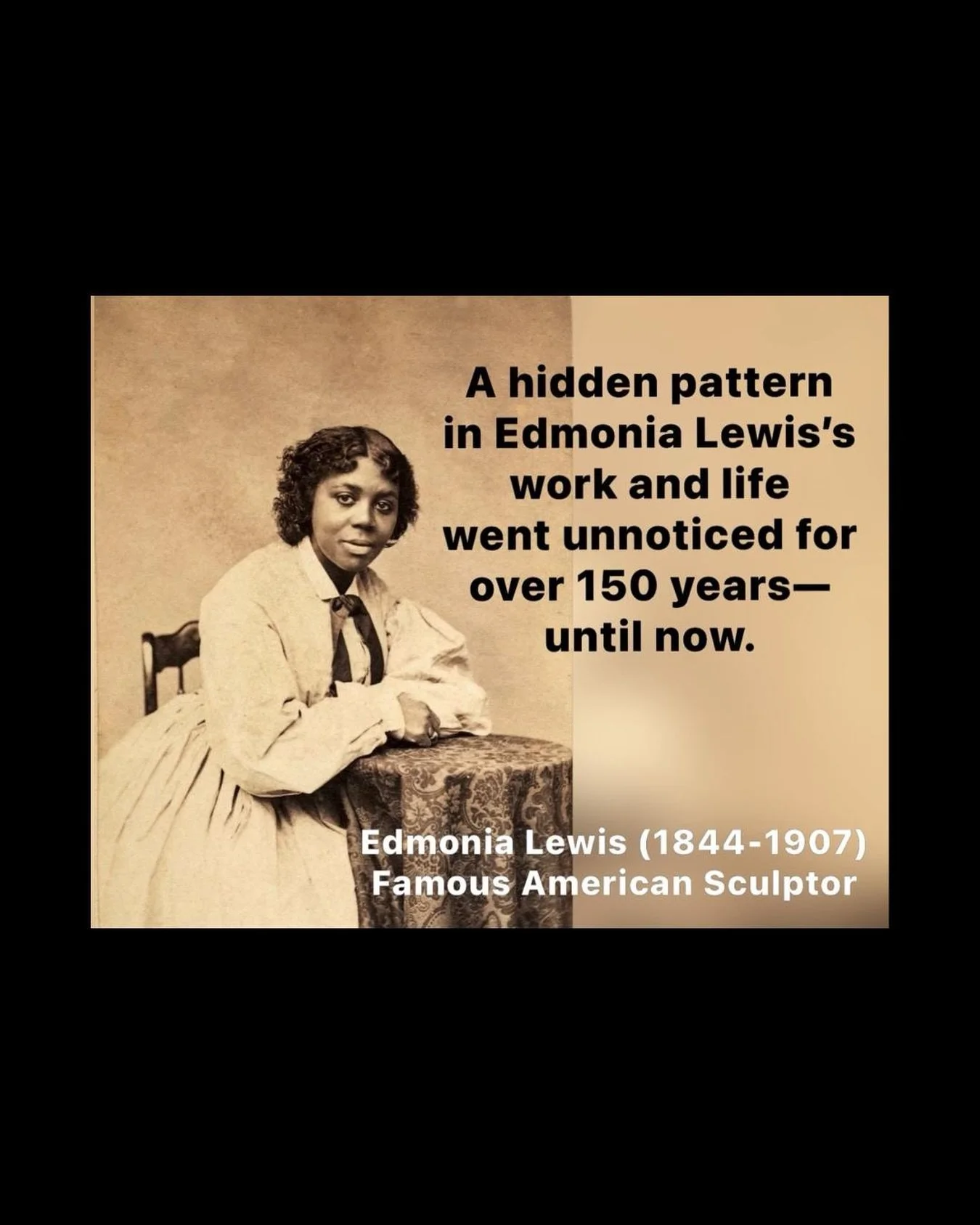
The founder of the Mayflower Descendants Museum has identified an unexpected pattern within Edmonia Lewis’s documented sculptural portraits: nearly one-quarter—23.3%—of the distinct named historical individuals represented in the study were Mayflower descendants. Among Lewis’s American subjects, the proportion rises to 26.9%, and among subjects whose lifetimes overlapped Lewis’s own, it reaches 28%.
The pattern emerged while the Museum’s founder was researching individual historical figures portrayed by Edmonia Lewis (1844–1907). After noticing that several of Lewis’s subjects were descendants of passengers aboard the Mayflower, she expanded the research to determine whether these connections represented isolated examples or a broader pattern within Lewis’s artistic record.
The broader study found that the connection appeared repeatedly across Lewis’s documented historical portrait subjects.
In other words, more than one in five of the identifiable historical individuals included in the overall study were Mayflower descendants—and more than one in four when examining either Lewis’s American subjects or those whose lives overlapped her own.
Edmonia Lewis, pictured here in a reproduction print, was of African American and Native American descent. The Smithsonian American Art Museum describes her as the first sculptor of African American and Native American (Mississauga) descent to achieve international recognition and states that her father was Black and her mother was Chippewa (Ojibwa). This background provides important context for understanding Lewis’s life and career and the nineteenth-century abolitionist, reform, artistic, and cultural circles in which she worked. Smithsonian American Art Museum: Edmonia Lewis
A Newly Identified Pattern in Edmonia Lewis’s Portrait Subjects
In the founder’s research to date, she has not found this concentration of Mayflower descendants previously identified or examined in published scholarship or publicly available research on Lewis. If further research confirms that the pattern has not previously been recognized, the finding may represent a new contribution to the study of Edmonia Lewis and the nineteenth-century social, cultural, and reform networks surrounding the people she portrayed.
A Summary of the Study
Using the Smithsonian National Portrait Gallery’s Catalog of American Portraits as the starting point, the founder identified 30 distinct named historical individuals represented in Lewis’s sculptures. When Lewis sculpted the same person more than once, that individual was counted only once.
Of those 30 individuals, seven have been identified through the genealogical and historical research reviewed by the founder as descendants of passengers aboard the Mayflower.
The Findings
7 of 30 historical subjects in the overall study — 23.3%
7 of 26 American subjects — 26.9%
7 of 25 subjects whose lifetimes overlapped Lewis’s — 28.0%
The seven currently identified are Henry Wadsworth Longfellow, Maria Weston Chapman, Charles Sumner, Charlotte Cushman, Colonel Robert Gould Shaw, Ulysses S. Grant, and Helen Ruthven Waterston.
What Does the Finding Mean?
The finding does not suggest that Lewis selected these individuals because they were Mayflower descendants. The founder has found no evidence supporting such a conclusion.
Instead, the pattern raises a different historical question:
Why did Mayflower descendants appear with such frequency among the identifiable historical people Edmonia Lewis portrayed?
Several of these individuals moved through overlapping nineteenth-century worlds of abolitionism, reform, literature, politics, the military, theater, and artistic patronage, particularly within Boston and other interconnected cultural circles.
The significance of the finding may therefore lie not in their Mayflower ancestry itself, but in what their repeated presence might reveal about the broader networks surrounding Lewis, her subjects, and her artistic career.
Another Fascinating Mayflower-Connected Finding Emerged
Mayflower descendant Henry Wadsworth Longfellow presents an additional connection. Lewis not only sculpted Longfellow himself, but repeatedly transformed characters and scenes from his The Song of Hiawatha into sculpture.
This extends the connection beyond portraiture: one Mayflower descendant represented in Lewis’s sculptural record was also the author whose literary work became an important source of subject matter for several of her sculptures.
Why did Lewis return repeatedly to Longfellow and his work?
What Comes Next?
The founder’s next step is to continue investigating the relationships and networks connecting these individuals to one another and to Lewis.
This is a descriptive research finding rather than a claim of statistical significance. Its importance lies in identifying and documenting a pattern within Lewis’s known historical portrait subjects and asking what that pattern may reveal about the nineteenth-century social, cultural, artistic, and reform networks surrounding her work.
What We Have Found So Far
A Contemporary Account Explains Why Edmonia Lewis Created the Bust of Mayflower Descendant Robert Gould Shaw: “For What He Had Done for Her Race”
The Museum’s continuing research is examining not only whom Edmonia Lewis portrayed, but, where surviving evidence permits, why she chose particular individuals as subjects. One especially revealing example is Mayflower descendant Colonel Robert Gould Shaw (1837–1863).
Shaw was the Union officer chosen to command the 54th Massachusetts Volunteer Infantry, one of the first Black regiments organized in the North during the Civil War. He was killed while leading the regiment’s assault on Fort Wagner on July 18, 1863. The National Park Service states that the 54th’s actions at Fort Wagner helped erode Northern opposition to Black soldiers serving in the military and encouraged increased Black enlistment; more than 180,000 Black soldiers ultimately served in United States forces during the war. National Park Service — Robert Gould Shaw and the 54th Massachusetts Regiment
Shaw came from a prominent abolitionist family. His parents, Francis George Shaw and Sarah Sturgis Shaw, were committed abolitionists and reformers, and through their circle he grew up around leading antislavery figures including William Lloyd Garrison and Harriet Beecher Stowe. The National Park Service notes, however, that Shaw himself showed comparatively little interest in his parents’ reform activities as a young man. National Park Service — Robert Gould Shaw
As commander of the 54th Massachusetts Volunteer Infantry, Shaw became an advocate for the regiment’s opportunity to demonstrate its abilities in combat at a time when Black soldiers still faced widespread prejudice about whether they could serve effectively in the military. During the regiment’s training, Shaw wrote proudly to his father that even a mustering officer who had previously doubted Black soldiers had been impressed by the men, concluding, “The sceptics need only come out here now, to be converted.” National Park Service — Robert Gould Shaw Robert Gould Shaw Letter, March 30, 1863
Against that background, Lewis’s own explanation for creating Shaw’s likeness becomes particularly significant.
Lewis had never met Shaw, yet she created his portrait bust. A contemporary account published in the November 11, 1864, Boston Evening Transcript provides unusually direct evidence of her reason for doing so: “She…undertook to make this likeness of one whom she had never seen, out of a sense of gratefulness ‘for what he had done for her race.’”
The same account reported that Shaw’s family considered the work an excellent likeness and permitted Lewis to sell copies for her own benefit. The newspaper account is documented in the National Park Service study To Heal the Wounded Nation’s Life: African Americans and the Robert Gould Shaw/54th Regiment Memorial. National Park Service — To Heal the Wounded Nation’s Life
Lydia Maria Child and the Shaw Bust
Abolitionist and author Lydia Maria Child (1802–1880) provides additional contemporary evidence concerning Lewis’s work on the Shaw portrait.
Child was part of the Boston abolitionist community that supported Lewis during the early development of her career. The National Park Service identifies Child, Maria Weston Chapman, and Elizabeth Peabody among those who commissioned Lewis’s work and offered her professional guidance. National Park Service — Edmonia Lewis
Child also visited Lewis while she was working on Shaw’s bust. Writing to Shaw’s mother, Sarah Blake Sturgis Shaw, Child said that Lewis had “put her whole soul into this bust.” Child further recorded Lewis describing the intensity with which she had thought about Shaw while modeling his likeness. Lewis reportedly said that while working on the bust she experienced “such a strong feeling that he was near.” National Park Service — To Heal the Wounded Nation’s Life
Want to See the Research Behind the Finding and Learn More About Edmonia Lewis?
Click the box below to read the full research PDF, including how the study group was created, who was counted, how duplicate sculptures of the same individual were handled, and the genealogical sources supporting each Mayflower connection.