
The Liberty Bell
Mayflower Descendants in the Abolitionist Movement
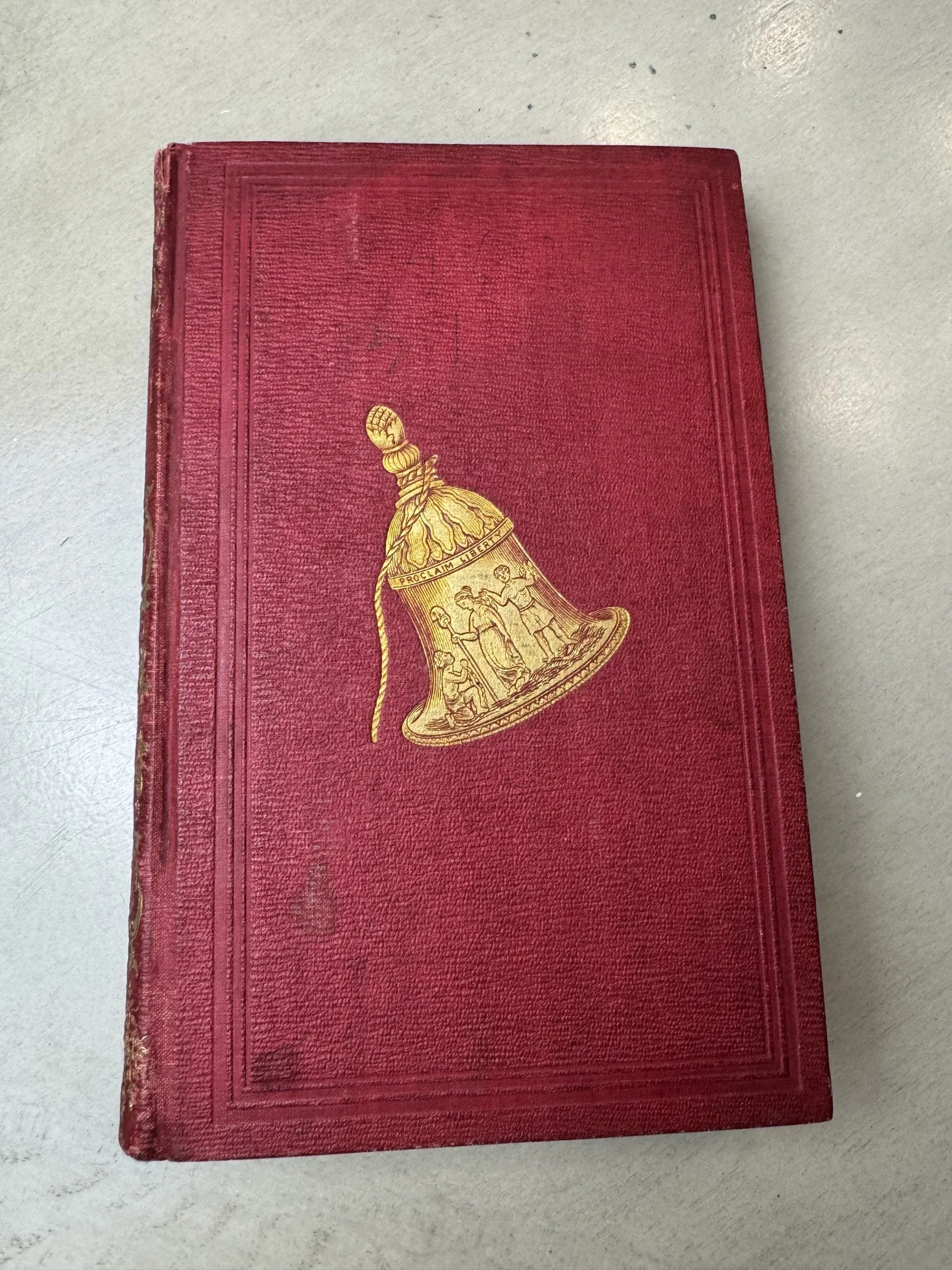
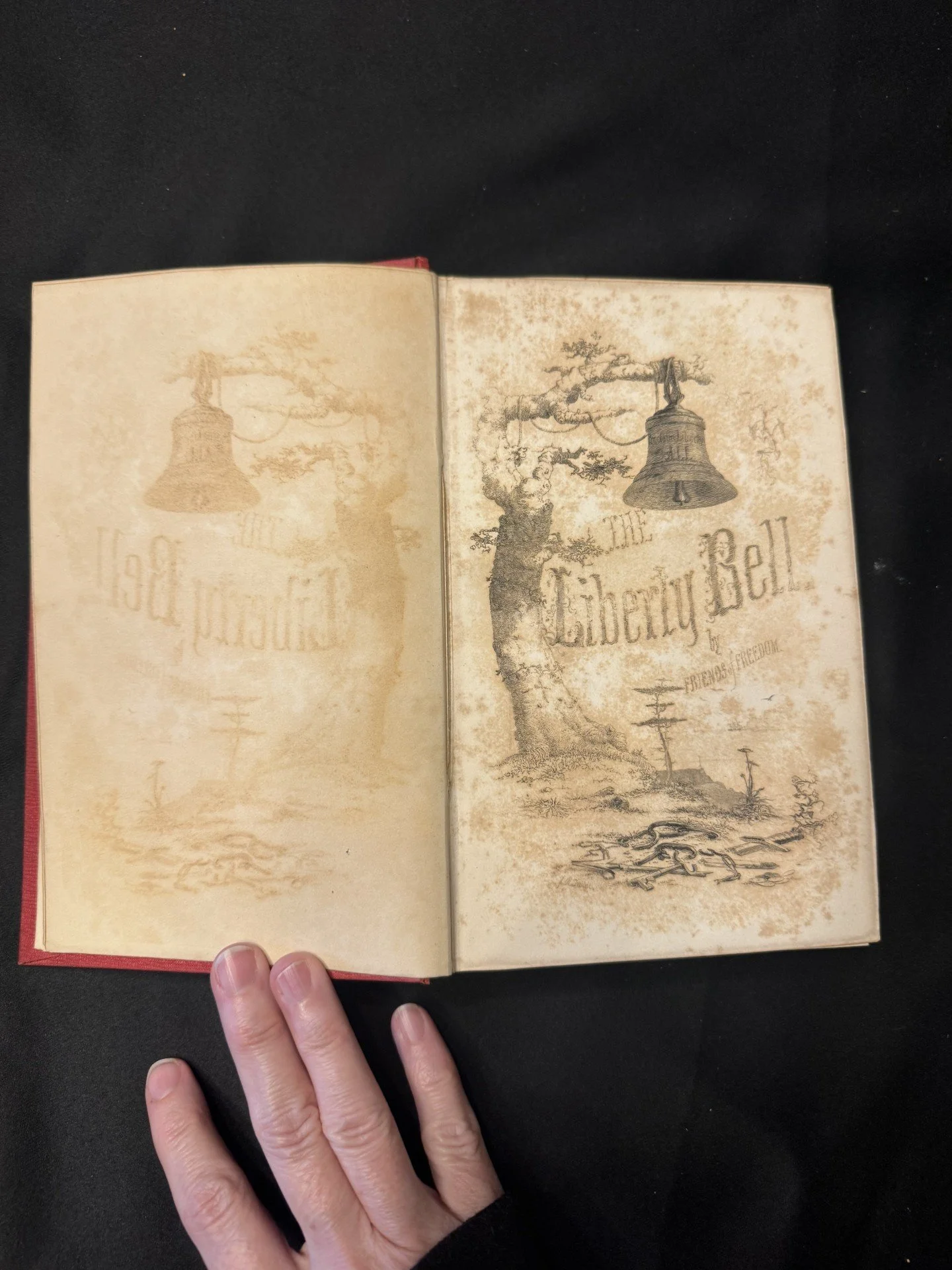
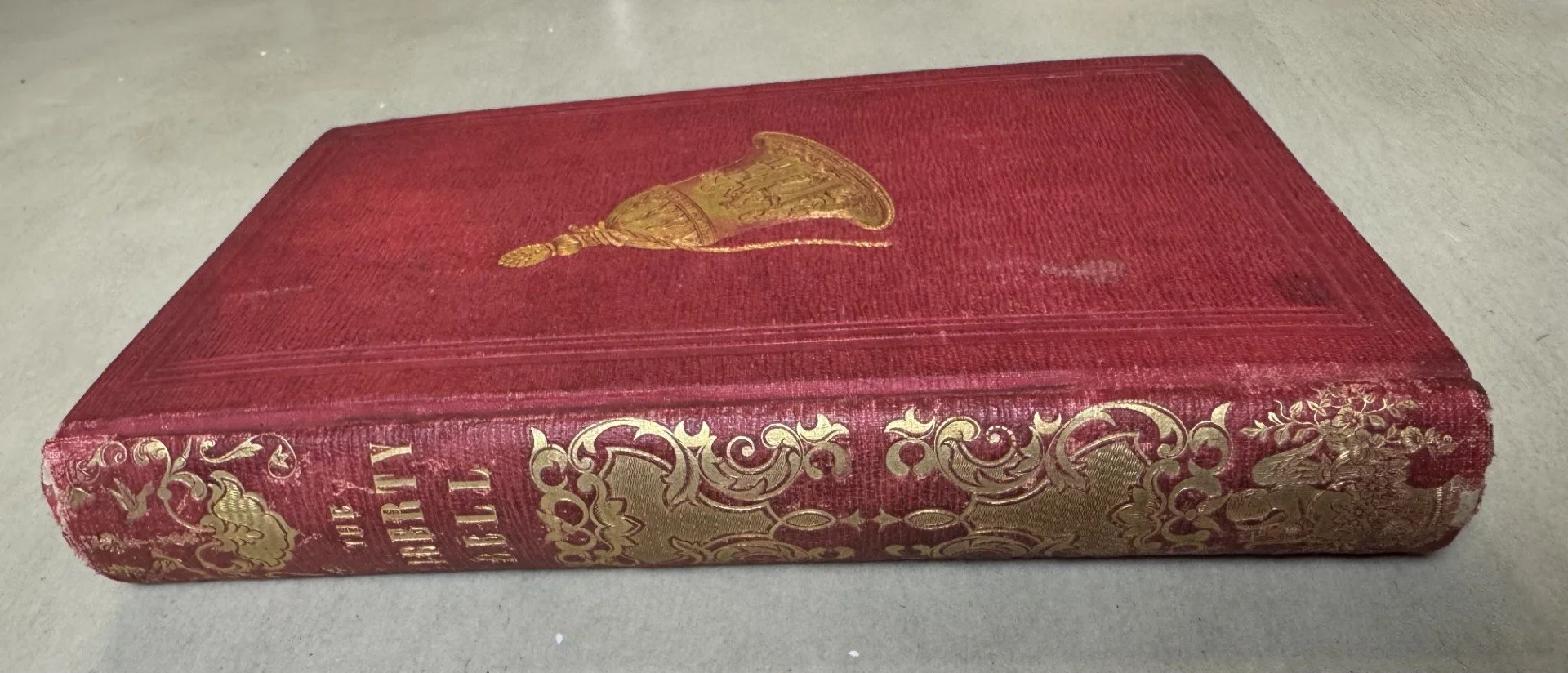
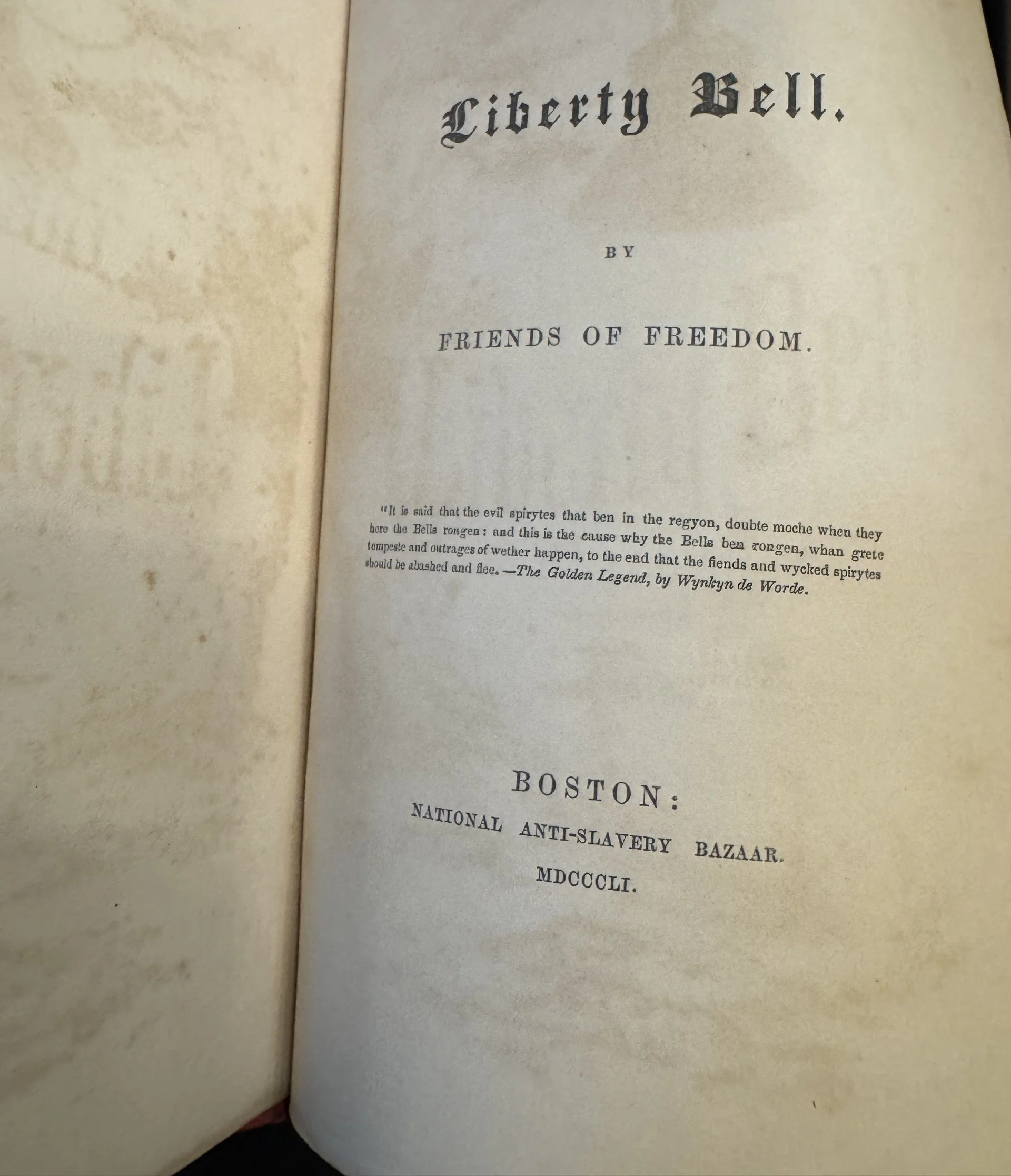
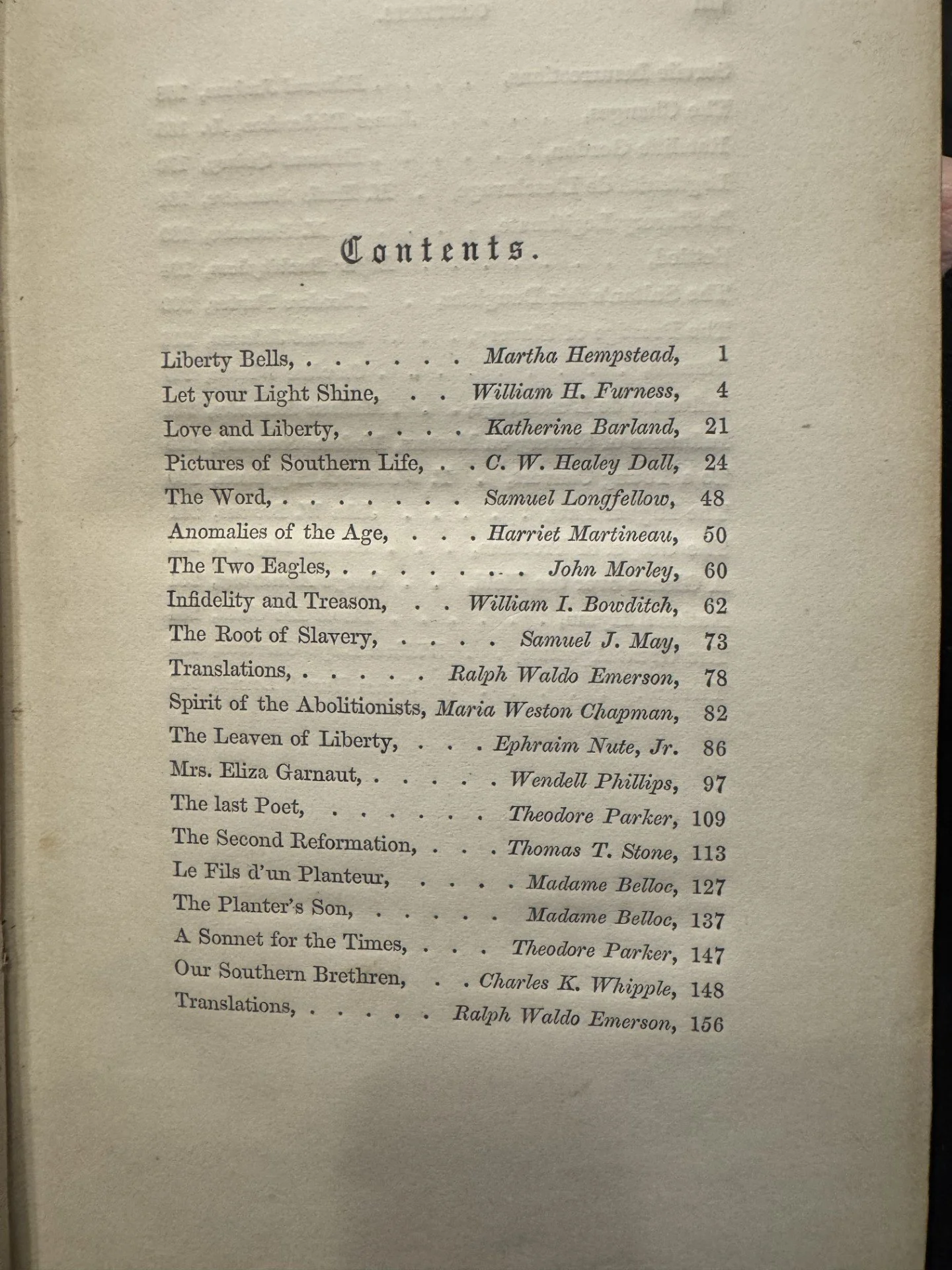
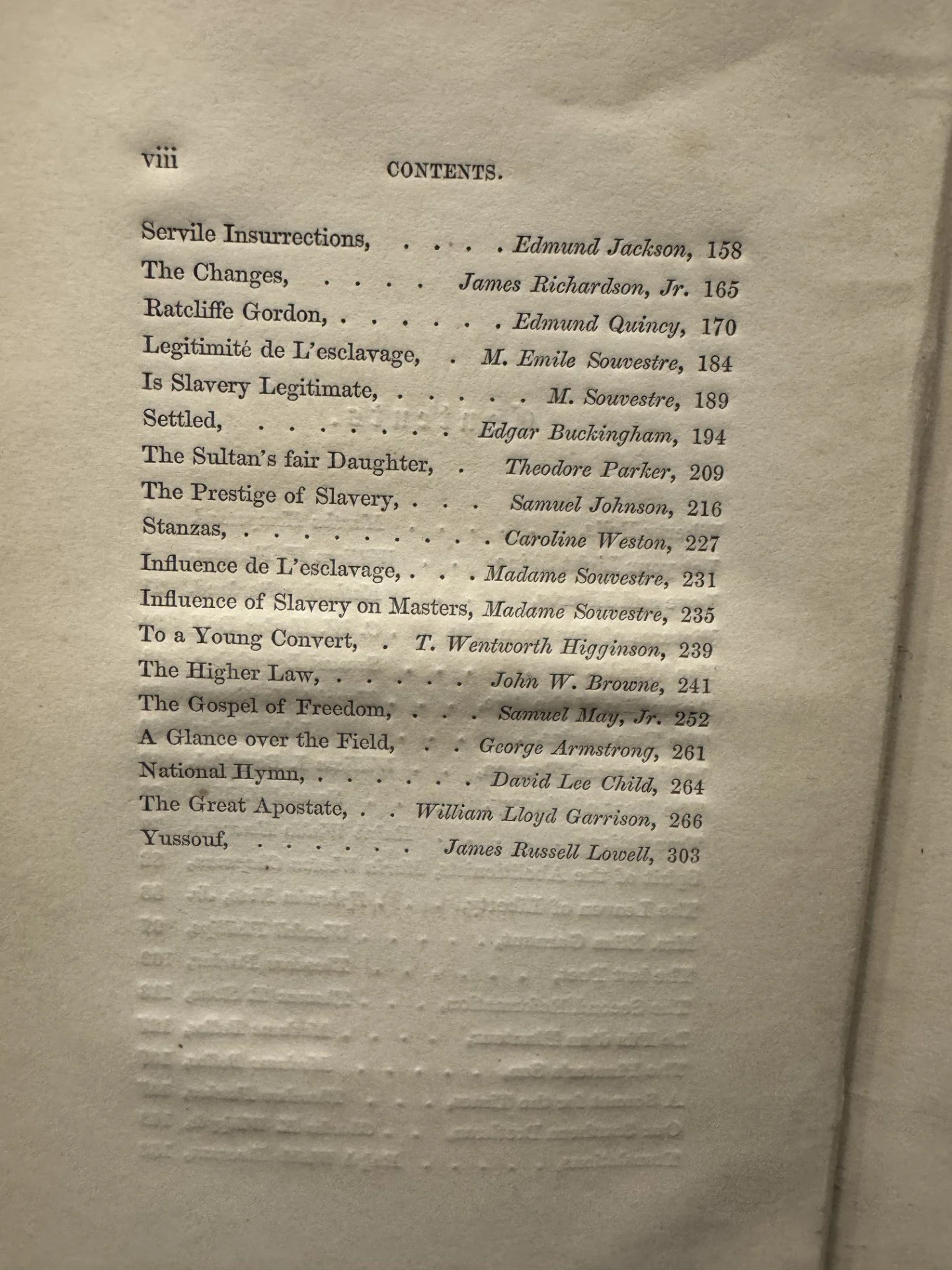
The Mayflower Descendants Museum holds an 1851 edition of The Liberty Bell, by Friends of Freedom, an antislavery literary annual edited by abolitionist Maria Weston Chapman (1806–1885).
How Rare is This Book? The Mayflower Descendants Museum Has Not Identified Another Museum Collection Holding This 1851 Edition as a Museum Object
In the Museum’s research to date, the Mayflower Descendants Museum has not identified another museum collection currently cataloging this exact 1851 edition of The Liberty Bell, by Friends of Freedom as a museum object.
The Smithsonian Institution’s National Museum of American History does preserve another edition of The Liberty Bell as a museum object. Its collection holds an 1853 edition.
What was the Liberty Bell?
The Liberty Bell was created as a fundraising publication for Boston’s antislavery movement. Chapman edited the annual and solicited poems, essays, stories, translations, and other writings from American and international authors. Copies were sold through the Boston Anti-Slavery Bazaar, with proceeds supporting the abolitionist cause. The series began in 1839 and continued, with some interruptions, into the 1850s.
The Museum’s 1851 volume contains an extraordinary cross-section of nineteenth-century reformers and writers, including Ralph Waldo Emerson, Theodore Parker, William Lloyd Garrison, Thomas Wentworth Higginson, Samuel J. May, Wendell Phillips, James Russell Lowell, Harriet Martineau, Samuel Longfellow, Edmund Quincy, Caroline Weston, and Chapman herself.
Five Mayflower-Descendant Contributors Confirmed So Far
Research conducted by the Mayflower Descendants Museum has so far confirmed at least five contributors to this particular 1851 edition as Mayflower descendants.
Samuel Longfellow (1819–1892), younger brother of Henry Wadsworth Longfellow, contributed The Word. Samuel was descended from multiple Mayflower passengers.
Ralph Waldo Emerson (1803–1882) contributed translations appearing in the volume and was also a Mayflower descendant.
Maria Weston Chapman, the volume’s editor, was herself descended from Mayflower passengers.
Caroline Weston (1808–1882), Maria’s sister, contributed Stanzas and shared the Weston family’s Mayflower ancestry.
Edmund Quincy (1808–1877), who contributed Ratcliffe Gordon, was another prominent abolitionist represented in the volume and a Mayflower descendant.
These are the five contributors the Museum has confirmed to date. Research will continue to determine whether additional writers represented in this particular edition also descend from Mayflower passengers.
Maria Weston Chapman and the Network Behind The Liberty Bell
Chapman was much more than the book’s nominal editor. She helped found the Boston Female Anti-Slavery Society, organized antislavery fairs for more than two decades, edited abolitionist publications, and built an extraordinary network of writers and reformers whose work she brought together in The Liberty Bell.
The National Park Service estimates that Chapman and the Boston Female Anti-Slavery Society raised approximately $65,000 through their antislavery fundraising efforts. To give a sense of scale, that amount would be equivalent to roughly $2.8 million today when using 1851 as a representative inflation benchmark.
Her network also connects this book to two other figures represented in the Museum’s broader collections: Frederick Douglass and sculptor Edmonia Lewis.
Frederick Douglass contributed an essay titled The Folly of Our Opponents to the 1845 edition of The Liberty Bell. Chapman and Douglass also corresponded, and Chapman became involved in the publication and circulation of his Narrative abroad. Their relationship belonged to the larger abolitionist network in which both worked.
Years later, when Edmonia Lewis arrived in Boston and began establishing herself as a sculptor, Chapman was among the prominent abolitionist women who supported her. The National Park Service identifies Maria Weston Chapman, Lydia Maria Child, and Elizabeth Peabody among the women who commissioned Lewis’s work and offered her career advice. In fact, Lewis made a bust of Maria Weston Chapman currently located at the Tufts Library/Weymouth Public Library in Weymouth, MA. Link: Maria Weston Chapman by Edmonia Lewis | Weymouth, MA
That connection gives the Museum’s 1851 Liberty Bell significance far beyond the names printed in its table of contents. It represents a network of reformers, writers, artists, and activists whose lives repeatedly intersected.
Mayflower Descendants Across Other Editions
The five confirmed descendants in the Museum’s 1851 volume were not the only Mayflower descendants to appear in The Liberty Bell series.
Henry Wadsworth Longfellow, Samuel’s older brother and himself descended from multiple Mayflower passengers, contributed to other editions of The Liberty Bell.
Eliza Lee Cabot Follen, another contributor to the series, was also a Mayflower descendant according to research and actively helped Chapman solicit material for the annual.
John Quincy Adams, a documented descendant of John Alden and Priscilla Mullins, was likewise represented in the series.
Mayflower Descendants with a Voice and On a Mission Together with Others to End Slavery
Mayflower descendants writing about slavery, liberty, religion, morality, and American freedom more than two centuries after their ancestors arrived.
Pictured: the Mayflower Descendants Museum’s 1851 edition of The Liberty Bell, by Friends of Freedom, including its table of contents identifying contributors to the volume.
Sources & Further Reading
National Park Service — Maria Weston Chapman and the Boston Female Anti-Slavery Society.
Maria Weston Chapman — National Park Service
National Park Service — the Longfellow family and antislavery materials, including contributions to The Liberty Bell.
Slavery and Abolition in the Longfellow Archives
Tufts University — Frederick Douglass and The Liberty Bell.
Frederick Douglass and The Liberty Bell
National Park Service — Edmonia Lewis and the support she received from Maria Weston Chapman and other Boston abolitionist women.
Edmonia Lewis — National Park Service
Boston College — The Liberty Bell as an antislavery gift book sold through the Boston Anti-Slavery Bazaar.
Reintroducing Robert Morris — Boston College
Google Books — digitized 1851 edition of The Liberty Bell.
The Liberty Bell, 1851
Inflation comparison — historical purchasing-power estimate using 1851 as the benchmark year.
1851 Inflation Calculator