
A Rare 1895 Book of Shakespeare’s Heroines
Featuring Mayflower Descendants Charlotte and Susan Cushman
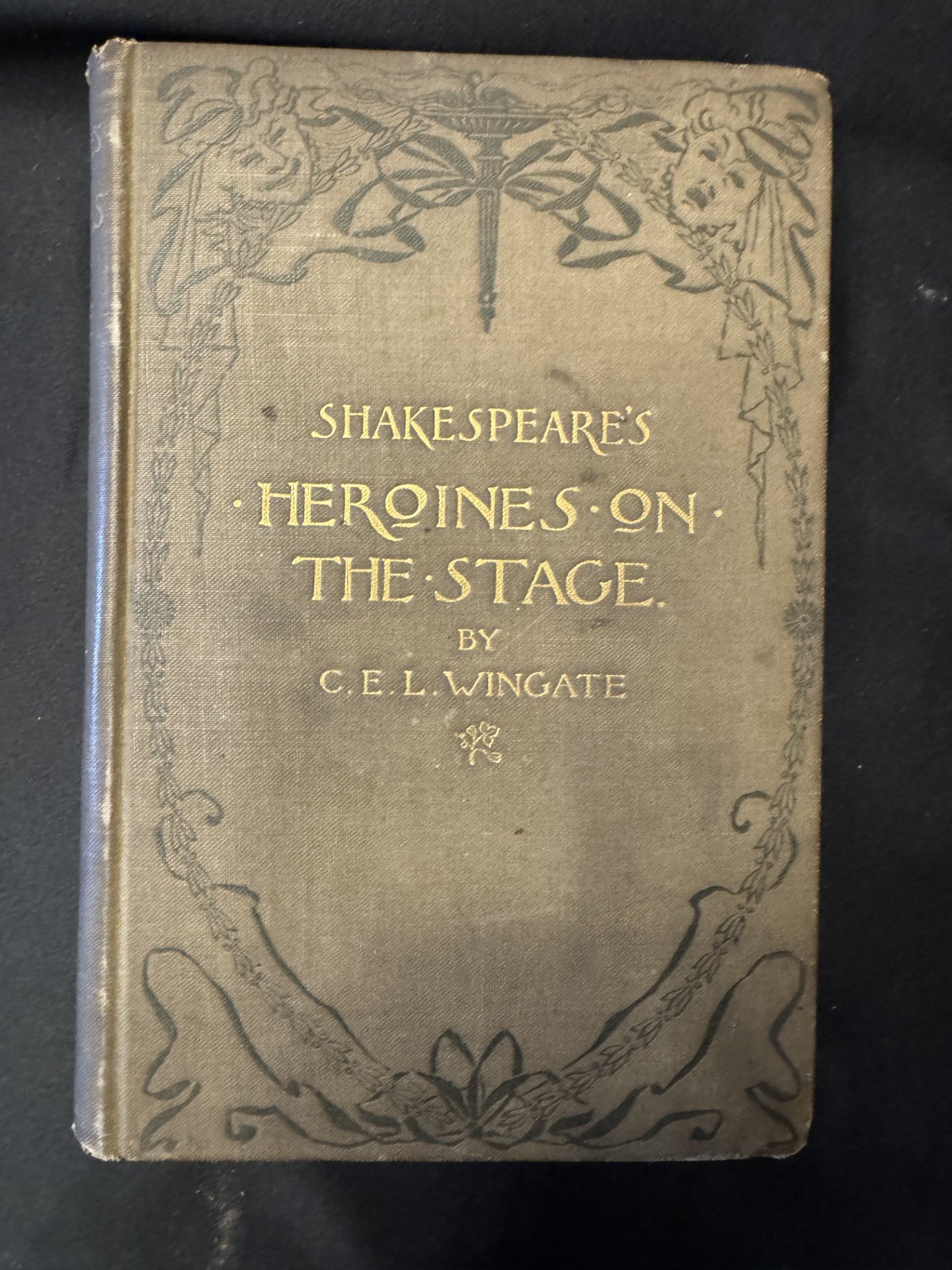
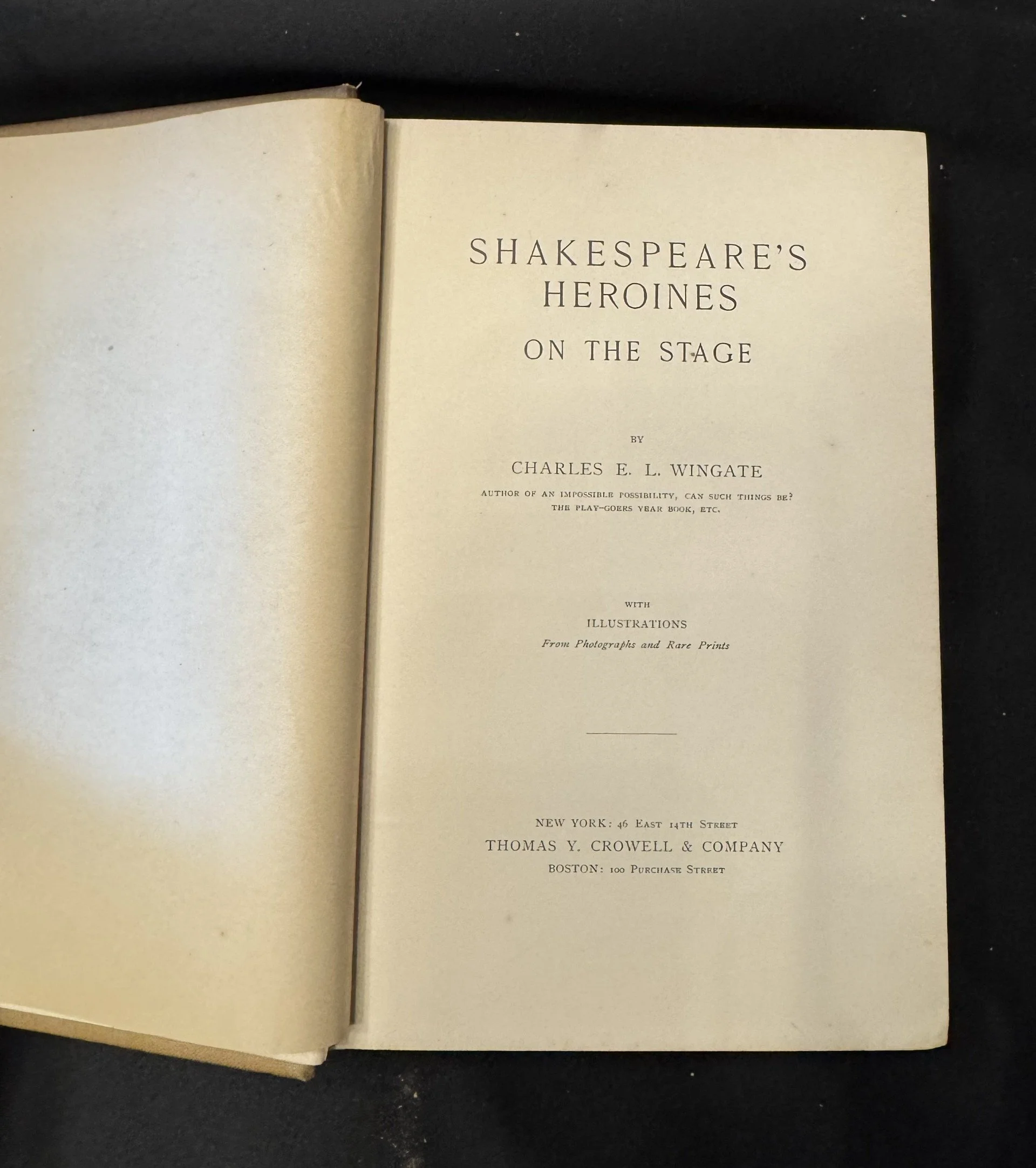
Shown here is the Mayflower Descendants Museum’s 1895 copy of Charles E. L. Wingate’s Shakespeare’s Heroines on the Stage, published by Thomas Y. Crowell & Company in New York and Boston. The 355-page volume explores the actresses who brought Shakespeare’s female characters to the nineteenth-century stage and includes illustrations drawn from photographs and rare prints. Its chapters examine performers associated with characters including Beatrice, Hermione, Viola, Imogen, Rosalind, Cleopatra, Queen Katharine, Katharina, Ophelia, and Desdemona. (Google Books)
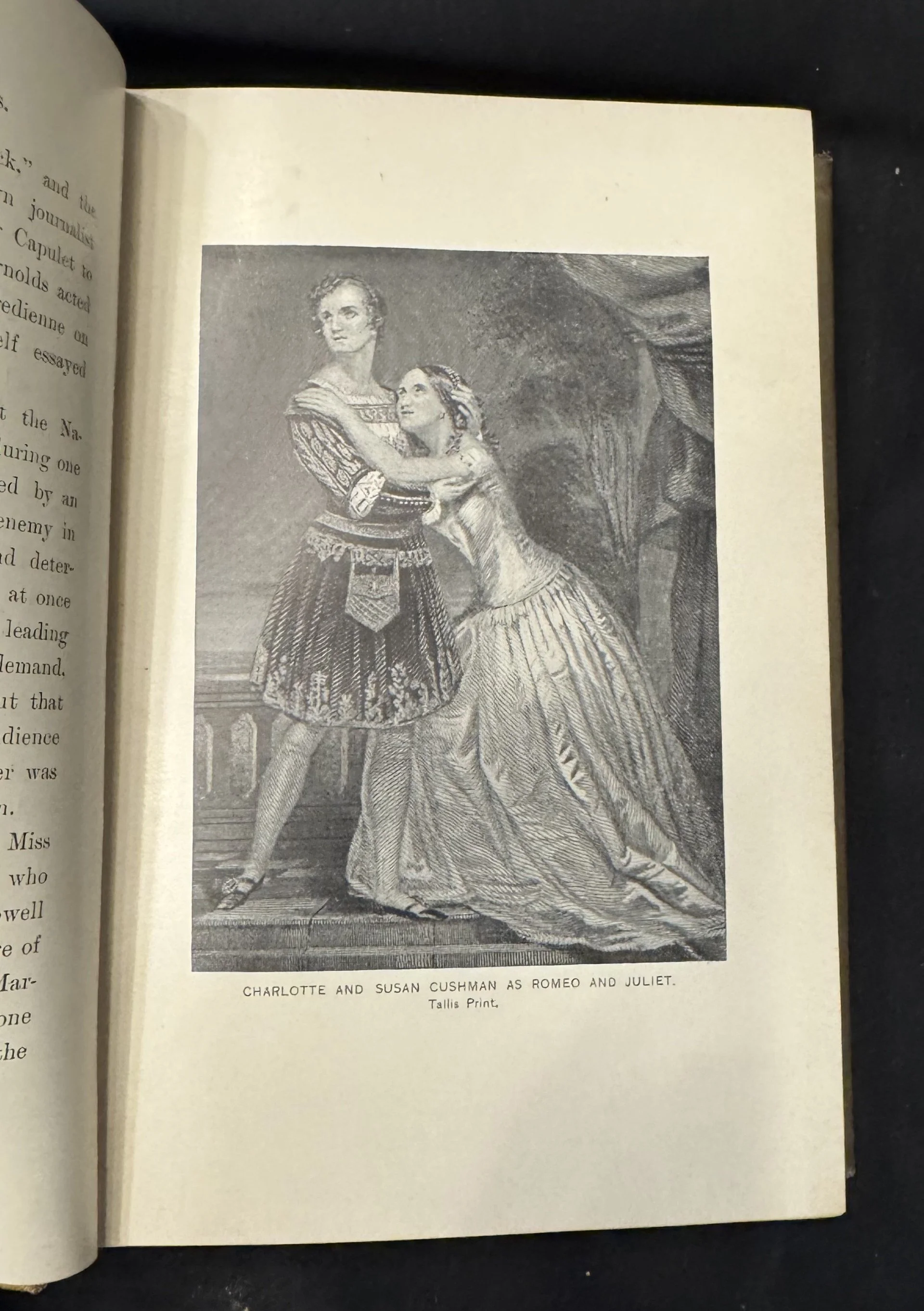
Among the illustrations is one especially significant to the Museum: Charlotte Cushman (1816–1876) as Romeo with her younger sister Susan Cushman (1822–1859) as Juliet. Charlotte became one of the nineteenth century’s most celebrated Shakespearean performers, particularly famous for taking male roles. The Folger Shakespeare Library describes images of Charlotte as Romeo opposite Susan as Juliet as some of the enduring icons of her career. (Folger Shakespeare Library)
Two Mayflower Descendants on the Shakespearean Stage
Charlotte and Susan Cushman shared a family line descending from Mayflower passenger Isaac Allerton and his daughter Mary Allerton, who crossed the Atlantic aboard the Mayflower as a child in 1620. Mary later married Thomas Cushman. Historical genealogical sources specifically identify Charlotte Cushman among the descendants of Mary Allerton and Thomas Cushman. (Wikimedia Commons)
Thomas Cushman was the son of Robert Cushman, an important figure behind the Mayflower migration. Robert and John Carver were selected to act as agents for the Leiden Separatists in negotiating their emigration. Robert intended to travel with the colonists in 1620, but the problems with the leaking Speedwell left him behind. He and Thomas reached Plymouth aboard the Fortune in 1621; Robert later returned to England while Thomas remained in Plymouth and eventually married Mary Allerton. (Mayflower DNA)
The connection gives the image in Wingate’s book another historical dimension: two sisters descended from the Mayflower generation appearing together in one of Shakespeare’s most famous love stories.
Charlotte Cushman as Romeo
Charlotte’s Romeo was not simply a theatrical curiosity. It became one of the performances most strongly associated with her career.
Charlotte and Susan appeared together as Romeo and Juliet in Britain during the 1840s, and the pairing became sufficiently famous to be reproduced in engravings and Staffordshire figures for the popular market. The Folger Shakespeare Library preserves several images and objects depicting the sisters in these roles. (Folger Shakespeare Library)
Charlotte’s importance also extends to the history of women in the performing arts. She established an international career while taking roles traditionally reserved for men and managed her professional life with unusual independence. The Folger describes her as a nineteenth-century theatrical icon and notes that she demanded compensation comparable to leading male performers. (Folger Shakespeare Library)
The illustration in the Museum’s book therefore preserves more than a scene from Romeo and Juliet. It records two professional women appearing together in Shakespeare, with Charlotte occupying the male leading role.
Why This Book Matters to Women in the Arts
The original performances of Charlotte and Susan Cushman cannot survive in the way a painting, sculpture, or piece of decorative art can.
Their art existed while they were performing.
Books, prints, photographs, reviews, playbills, and other historical records therefore become especially important for preserving the history of nineteenth-century actresses. Wingate’s volume was published less than twenty years after Charlotte Cushman’s death and helped record the performers who shaped the nineteenth-century interpretation of Shakespeare’s women.
The Museum’s copy preserves that history as a physical artifact. Its Cushman illustration connects the history of women performers, Shakespeare, Boston theater, Mayflower descendants, and the nineteenth-century reproduction of theatrical celebrity within a single object.
How Rare is this Book? The Mayflower Descendants Museum Has Not Identified Another Museum Collection Holding This Historic and Rare 1895 Book
Copies of Shakespeare’s Heroines on the Stage survive in important institutional collections, but the examples located during the Museum’s research are primarily preserved as library and special-collection books rather than as museum objects.
The Boston Public Library’s historic catalog records the 1895 edition under its special call number *T.47.89 and notes an additional copy with newspaper clippings inserted. The record describes the volume as containing illustrations from photographs and rare prints. (BPL Card Catalog)
Digitized examples also survive through research-library projects such as Google Books, allowing the text to remain accessible to scholars and the public. (Google Books)
In the Museum’s research to date, the Mayflower Descendants Museum has not identified another museum collection cataloging this exact 1895 volume as a museum object. That does not mean another museum copy cannot exist; institutional catalogs are incomplete and books of this type are frequently held within libraries rather than museum object databases.
Within the Mayflower Descendants Museum, however, the volume is being preserved and interpreted specifically as an artifact connecting Mayflower-descendant history with women’s professional history and the performing arts.
Preserving an Art That Disappears
One illustrated page captures why the book belongs in the Museum’s Rare Book Collection.
Charlotte Cushman appears as Romeo. Susan Cushman appears as Juliet. They were sisters, professional actresses, and descendants of the Mayflower generation. Their performances helped shape nineteenth-century Shakespearean theater, but those performances themselves disappeared as soon as the curtain fell.
The book survives.
More than a century later, it continues to preserve an image of two women whose work challenged expectations about who could occupy the stage—and what roles women could claim there.
Holdings of the Mayflower Descendants Museum
Sources and Further Reading
Charles E. L. Wingate, Shakespeare’s Heroines on the Stage. New York and Boston: Thomas Y. Crowell & Company, 1895. The bibliographic record identifies the volume as 355 pages and provides its contents and digitized text. (Google Books)
View the 1895 book on Google Books
Boston Public Library historic card catalog — records the 1895 Wingate volume and an additional copy with clippings inserted. (BPL Card Catalog)
View the Boston Public Library catalog record
Folger Shakespeare Library — Charlotte Cushman: When Romeo Was a Woman. Discussion of Cushman’s career and her famous performances opposite Susan as Juliet. (Folger Shakespeare Library)
Read the Folger feature on Charlotte Cushman
Folger Shakespeare Library — Charlotte Cushman, an American Star. Includes images of Charlotte and Susan as Romeo and Juliet and other representations of Cushman’s career. (Folger Shakespeare Library)
Explore Charlotte Cushman at the Folger
Mayflower DNA — Cushman family history. Documents Robert Cushman’s role as an agent for the Separatists, Thomas Cushman’s 1621 arrival aboard the Fortune, and Thomas’s marriage to Mayflower passenger Mary Allerton. (Mayflower DNA)
Explore the Cushman family history
The Women of the Mayflower and Women of Plymouth Colony — identifies Charlotte Cushman among the descendants of Mary Allerton and Thomas Cushman. (Project Gutenberg)
Read the digitized historical volume