
Tea and the Gibson Girl
Charles Dana Gibson in Art and Ceramics
More than a century after the Boston Tea Party, tea had acquired very different associations in American visual culture. In the work of Mayflower descendant Charles Dana Gibson (1867–1944), tea tables, drawing rooms, dinners, visits, and other social rituals became settings in which he observed—and gently satirized—the relationships, expectations, and changing roles of men and women at the turn of the twentieth century.
Gibson was one of the most influential American illustrators of his era and the creator of the celebrated “Gibson Girl.” Beginning in the 1890s, his elegant, self-possessed women appeared in publications including Life, Collier's Weekly, Harper's Weekly, Scribner's, and Century. The Library of Congress describes the Gibson Girl as a visual embodiment of the period's emerging “New Woman”—fashionable and beautiful, but also confident, socially active, and increasingly independent. (Library of Congress)
Gibson’s Mayflower ancestry is documented through passengers John Alden, William Bradford, and Richard Warren. Published genealogical research identifies him as a seventh-great-grandson of Alden, a sixth-great-grandson of Bradford, and a descendant of Warren through multiple ancestral lines. (Mayflower Kin)
A Gibson Drawing Transformed into Ceramics
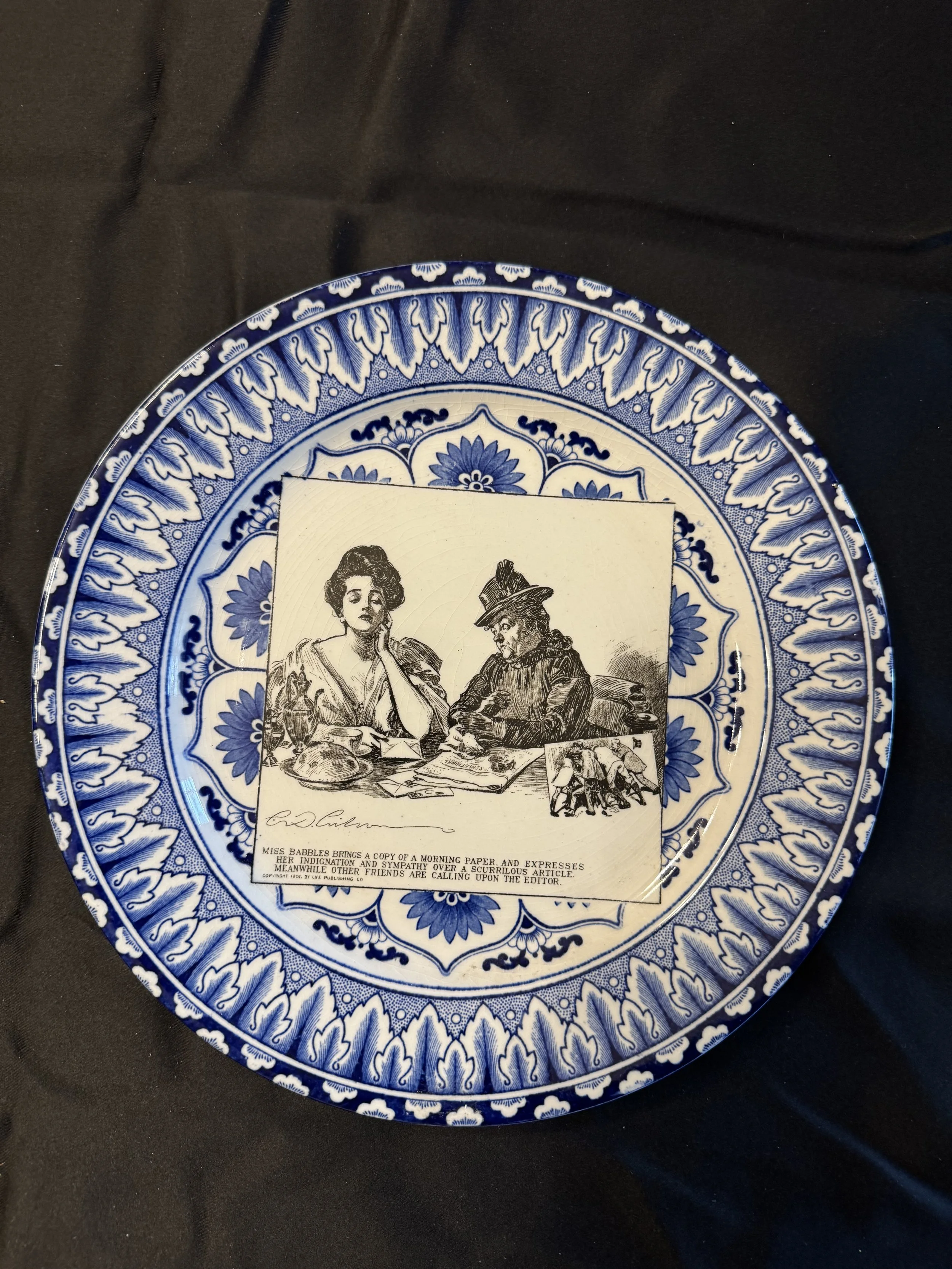
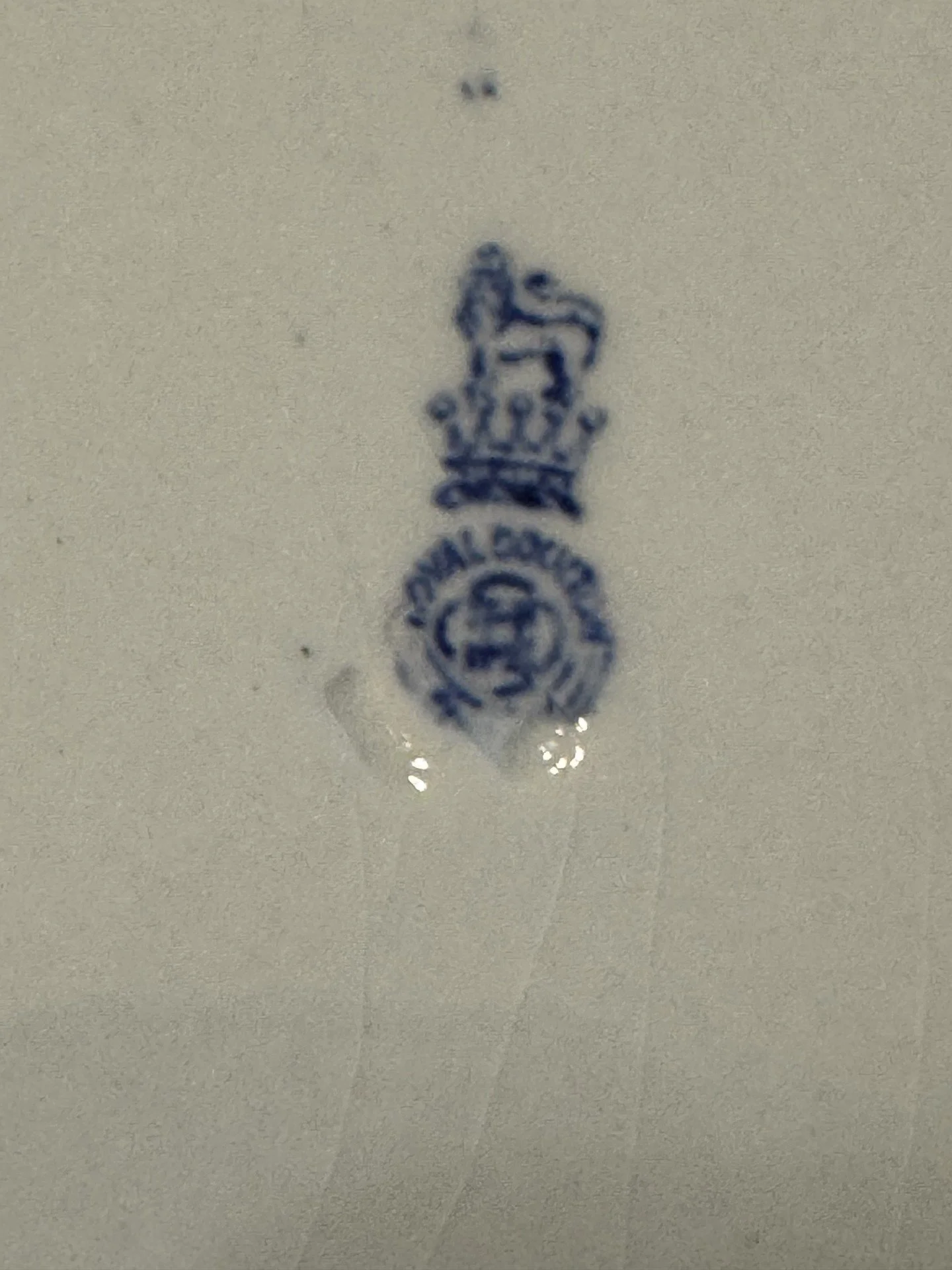
Shown here is one of a series of Royal Doulton plates produced in England after Gibson's illustrations. Royal Doulton created a service of 24 different plates based on scenes from Gibson's A Widow and Her Friends. Hillwood Estate, Museum & Gardens holds examples from the same service and identifies them as Royal Doulton bone china made in Burslem, England. The plates combine Gibson's black transfer-printed illustrations with elaborate blue-and-white foliate borders. (Hillwood Estate, Museum & Gardens)
The Mayflower Descendants Museum holds many in the series, allowing these objects to be considered together as a visual narrative rather than as individual decorative plates.
This particular scene bears Gibson's caption:
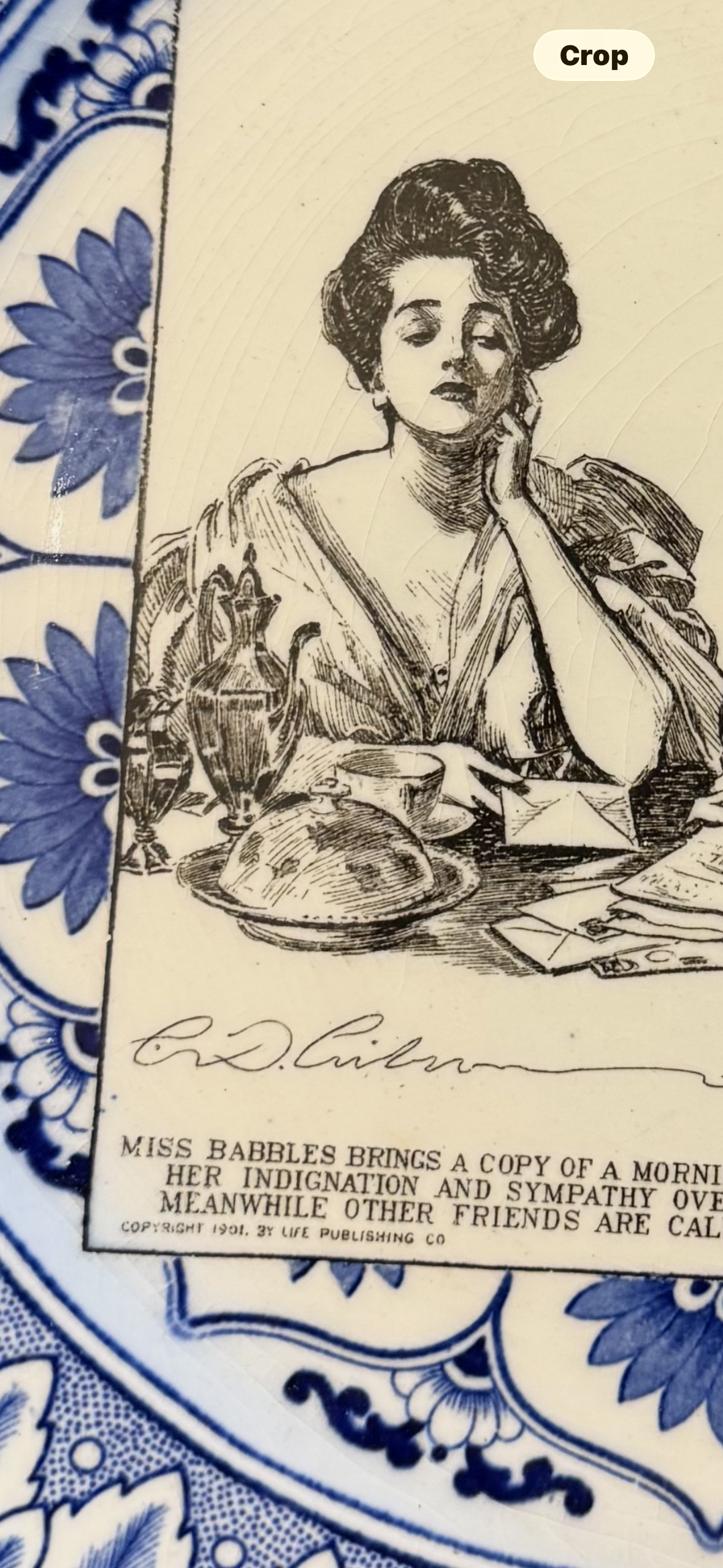
“Miss Babbles brings a copy of a morning paper, and expresses her indignation and sympathy over a scurrilous article. Meanwhile other friends are calling upon the editor.”
The illustration is copyrighted 1901 by Life Publishing Co. and also appears among the episodes of A Widow and Her Friends in Gibson's published work. (Project Gutenberg)
One notable detail in the scene is the presence of tea.
Beside the women, Gibson carefully included a teapot, cup and saucer, and additional tableware. They are not the subject of the joke, yet they help establish the social world in which the conversation occurs. The newspaper has brought upsetting gossip or criticism into the room; the tea table provides the familiar domestic setting around which that news is discussed.
Tea as a Stage for Social Life
Tea appears elsewhere in Gibson's work as well. It was one of the everyday social rituals he could use to bring people together and then observe their relationships.
Decades later, in Gibson's 1926 drawing Eenie, Meenie, Minie, Mo, now in the Library of Congress, he again placed a woman at the center of a tea party. Four suitors surround her while she remains composed and in control of the encounter. The Library of Congress specifically identifies the scene with both tea parties and tea tables, describing the woman as having served tea to her admirers. (Library of Congress)
The tea service on this earlier plate therefore carries significance beyond decoration. Across Gibson's work, the tea table could function almost like a stage: a place for conversation, courtship, friendship, gossip, humor, and the negotiation of social expectations.
From Illustration to Object
The plate also demonstrates how enormously influential Gibson's imagery became. His drawings did not remain confined to magazines and books. They moved into popular material culture, appearing on objects made for the home.
Here, an American magazine illustration by a Mayflower-descendant artist was translated by one of Britain's major ceramic manufacturers into blue-and-white tableware—turning Gibson's depiction of domestic social life into an object that could itself be placed on an American tea or dinner table.
For the Museum's growing group of these plates, that intersection is particularly compelling: illustration, ceramics, publishing, women's history, popular culture, and Mayflower-descendant art all meet in the same objects.
Holdings of the Mayflower Descendants Museum
Sources and Further Reading
Library of Congress, The Gibson Girl's America: Drawings by Charles Dana Gibson — overview and sections on the Gibson Girl and social relations. (Library of Congress)
Hillwood Estate, Museum & Gardens, Plate from the Gibson Girl Service — Royal Doulton, after Charles Dana Gibson; identifies the service as a 24-plate set based on The Widow and Her Friends. (Hillwood Estate, Museum & Gardens)
Christie's, A Set of Twelve Royal Doulton Porcelain “Gibson Girls” Plates — examples from the same Royal Doulton series and identification of the individual scenes. (Christie's Online Only)
Charles Dana Gibson, The Gibson Book, Vol. II — includes the original A Widow and Her Friends sequence and the “Miss Babbles” scene represented on this plate. (Project Gutenberg)