
The Story of Wampum
A Mayflower Descendant’s Study Collection and Wampanoag History
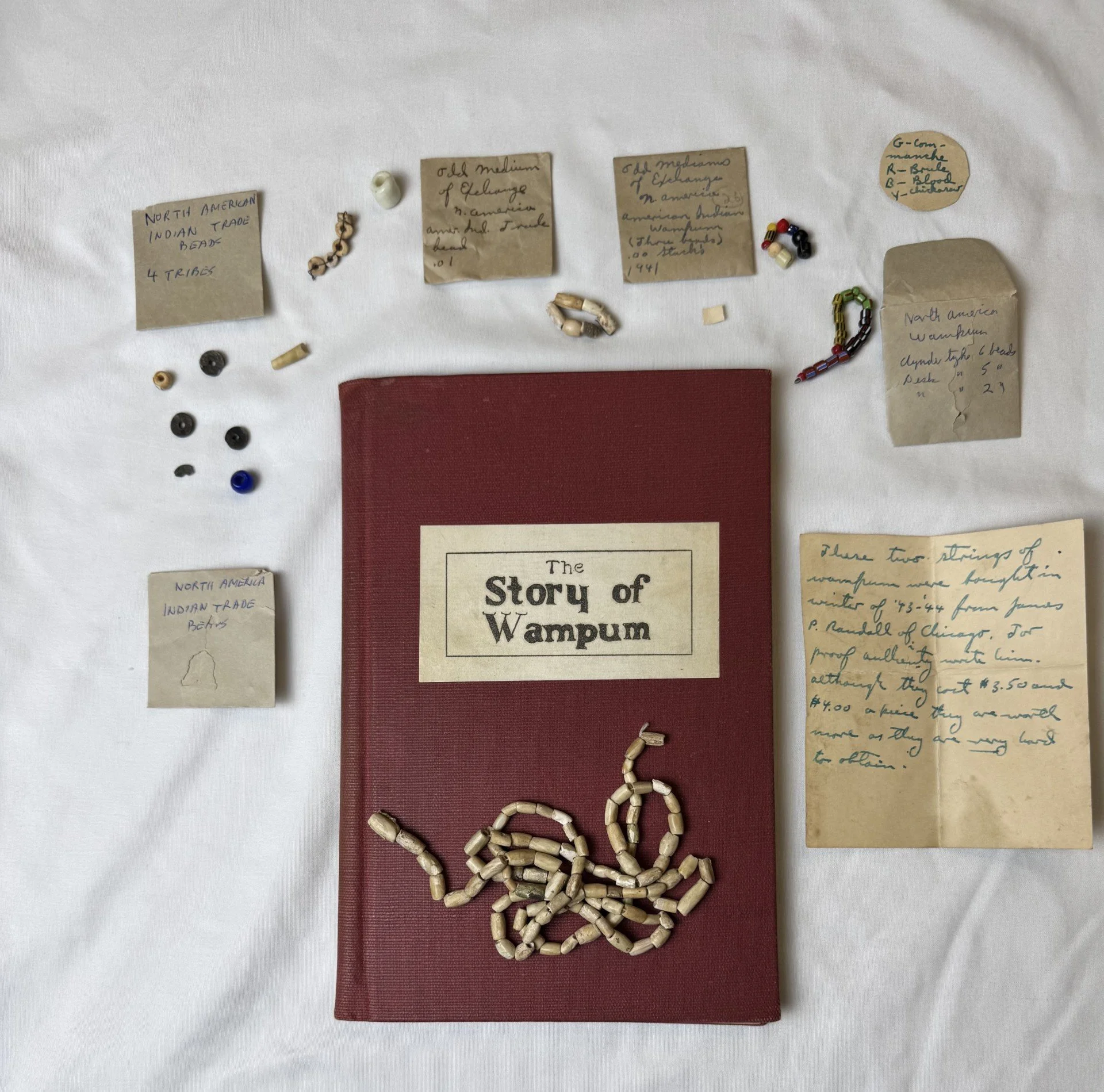
PREVIEW 1/3: The Story of Wampum — A Mayflower Descendant’s Study Collection and Wampanoag History
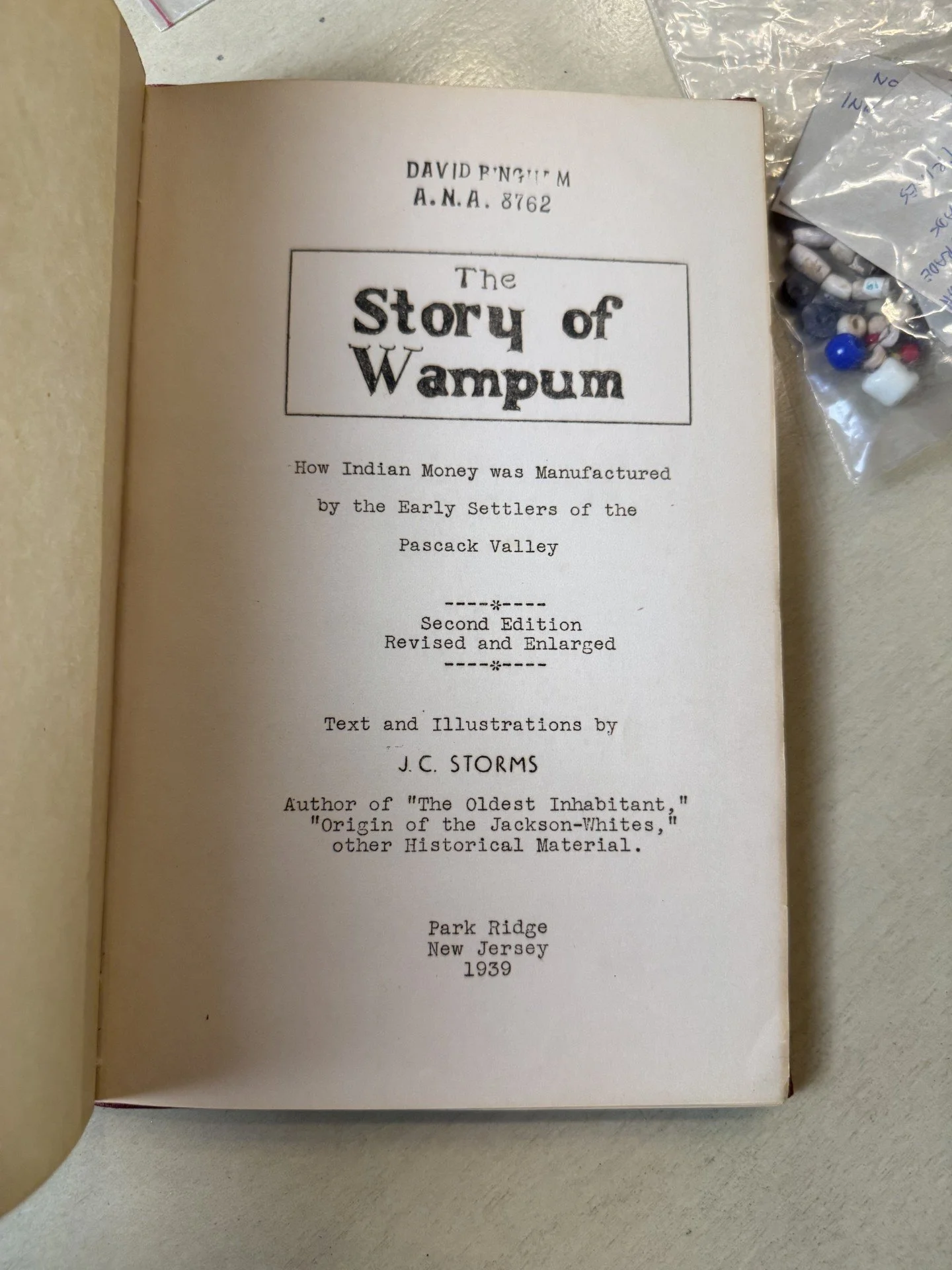
At the center of this study collection is the rare volume The Story of Wampum, accompanied by shell specimens, beads, trade beads, and handwritten research notes assembled by Mayflower descendant Dr. David Starr Bingham (1926–2012). In our research we have not identified another museum collection with a cataloged copy.
Bingham was a World War II veteran who studied economics at Princeton University and graduated with honors. His academic background is particularly interesting in relation to this collection because The Story of Wampum discusses the historic use of wampum in systems of exchange. Bingham’s surviving handwritten notes record observations about individual shells and beads, including references to exchange values and different types of North American trade beads.
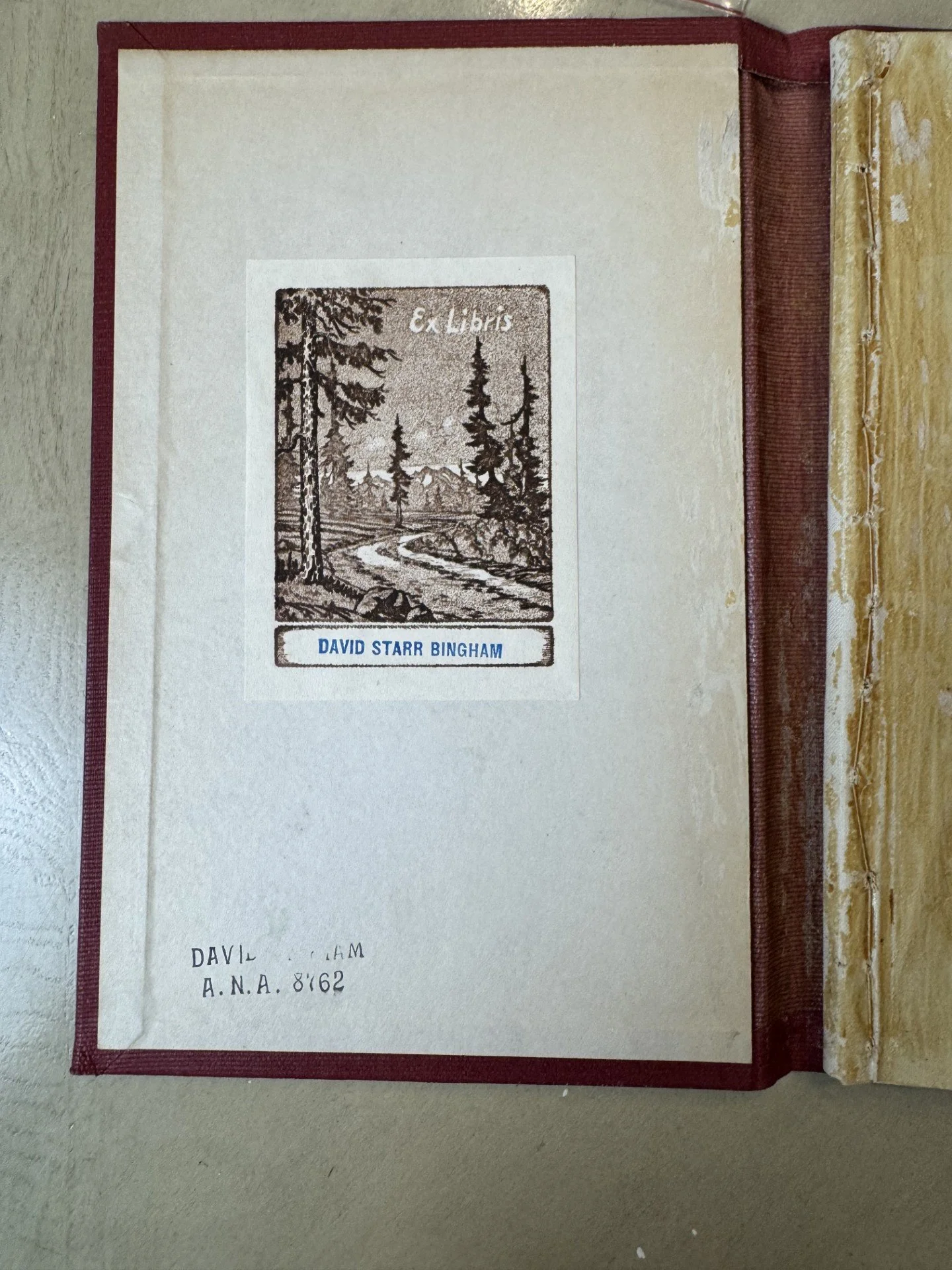
His interest in monetary history extended beyond this study collection. Bingham was also a member of the American Numismatic Association, as documented by the membership stamp and number preserved inside the book.
Together, the book, specimens, and handwritten notes provide a glimpse into the way one twentieth-century Mayflower descendant studied the intersection of Native American material culture, economics, trade, and early American history.
What Is Wampum?
Wampum is far more than an early form of money.
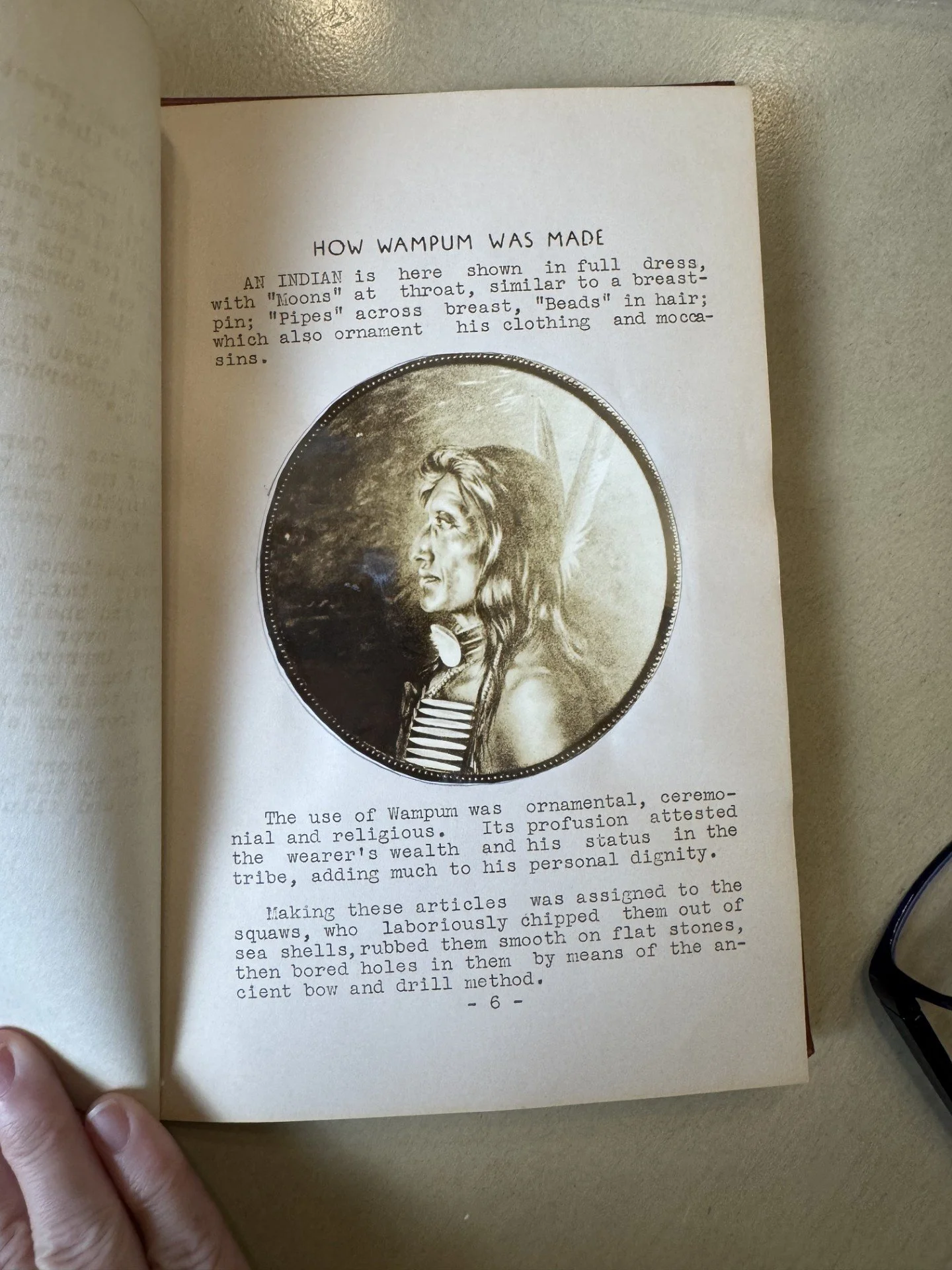
The Smithsonian’s National Museum of the American Indian explains that wampum beads were traditionally made from shell: purple beads from the colored portion of quahog clam shells and white beads from whelk shells. Making the small cylindrical beads required considerable labor—the shell was cut, ground, sanded, and drilled before the beads could be strung or woven. (National Museum of the American Indian)
Smithsonian National Museum of the American Indian — Journey of Wampum
For the Wampanoag people specifically, wampum has deep cultural significance. The Wampanoag Tribe of Gay Head (Aquinnah) explains that quahog was an important food source as well as a principal material for wampum, and describes wampum belts as sacred and culturally important objects. Wampum also circulated through extensive systems of trade. (Wampanoag Tribe of Gay Head (Aquinnah))
Wampanoag Tribe of Gay Head (Aquinnah) — Wampum
More Than Currency
European colonists encountered wampum within Native systems of exchange and increasingly used it themselves as trade expanded. This history is one reason wampum is sometimes described primarily as “money” or “currency.”
That description, however, captures only part of its meaning.
The National Museum of the American Indian explains that wampum could be exchanged to establish and maintain relationships and woven into belts, collars, and other forms carrying symbolic designs. Wampum continues to be used by Native people for ceremonies, expressions of respect, and the recording of important events. (National Museum of the American Indian)
Across northeastern Native nations, strings and belts of wampum also became important in diplomacy. They could preserve the memory of agreements, alliances, political positions, ceremonies, and significant events. National Park Service educational materials describe wampum belts as material records that accompanied diplomatic agreements between Native nations and colonial governments. (National Park Service)
National Park Service — Teaching American Indian History with Primary Sources
A Living Wampanoag Tradition
Wampum should not be understood only as an artifact of the seventeenth century.
The Aquinnah Cultural Center describes contemporary Wampanoag wampum as an ongoing artistic and cultural tradition. Its recent Wampum: Stories from the Shells of Native America exhibition featured a newly created belt made collaboratively by Wampanoag artists and community members. The Cultural Center explains that the purple and white shell beads embody relationships with the sea, memory, community, and tribal history. (Aquinnah Cultural Center)
Aquinnah Cultural Center — Wampum and Wampanoag Exhibitions
The Smithsonian likewise describes wampum among Wampanoag and other northeastern Native peoples as holding memory: words, thoughts, traditions, and significant events can be embodied in wampum when beads are woven into bands or belts. (National Museum of the American Indian)
This continuing tradition is essential to understanding the objects in Bingham’s study collection. His book and notes document one twentieth-century researcher’s investigation of wampum, while contemporary Native sources help provide the broader cultural context necessary to understand what wampum has meant—and continues to mean—to the peoples who created and used it.
John C. Storms: Historian, Collector, and Museum Founder
John C. Storms (1869–1962) was a local historian, collector, author, and preservationist deeply connected to the history of the Pascack Valley in northern New Jersey. Together with his brother James, Storms assembled a substantial collection of historical objects relating to the region. Beginning in 1938, Storms led a group of local residents who met to discuss Pascack Valley history and develop plans for its permanent preservation. Their efforts resulted in the incorporation of the Pascack Historical Society in 1942. (Pascack Historical Society)
Storms became particularly important to the preservation of the region’s wampum-making history. Park Ridge had been home to the Campbell family’s nineteenth-century shell-working industry, where specialized machinery was developed to manufacture wampum and shell hair pipes. Storms knew members of the later generations of Campbell makers personally and preserved information about their tools, techniques, and family industry—knowledge he recorded in The Story of Wampum. His familiarity with the Campbells would later make his research useful to Smithsonian ethnologist John C. Ewers.
Storms was also instrumental in preserving physical evidence of that history. He helped secure the surviving Campbell wampum drilling machine for the local historical collection. Today, the Pascack Historical Society describes itself as steward of the world’s only surviving wampum drilling machine, together with Campbell business ledgers, early wampum-making tools, and other materials documenting this once-important local industry. (Pascack Historical Society)
Storms’s preservation work ultimately became part of his own legacy. The Pascack Historical Society’s museum in Park Ridge is today named the John C. Storms Museum, recognizing the man who helped organize the Society and preserve the region’s history for future generations. (Pascack Historical Society)
A Source Used by the Smithsonian
John C. Storms’s The Story of Wampum later became a source for Smithsonian research. In 1957, Smithsonian ethnologist John C. Ewers cited the book in his Bureau of American Ethnology study Hair Pipes in Plains Indian Adornment: A Study in Indian and White Ingenuity. Ewers also interviewed Storms directly, drawing upon his personal knowledge of the Campbell family of Park Ridge, New Jersey, whose wampum industry included the manufacture of shell hair pipes for the Indigenous trade.
Storms had known members of the last generations of Campbell hair-pipe makers and preserved information about their specialized manufacturing techniques. He supplied Ewers with photographs of the family’s drilling equipment, and Ewers noted that Storms had also helped secure the surviving Campbell drilling machine for the Pascack Historical Museum.
The Smithsonian formally included The Story of Wampum among the published sources used in the study.
Preservation
The Museum’s copy of The Story of Wampum therefore represents more than an early twentieth-century publication about wampum. It preserves research and recollections that later contributed to Smithsonian scholarship and provides a window into how wampum and shell objects were manufactured, interpreted, collected, and studied during the nineteenth and twentieth centuries.
The Study of Wampum by a Mayflower Descendant
The collection creates an unusual intersection between Mayflower-descendant history and Wampanoag history.
Its assembler, Dr. David Starr Bingham (1926–2012), was a direct descendant of William Bradford, and the surviving evidence indicates that he was well aware of his ancestry. His obituary specifically identifies his Bradford descent and describes genealogy as one of the major pursuits of his retirement. Bingham spent approximately 18 to 20 years compiling an extensive 14-volume history of his Connecticut Bingham family, including two pictorial volumes.
This was therefore not simply Mayflower ancestry discovered generations later by someone else. Family history was something Bingham himself researched, documented, and preserved.
That makes his study of wampum especially fascinating. In his spare time, a man who knew himself to be a descendant of William Bradford, although we are not sure as to when he determined his linage, assembled a study collection focused on the material culture, trade, and history of Native peoples whose histories intersected directly with the arrival and settlement of the Mayflower passengers—including Bingham’s own ancestors. Dr. Bingham’s obituary noting his descent from William Bradford: David Bingham Obituary (1926 - 2012) - Holyoke, MA - Daily Hampshire Gazette
His collection therefore brings two historical threads into the same object group: the continuing genealogical consciousness of a Mayflower descendant and his personal effort to understand wampum and Native material culture centuries after the first encounters between Plymouth colonists and the Indigenous peoples of the region.
For the Mayflower Descendants Museum, that connection is precisely what makes the collection significant. It allows the Museum not simply to preserve what a Mayflower descendant collected, but to interpret why he may have been drawn to the subject and to place his study materials within the much broader cultural history of wampum and Wampanoag life.
His background adds another layer. Bingham studied economics at Princeton University and graduated with honors before later earning a Ph.D. in clinical psychology. His early training in economics provides particularly relevant context for his interest in wampum and historical systems of exchange, while his surviving handwritten notes demonstrate the close attention he gave to the shells, beads, trade materials, and monetary references contained in the collection.
For the Mayflower Descendants Museum, preserving this study collection provides an opportunity not simply to display what a Mayflower descendant collected, but to place those materials within a fuller historical framework—one that recognizes wampum as trade material, artistic expression, diplomatic record, ceremonial object, carrier of memory, and a living element of Wampanoag culture.
Object Information
The Story of Wampum
Accompanied by shell specimens, beads, trade beads, and handwritten research notes
Study collection assembled by Dr. David Starr Bingham (1926–2012)
Bingham identified as a Mayflower descendant
American Numismatic Association membership stamp and number retained inside the volume
Holdings of the Mayflower Descendants Museum
Sources & Further Reading
Wampanoag Tribe of Gay Head (Aquinnah), “Wampum.”
Discusses the Wampanoag manufacture and use of wampum, the importance of quahog shell, wampum as a trade item, and the cultural significance of wampum belts. (Wampanoag Tribe of Gay Head (Aquinnah))
https://wampanoagtribe-nsn.gov/wampum
Aquinnah Cultural Center, “The Museum — Wampum: Stories from the Shells of Native America.”
Describes contemporary Wampanoag wampum making and the relationship between shell, memory, cultural history, community, and the sea. (Aquinnah Cultural Center)
https://www.aquinnah.org/museum
Smithsonian National Museum of the American Indian, Native Knowledge 360°, “Journey of Wampum.”
Explains how wampum beads are made from quahog and whelk shell, the labor involved in their manufacture, their role in Native trade networks, and their continuing ceremonial and cultural uses. (National Museum of the American Indian)
https://americanindian.si.edu/nk360/manhattan/journey-of-trade/journey-of-trade.cshtml
Smithsonian National Museum of the American Indian, “Wampum,” Haudenosaunee Guide for Educators.
Provides additional information about purple and white wampum, Native shell-bead production, trade networks, and the cultural importance of wampum among northeastern Native nations. (National Museum of the American Indian)
https://americanindian.si.edu/sites/1/files/pdf/education/HaudenosauneeGuide.pdf
U.S. National Park Service, Teaching American Indian History with Primary Sources.
Discusses the diplomatic functions of wampum belts, including their use in recording agreements, alliances, historical events, and political relationships between Native nations and colonial governments. (National Park Service)
Smithsonian National Museum of the American Indian, “Shell for Making Purple Wampum Beads.”
Documents quahog shell used in wampum production and provides an example from the Smithsonian’s collection. (National Museum of the American Indian)
https://americanindian.si.edu/collections-search/object/NMAI_142943